
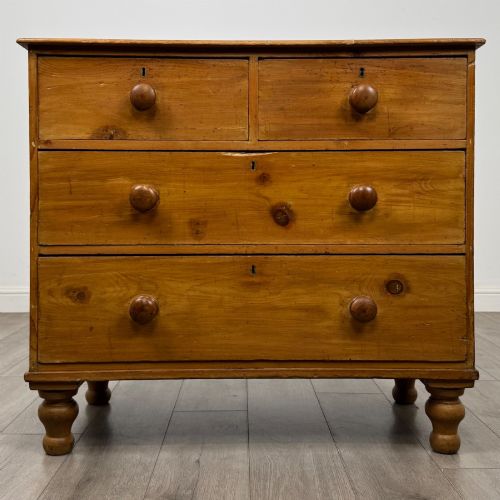
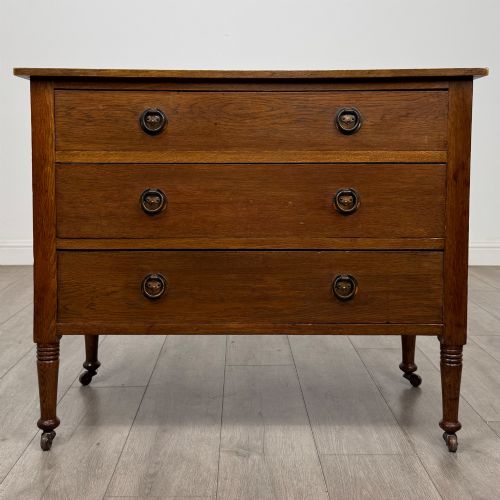

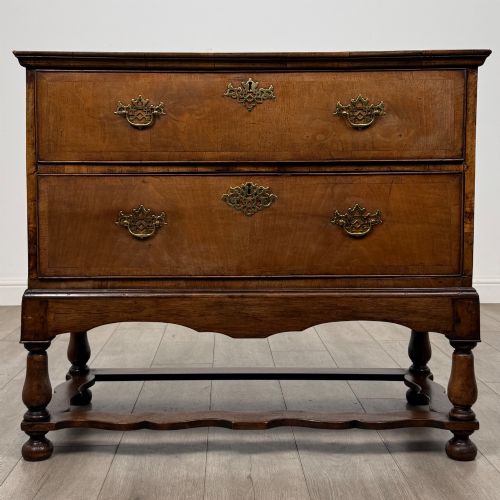
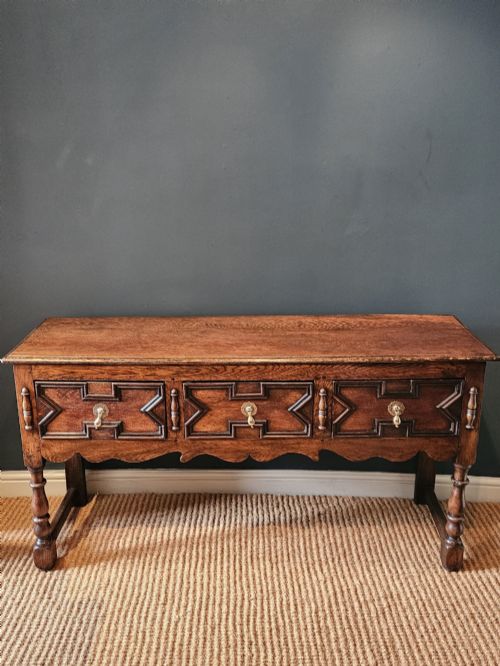


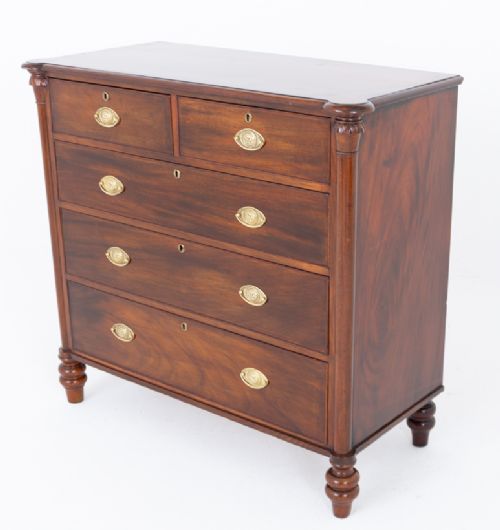


Turned Leg Wooden Chest
A turned leg wooden chest brings tactile warmth to a room, offering sturdy storage anchored by classic timber framing.
Turned Leg Wooden Chest
A turned leg wooden chest encompasses forms like chests of drawers, cabinets on stands, and dressers originating from the seventeenth century through the Edwardian era. These pieces combine practical storage compartments with distinct turned wooden supports beneath the main body.
The seventeenth-century examples frequently feature oak, walnut, or olive wood with oyster veneers and distinctive stand configurations. Later iterations from the Georgian and Victorian periods tend to present mahogany or satinwood construction with drawers and occasional cellarette forms.
Buyers encounter a significant variety of styles ranging from William and Mary and Queen Anne designs to later Regency and Edwardian interpretations. Oak and mahogany appear most frequently across the listed periods.
The physical stature of these items varies from low chests of drawers to elevated cabinets on stands. Each version utilises visible turned supports to lift the timber body clear of the floor.
Materials and construction
Cabinet makers utilised dense hardwoods such as oak, mahogany, walnut, and kingwood, often applying intricate veneers like oyster veneer or seaweed marquetry to primary surfaces. Secondary timbers provided structural stability within drawer linings and internal framing.
Turning lathes shaped the vertical supports from solid timber blocks, creating balanced legs that were joined with stretchers for rigidity. Dovetail joints secured the drawer carcases, whilst brass handles and hinges completed the hardware assembly.
Forms include traditional chests of drawers, elaborate cabinets on stands, cellarettes, and compact work tables equipped with turned legs.
Quality differences
Finer examples display careful selection of grain patterns, such as flame mahogany or figured olive wood, matched symmetrically across drawer fronts and panel surfaces. The execution of turnings on the legs reveals the artisan's control and symmetry.
Original hardware, sound structural joints, and minimal timber replacement elevate an example above pieces with extensive repairs or later alterations. The depth of the timber patina and the crispness of mouldings distinguish superior pieces.
The Turned Leg Wooden Chest Glossary
- Oyster veneer
- Small, circular cross-sections of branches sliced to display the annual growth rings, laid in patterns across cabinet surfaces. This decorative technique appears frequently on seventeenth-century walnut and olive wood furniture.
- Seaweed marquetry
- An intricate two-part inlay work resembling seaweed or fine arabesques, popular on late seventeenth-century cabinet furniture. It uses contrasting light and dark veneers to create elaborate surface designs.
- Cellarette
- A fitted container or chest designed to hold bottles of wine and spirits securely. They often feature lead linings and internal dividers.
- Chest on stand
- A cabinet or drawer chest elevated upon a separate or integrated open base with legs. This form lifts the main storage volume significantly off the floor.
- Parquetry
- Geometric mosaic woodwork formed by small pieces of veneer fitted together to cover a surface. It creates patterned floors or cabinet panels.
Turned Leg Wooden Chest: Frequently Asked Questions
How do I date a turned leg chest?
Examine the timber species, construction joints, and the profile of the turned legs to ascertain the likely period of manufacture. Seventeenth-century pieces typically employ oak, walnut, or olive wood with heavier framing, whereas later Georgian and Victorian examples favour mahogany.
The style of the handles, the presence of hand-cut dovetails, and the formatting of the drawer linings provide further clues. Comparing the decorative motifs, such as geometric mouldings or marquetry, against known period styles narrows down the date.
Where should I place these chests at home?
Position these timber chests in hallways, living rooms, or bedrooms where their grain and turned supports remain visible. Smaller cabinet forms suit corners or entrance spaces, whilst larger drawer chests anchor bedroom walls effectively.
Keep wooden furniture away from direct heat sources and strong sunlight to protect the aged polish and prevent timber splitting. Maintaining stable room humidity preserves both solid woods and delicate veneers.
Are turned leg chests practical for daily use?
These chests offer functional storage through deep drawers and compartmentalised interiors originally built for domestic goods or wine. Their sturdy timber construction handles everyday opening and closing without difficulty.
Careful loading prevents drawer binding, and regular dusting keeps the polished wood surfaces in good condition. The raised legs simplify cleaning underneath the furniture.
What is an oyster veneer?
Oyster veneering involves slicing small branches diagonally to produce oval or circular wooden discs showing concentric growth rings. Artisans arranged these pieces closely together to create patterned surfaces across cabinet doors and drawer fronts.
This technique requires steady hand-crafting and seasoned timber to prevent shrinkage over the centuries. It remains a hallmark of high-status seventeenth-century case pieces.