
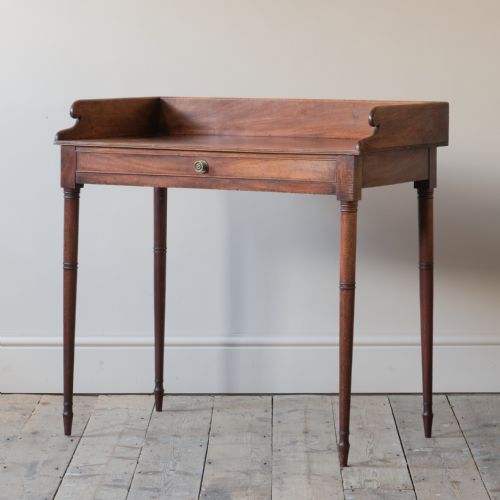
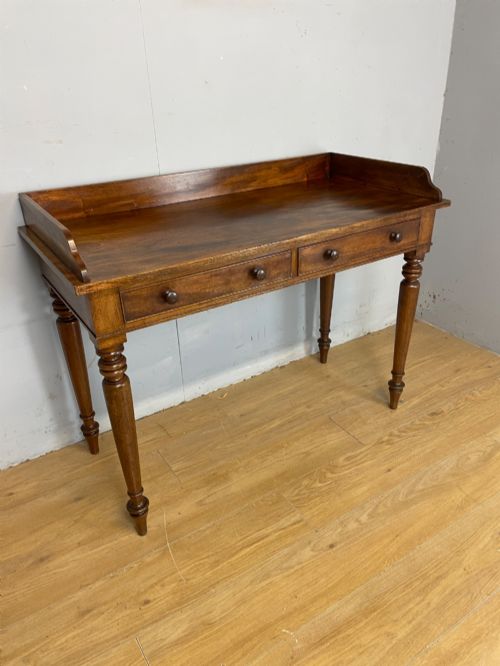
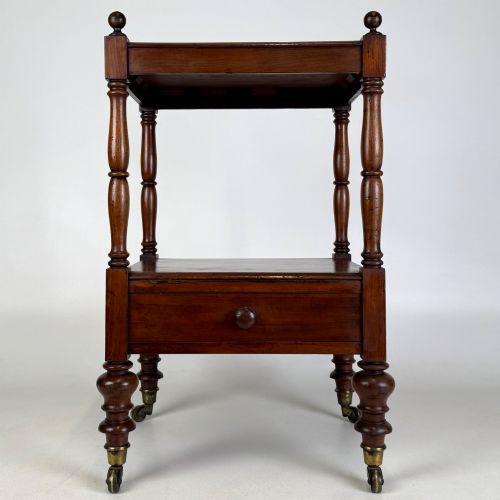
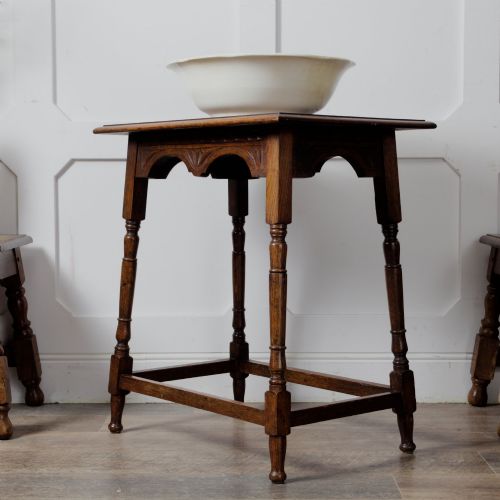

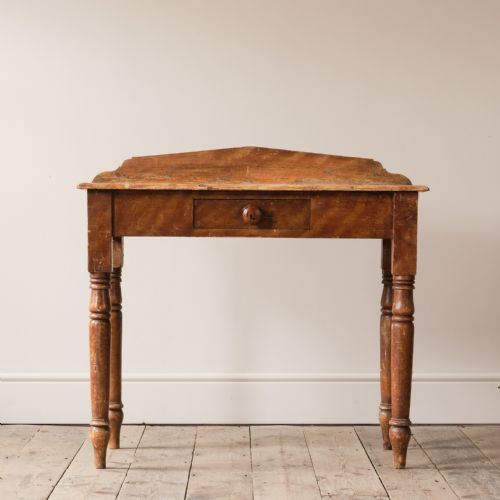
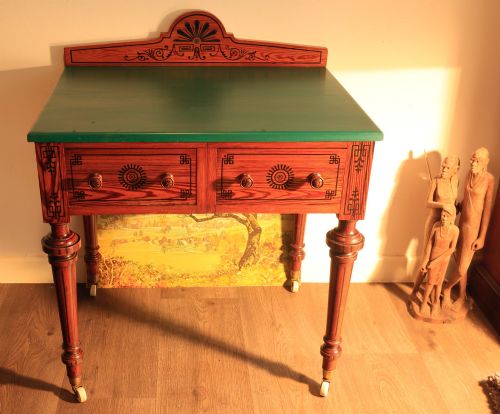
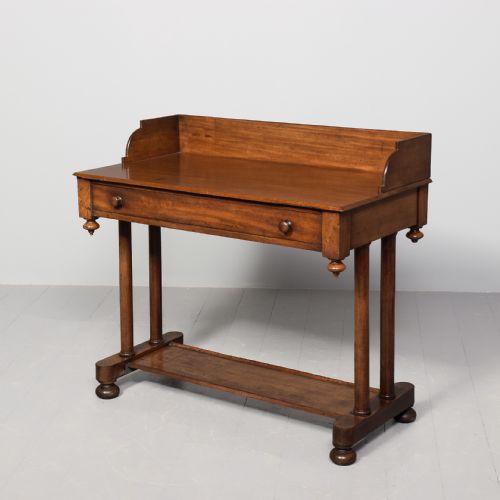


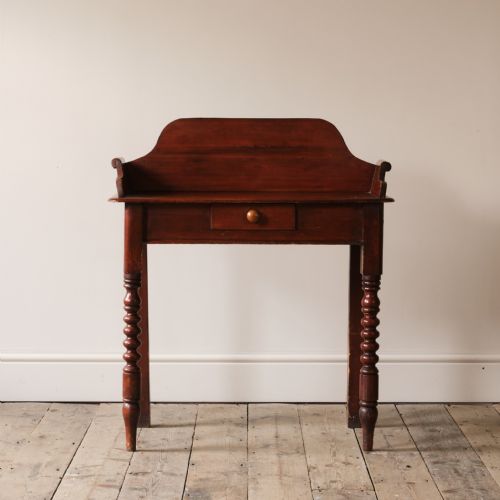

Turned Leg Washstand
These turned leg washstand pieces are practical bedside and dressing furniture designed for personal ablutions in the bedroom.
Turned Leg Washstand
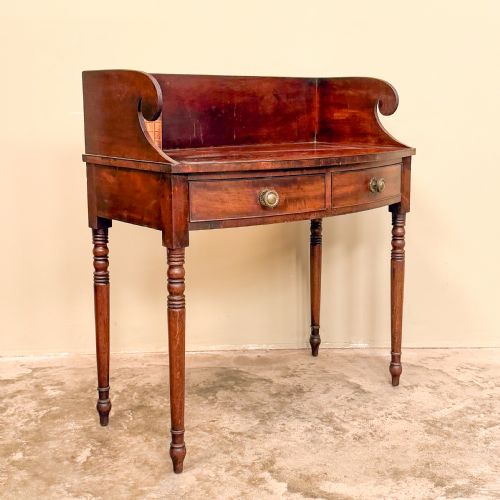
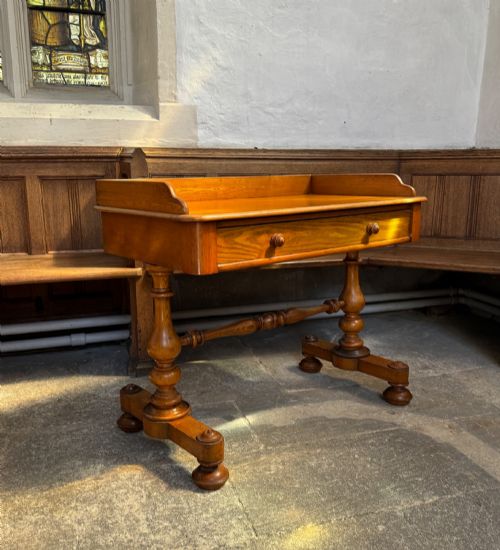
A turned leg washstand brings utilitarian 19th Century craftsmanship into modern interiors, serving as a functional side table or washstand. These pieces originate predominantly from the Victorian and Georgian periods, reflecting domestic needs of the 19th Century, 1880, and 1900.
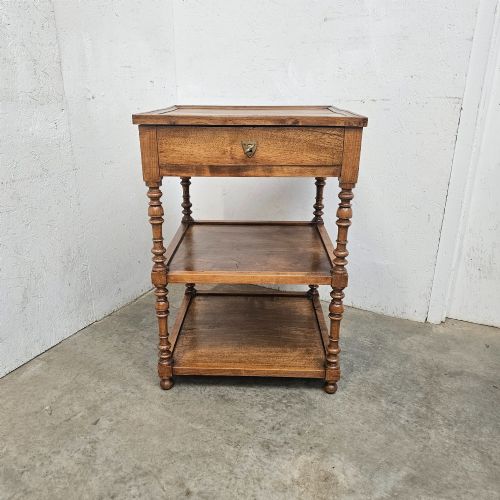
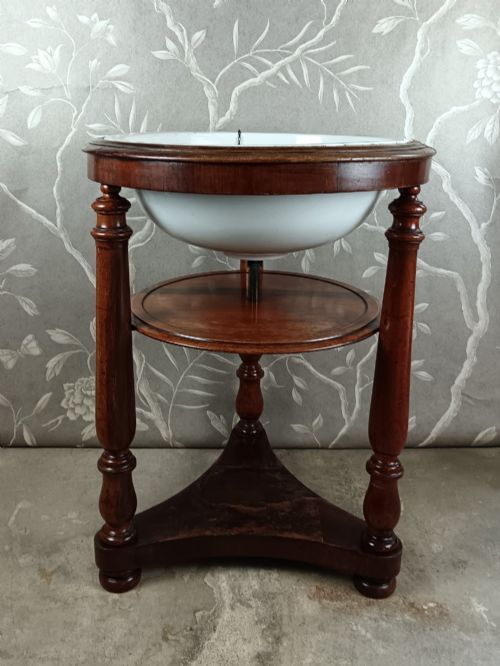
The dominant forms span washstands, side tables, and dressing tables, often featuring gallery backs or basin accommodations. Buyers will encounter both refined Georgian and Victorian examples, alongside simpler country pine and pitch pine variants.
Materials range from rich hardwoods like mahogany and walnut to utility timbers such as pine and pitch pine, sometimes finished in original paint or grain effects. Some pieces include marble tops or brass fittings, aligning with French Provincial, Regency, and Victorian styles.
What varies in quality
The selection of timber dictates the visual weight and longevity of the piece, with dense flame mahogany and burr walnut sitting at the upper end compared to utility pine. Cabinetmaking finesse distinguishes simpler washstands from formal dressing tables.
Originality of surface finishes, including period paintwork, grain finishes, and intact marble tops, significantly influences the integrity of the object. Structural refinements such as three-quarter gallery surrounds and brass hardware reflect the original purpose and tier of the manufacture.
Turned Leg Washstand Retail Price Guide 2026
Typical asking prices for turned leg washstand among the pieces listed under this phrase on Sellingantiques today, from the lower quarter to the upper quarter. They describe what is for sale here now, not the wider market.
One mahogany side table carries a later sign-writing attribution to the Midland Grand Hotel.
The Turned Leg Washstand Glossary
- Washstand
- A piece of bedroom furniture designed to hold a basin and jug for washing. These often feature raised backs or marble tops to contain water splashes.
- Gallery
- A low railing or raised wooden surround edging the top of a table. This prevents wash bowls or toilet articles from sliding off the surface.
- Pitch Pine
- A durable resinous pine timber utilised in 19th Century utility furniture. It exhibits a distinct grain pattern and structural strength.
- Campaign
- Portable furniture designed for travel and military use during the 19th Century. Such pieces frequently incorporate robust woods and brass mounts.
- Etagere
- An open piece of furniture with shelves for displaying small objects. These often feature turned wooden supports.
Turned Leg Washstand: Frequently Asked Questions
What is a turned leg washstand?
A turned leg washstand is a 19th Century utilitarian table built to hold washing basins in the bedroom. They typically feature solid timber construction with distinctive rounded, lathe-turned legs.
Today, these versatile items function well as side tables, bedside cabinets, or hall stands in contemporary homes.
How do I identify a Victorian washstand?
Victorian washstands generally date from the 19th Century and utilise woods like mahogany, pine, or pitch pine. They often include gallery backs or marble surfaces designed for daily ablutions.
Details such as original grain finishes or turned supports help distinguish them from later reproductions.
Were these washstands used with marble?
Many washstands incorporate marble tops to provide a water-resistant surface for basins and jugs. This material protected the underlying timber from moisture damage during washing.
Marble-topped variants frequently appear alongside wood-topped pieces within 19th Century listings.