
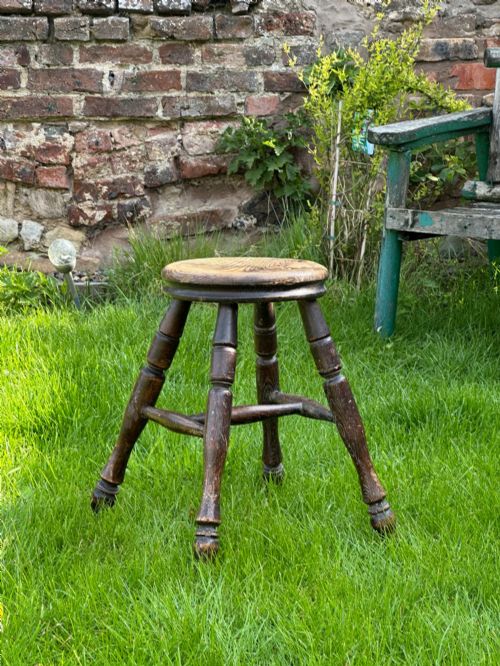


Turned Leg Hearth Stool
These turned leg hearth stool examples bring honest vernacular character to a room, offering low, sturdy seating built for fireside use.
Turned Leg Hearth Stool
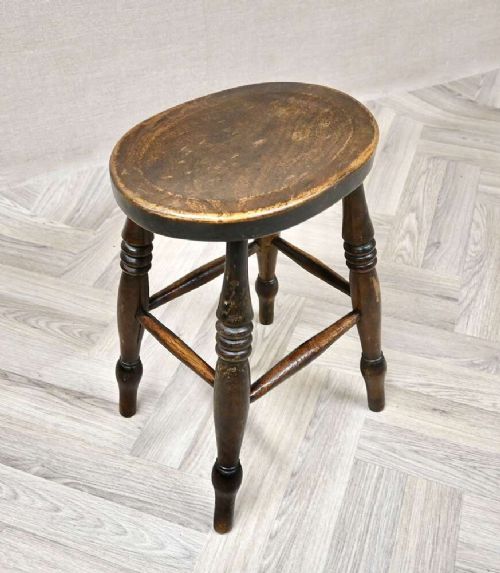
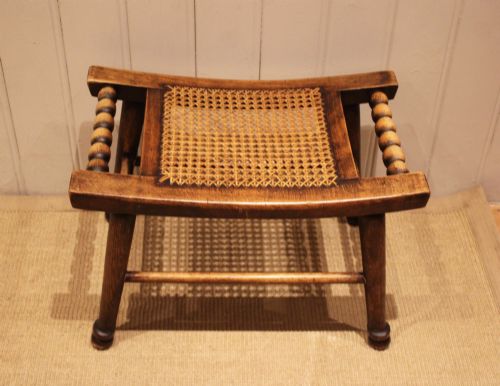
The pieces you are most likely to meet on this page span the Georgian, Victorian, and Edwardian periods, alongside items dated around nineteen twenty. They arrive in various forms including oval seat country stools, tavern stools, and long framed footstools.
Makers working within the traditional vernacular, rustic country, and Jacobean revival styles produced these items for everyday utility. They serve equally well as low seats or as rests for tired feet by the hearth.
How they were made
Joiners and country craftsmen utilised solid timbers such as oak, elm, beech, and mahogany for the frames and legs. These woods were chosen for their toughness and availability in local workshops.
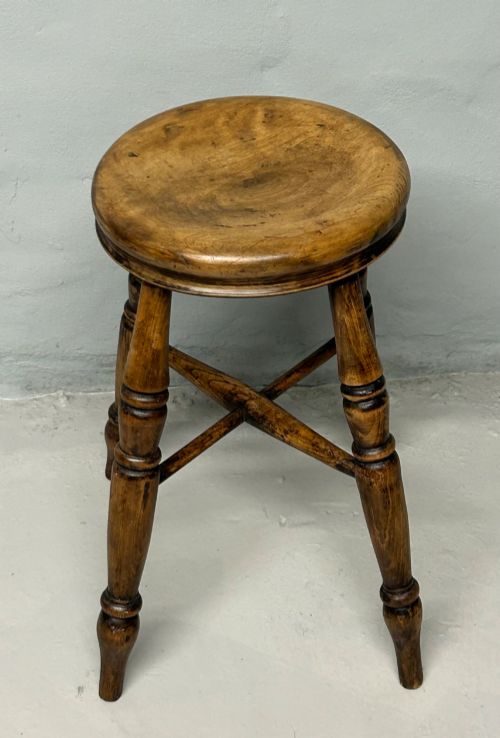
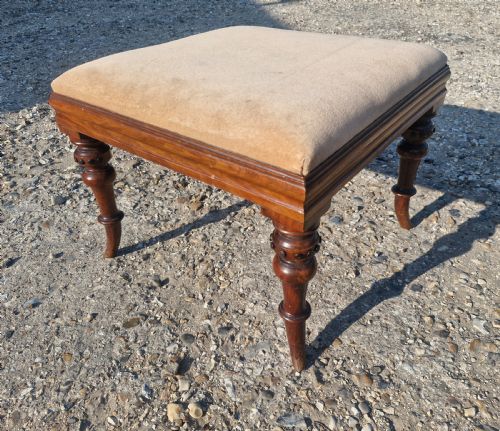
Turned legs provide the characteristic profile, supporting seats fashioned from solid wood, woven cane, or traditional rush. Upholstery also appears on larger heavy oak examples, adding a layer of comfort to the rigid wooden structures.
Some petty, neat oak stools have survived a century of fireside service while keeping their rush seats remarkably tidy.
What varies in quality
The distinction between a standard utility piece and a finer example lies in the crispness of the wood turning and the selection of timber. Dense hardwoods like oak and elm with well-figured grain command greater appreciation than softer or more plain alternatives.
The integrity of the seating surface further separates the output, whether that involves a tightly woven rush seat, sound cane work, or a neat solid timber top. Sturdiness in the frame construction determines how well the piece survives centuries of fireside use.
The Turned Leg Hearth Stool Glossary
- Vernacular
- Everyday objects made by local craftsmen for practical use rather than following high-style academic design. These pieces reflect regional traditions and available materials.
- Rush
- Aquatic plants twisted into cords and used for traditional seat weaving. It creates a durable, textured surface that breaks in comfortably over decades.
- Cane
- Strips of rattan woven into open mesh patterns for lightweight seat panels. It offers flexibility and a neat appearance on smaller footstools.
- Tavern stool
- A sturdy public house seat built to withstand heavy daily wear. They often feature robust timber framing and simple turned supports.
Turned Leg Hearth Stool: Frequently Asked Questions
What is a turned leg hearth stool?
A turned leg hearth stool is a low, sturdy seat designed historically to sit near an open fire. These items provide practical seating or foot support in traditional rooms.
They are built from solid timbers with distinctive turned wooden legs, reflecting country workshop traditions across the eighteenth, nineteenth, and early twentieth centuries.
How were these stools used originally?
These stools served as movable seats close to the warmth of the fireplace or as footrests for people sitting in larger armchairs. Their low height kept users out of drafts near the floor.
In taverns and cottages, they provided dependable, space-saving utility where large chairs proved impractical.
What woods should I expect to find?
Makers relied on domestic hardwoods like oak, elm, beech, and mahogany for their strength and durability. These timbers formed the turned legs and structural frames.
Seats were constructed from the same solid woods or finished with flexible materials such as woven cane and rush.
How do I date an old stool?
Dating relies on observing timber characteristics, tool marks, and stylistic clues from periods like the Georgian era, Victorian times, or the early twentieth century. Construction methods often reveal whether a piece belongs to the country vernacular or a formal revival style.
Turnery patterns and seat materials also help narrow down the decade of production.