
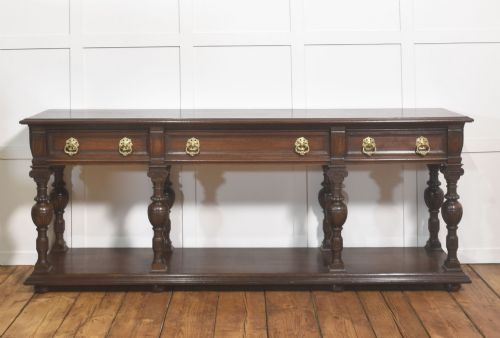
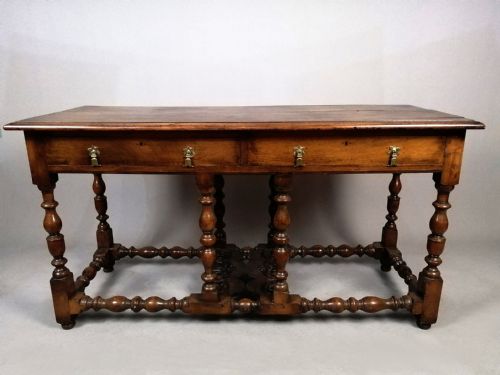
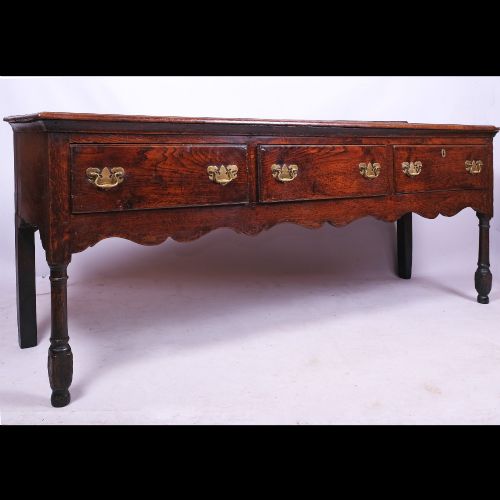
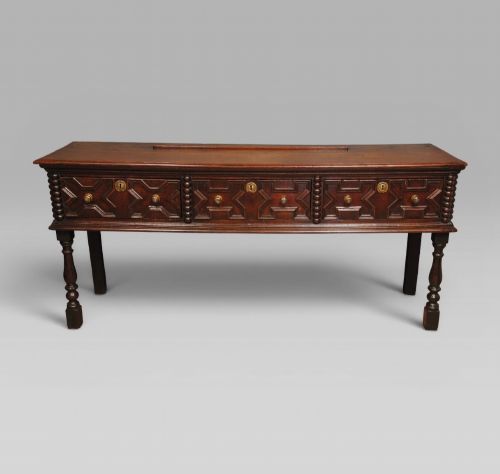
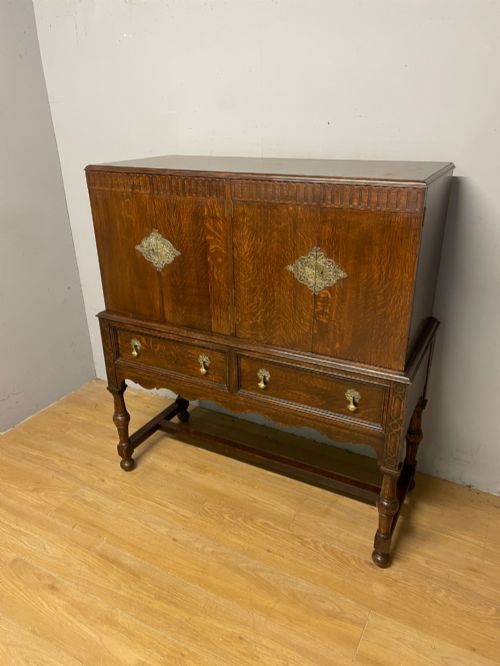

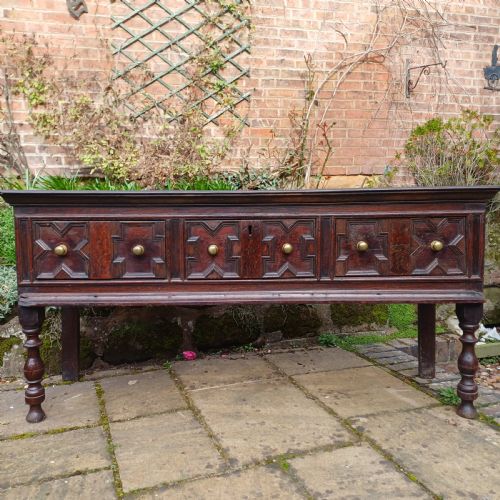


Turned Leg Dresser Base
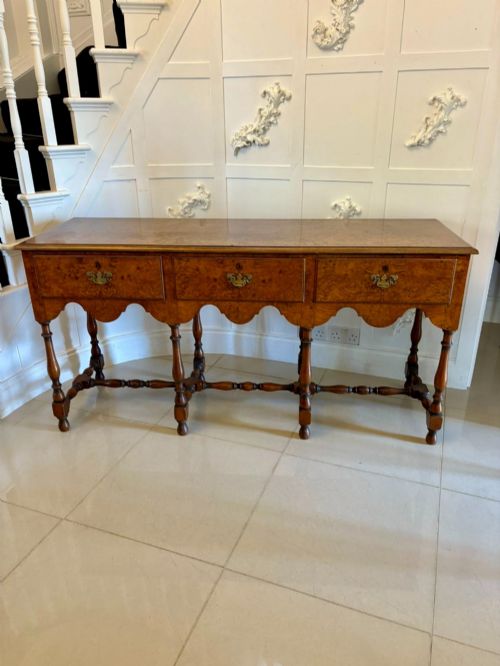
A turned leg dresser base anchors a farmhouse kitchen or dining room with honest timber and sturdy uprights.
Turned Leg Dresser Base
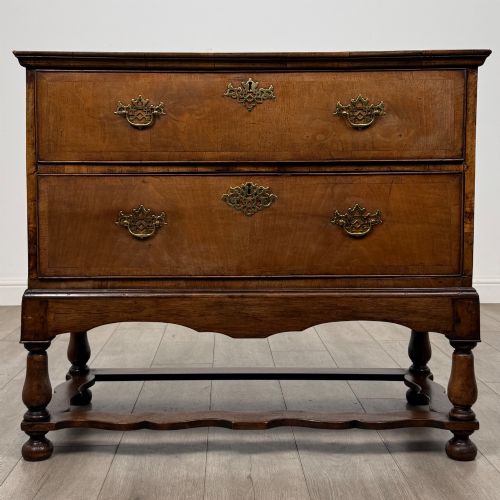
A turned leg dresser base provides practical storage and a generous working surface for domestic spaces. These low forms sit below eye level, often fitted with multiple drawers above an open potboard or shelf.
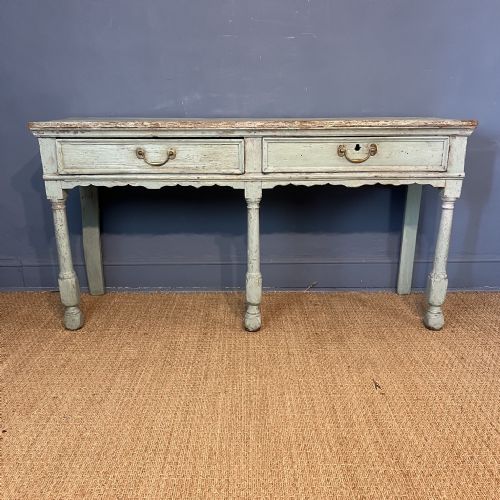
The turned leg dresser base spans several centuries of British cabinet making, moving from austere seventeenth-century framing to later Georgian elegance. Oak remains the predominant timber, though walnut and painted pine examples appear across the timeline.
Buyers encounter early vernacular work alongside later revival interpretations built in the Edwardian era. Each variant offers a distinct architectural stance while retaining the core utility of a kitchen or dining serving piece.
How they were made
Cabinet makers relied on solid oak and walnut, constructing frames with pegged mortise and tenon joints to withstand heavy daily use. Panels were frequently bevelled and fitted into grooved framing to allow for natural wood movement over decades.
Turned supports required the lathe, producing sturdy bolster or straightforward column profiles that bear the weight of the heavy top boards. Brass handles and escutcheons were cast and fitted to drawers, though many early pieces retain plain timber drawer pulls.
Several pieces arrive with scars from centuries of rolling pastry and carving joints right on the boards.
What varies in quality
Quality rests in the integrity of the timber selection and the retention of original surface patination. Untouched boards with deep wax buildup and natural wear distinguish a superior survivor from a heavily restored example.
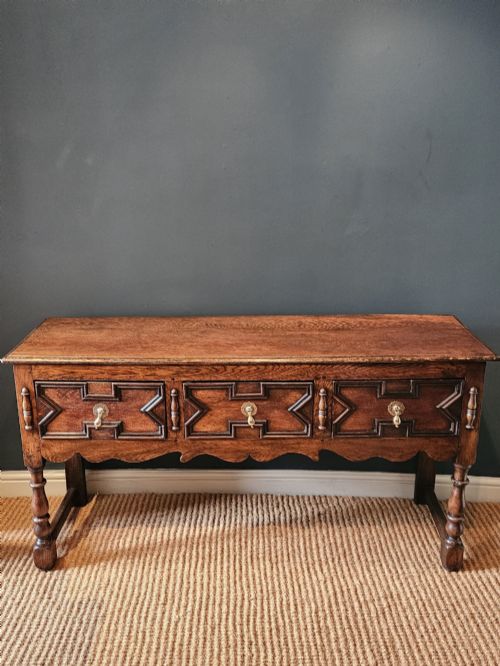
The crispness of the turning on the legs and the neatness of the drawer construction indicate the maker's skill. Elements like geometric mouldings and early panel inserts demand careful integration to hold lasting value.
The Turned Leg Dresser Base Glossary
- Potboard
- A lower open shelf positioned close to the floor, traditionally used for storing pots and heavy kitchen utensils.
- Bolster turned
- A form of lathe turning characterised by a rounded, swelling profile often found on seventeenth-century supports.
- Geometric moulding
- Raised wooden mouldings applied to drawer fronts in rectilinear patterns, typical of the late seventeenth and early eighteenth centuries.
- Dresser base
- The lower section of a kitchen or dining dresser, consisting of a flat top surface above drawers and cupboards, without the upper plate rack.
Turned Leg Dresser Base: Frequently Asked Questions
How do I clean a dresser base?
Dust regularly with a soft, dry cloth to prevent grit accumulation on the aged timber surfaces.
Apply a microcrystalline wax sparingly once or twice a year to nourish the wood without building up a sticky residue.
Can I use this in a modern kitchen?
These robust sideboards fit comfortably into contemporary living spaces, providing generous surface area and practical storage below.
Ensure placement avoids direct heat sources and strong sunlight to protect the historic finish and dry timber.
How do I date a dresser base?
Examine the construction methods visible inside the drawers and beneath the top boards, looking for hand-cut joinery and handmade fixings.
Compare the style of the leg turnings and timber choice against established periods like the seventeenth century or Georgian era.
What is the difference between a dresser and a sideboard?
A traditional dresser base typically includes deep working drawers and occasionally a potboard shelf, originating from kitchen environments.
Sideboards evolved later primarily for dining room service, featuring more refined decorative veneers and enclosed cupboard configurations.