

Turned Leg Couch
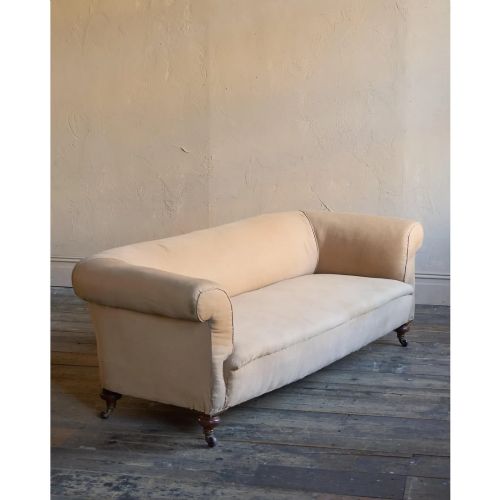
A turned leg couch brings substantial nineteenth-century presence and robust timber framing to a room.
Turned Leg Couch
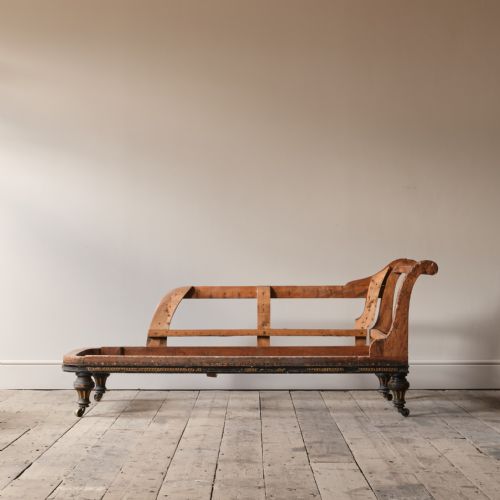
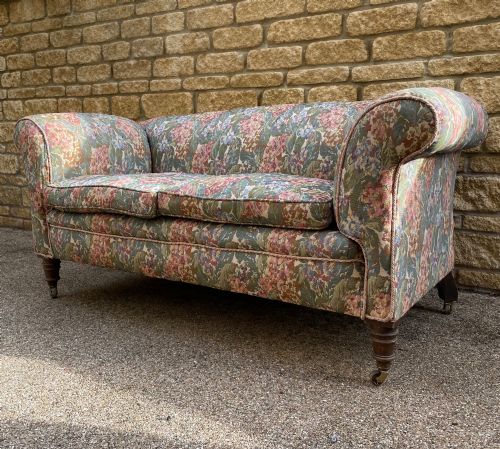
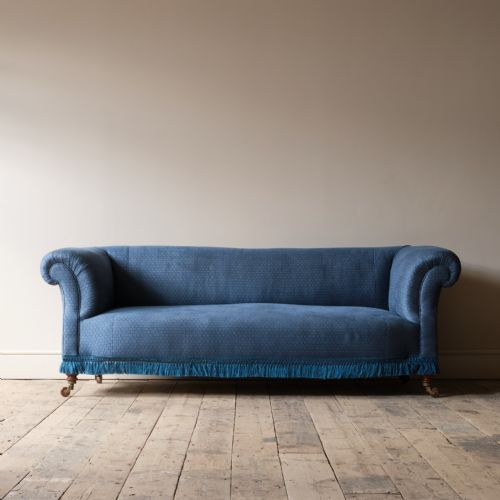
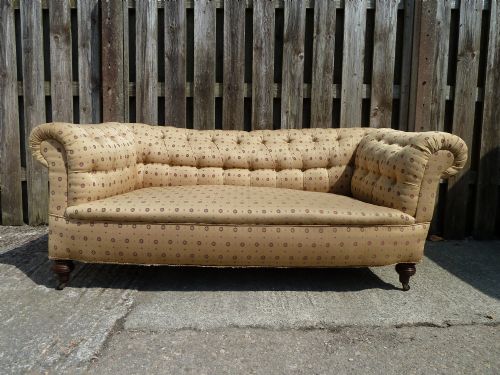
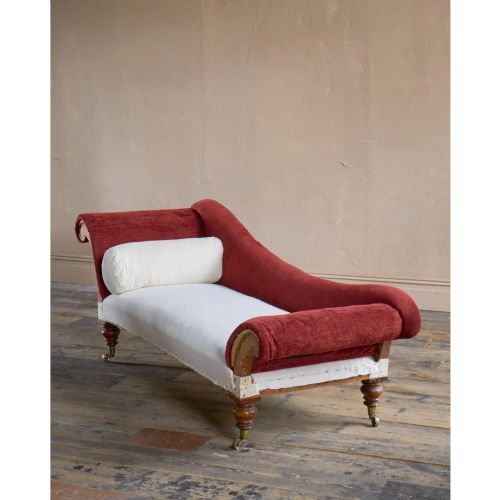
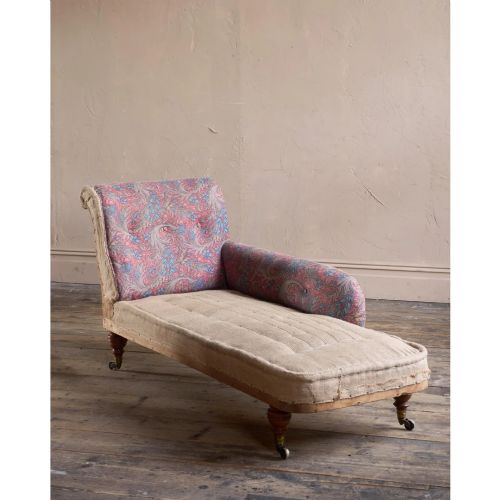
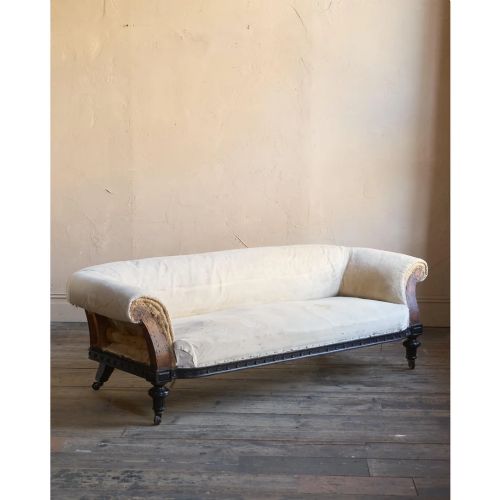
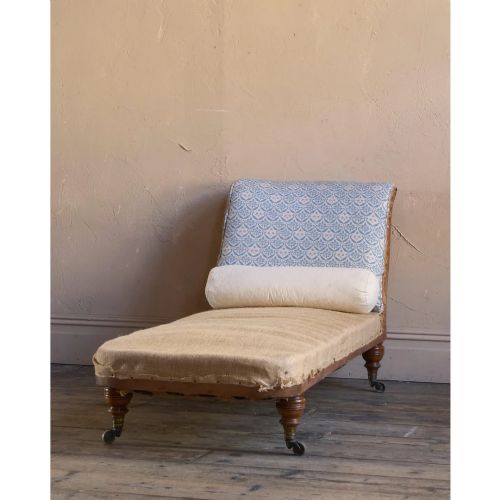
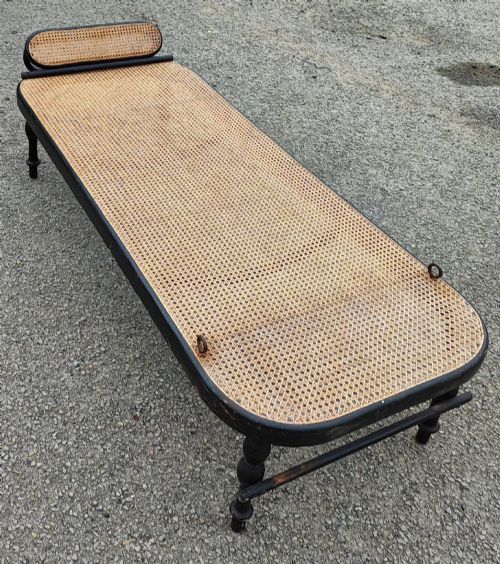
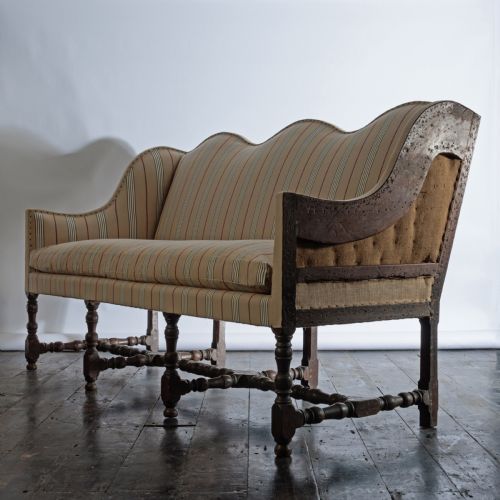
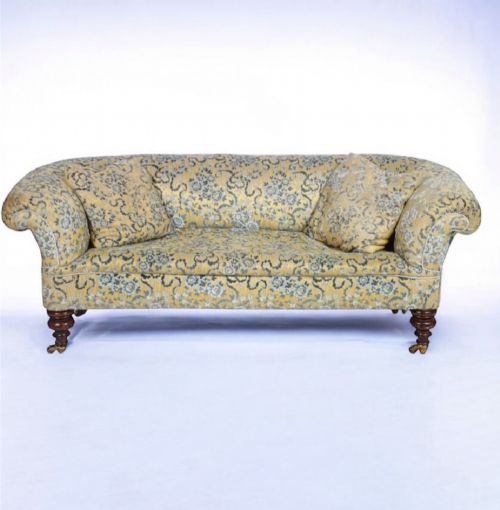
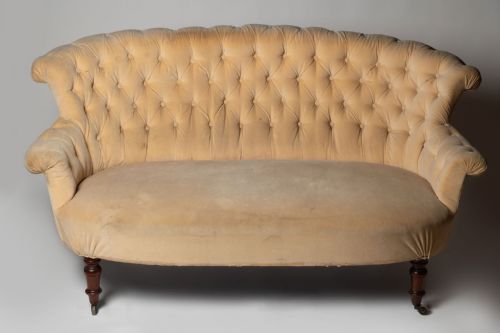
A turned leg couch gathers together nineteenth-century daybeds, chaise longues, and deep-seated sofas resting on cylindrical or spiralling wooden supports. These pieces emerge chiefly from the Victorian and Regency eras, spanning forms like the drop-arm sofa, the Chesterfield, and the low day bed.
The version most commonly met on this page is the nineteenth-century upholstered sofa or chaise longue mounted on walnut or mahogany turned legs. These items reflect traditional English and country house seating designs built for comfort and formal reception rooms alike.
How they were made
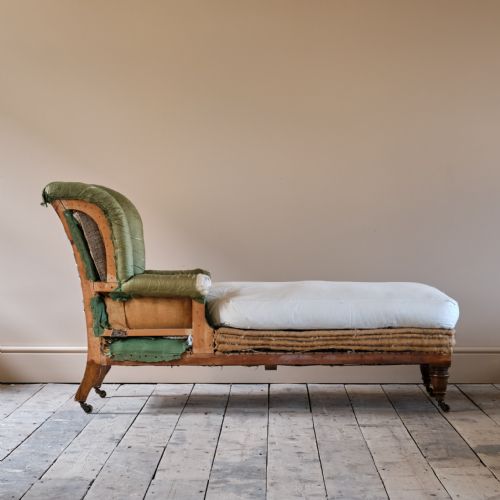
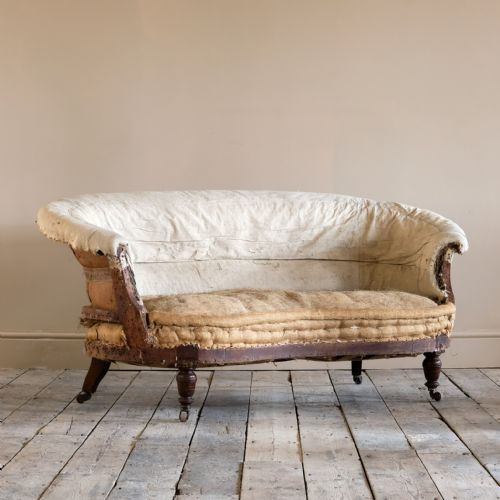
Construction relies upon dense timbers like mahogany, walnut, and general wood framing to support heavy sprung upholstery. Legs are shaped on a lathe to form turned profiles, frequently fitted with original castors for mobility across heavy carpets.
Upholstery techniques involve traditional stuffing layered beneath fabrics such as velvet, calico, and contemporary patterned textiles, often finished with buttoning or hand-tacked borders.
Listings span the seventeenth through the early twentieth centuries, dominated by nineteenth-century Victorian and Regency examples utilising mahogany, walnut, brass, and velvet.
What varies in quality
The refinement of the turned woodwork and the integrity of the underlying timber frame separate standard production from superior workshop output. Maker attribution, particularly to notable nineteenth-century cabinet makers, alters the standing of a piece significantly.
The retention of original castors, sound frame joinery, and the quality of the timber grain determine the durability and architectural honesty of the couch.
Holland and Sons·Hampton and Sons·Howard and Sons·Gillows
The Turned Leg Couch Glossary
- Turned leg
- A wooden support shaped by rotating timber against a cutting tool on a lathe. This technique produces symmetrical cylindrical, fluted, or spiralled profiles common in nineteenth-century seating.
- Chaise longue
- An upholstered couch shaped for reclining, featuring a backrest that extends along part or all of the length. These forms date predominantly from the Regency and Victorian periods.
- Chesterfield
- A deep-buttoned, upholstered sofa characterised by arms and back of the same height. It remains a staple of nineteenth-century domestic seating.
- Day bed
- A long seating item designed for resting during the day, combining elements of a chair and a bed. Examples on this record often incorporate cane panels or fully upholstered frames.
- Drop-arm
- A sofa mechanism allowing one end of the seating to lower or adjust flat. This modification provides versatility for lounging.
Turned Leg Couch: Frequently Asked Questions
What is a turned leg couch?
A turned leg couch is an antique seating piece from the nineteenth century featuring wooden supports shaped on a lathe. These items include chesterfields, day beds, and chaise longues upholstered in velvet or fabric.
They serve as focal points in period interiors, combining robust timber frames with comfortable padded seating.
How do I identify a Victorian sofa?
Victorian sofas are identified by their substantial proportions, dark wood frames in walnut or mahogany, and deep buttoned upholstery. Turned legs with or without metal castors frequently anchor the base.
Design styles range from simple country house settees to elaborate buttoned chaises from the mid to late nineteenth century.
Where were these couches used?
These seating pieces were placed in nineteenth-century drawing rooms, libraries, and formal parlours for reception and resting. Chaise longues and day beds specifically suited private sitting rooms or large bedrooms.
Today, they function effectively as statement seating in modern living spaces while retaining their historical character.
Are these couches comfortable for daily use?
Many nineteenth-century couches offer deep seating and solid sprung foundations built for sustained lounging. Some antique frames require modern reupholstery to achieve optimal support.
Their robust timber construction ensures they remain practical for everyday domestic life.