
Turned Leg Club Chair
A turned leg club chair offers deep seating and sturdy proportions, combining functional comfort with period character for any interior.
Turned Leg Club Chair
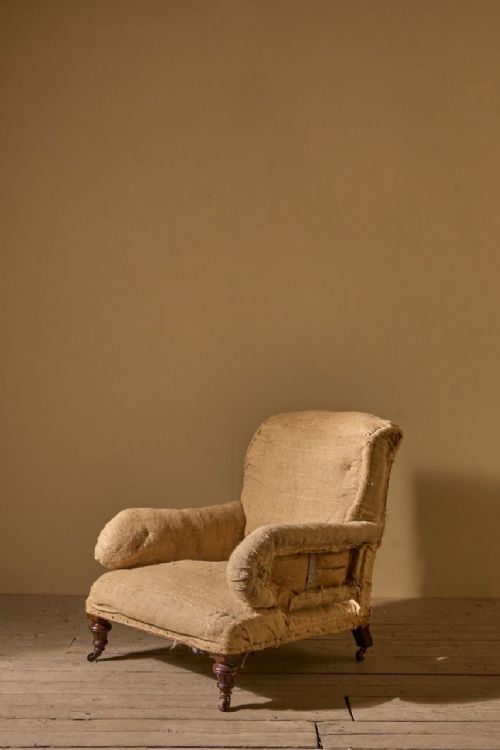
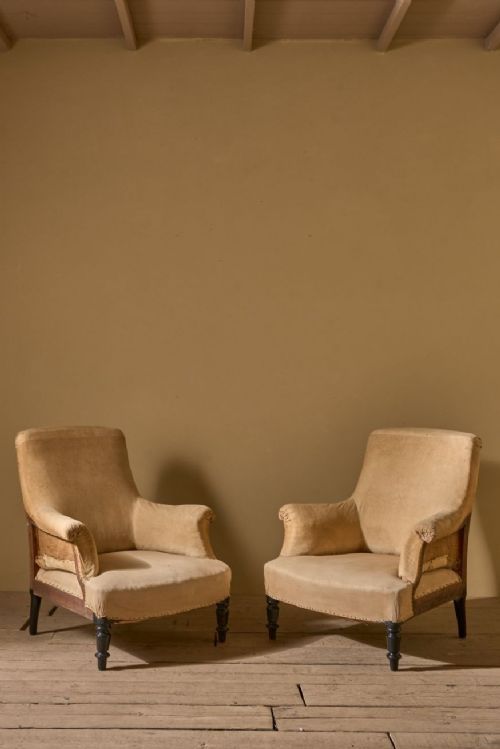
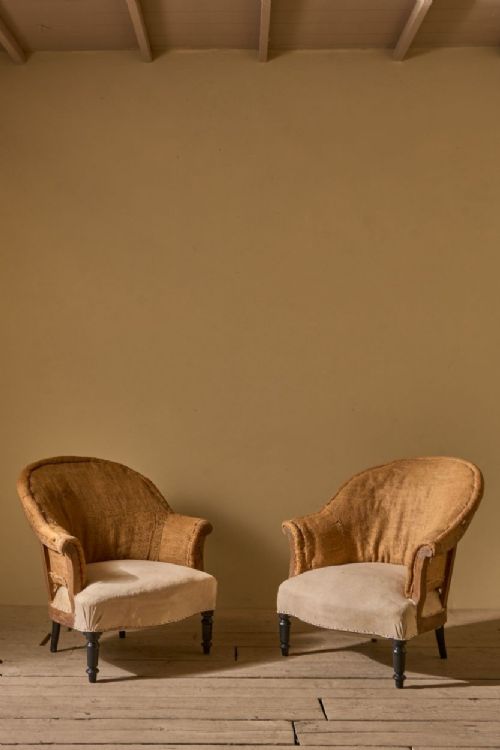
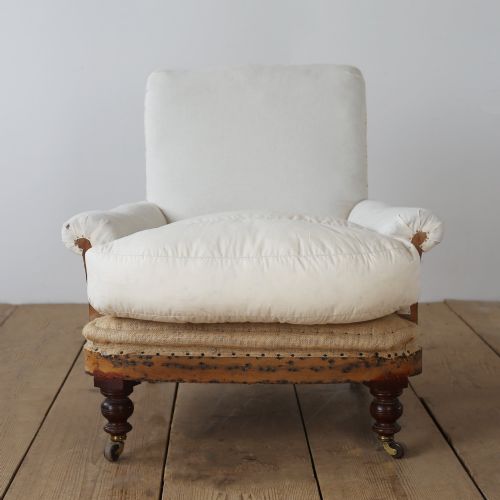
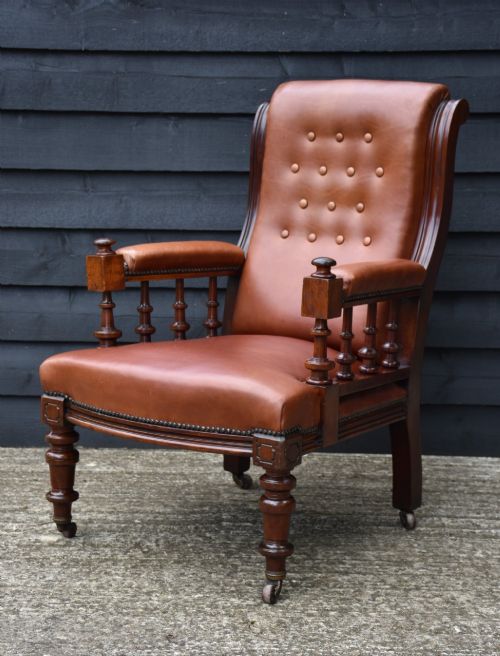
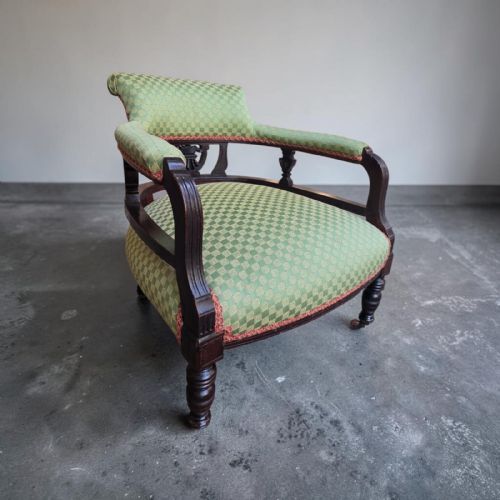
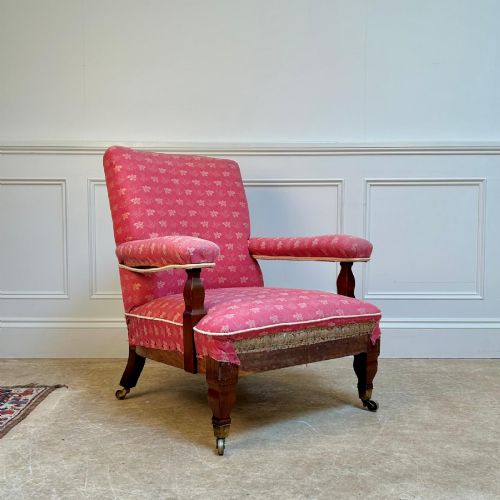
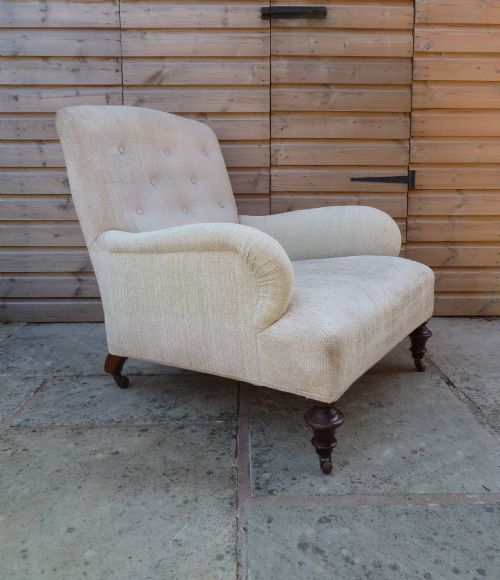
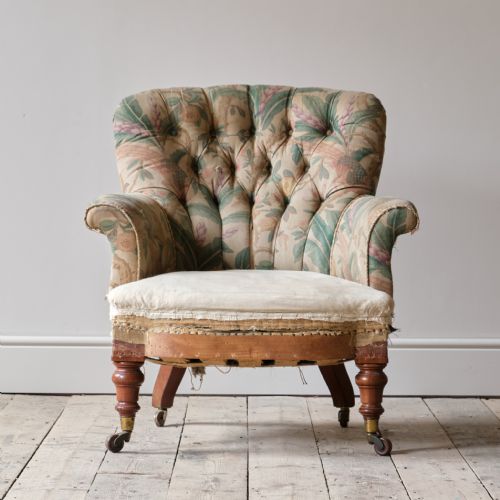
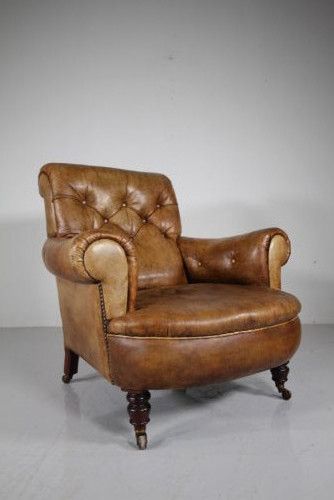
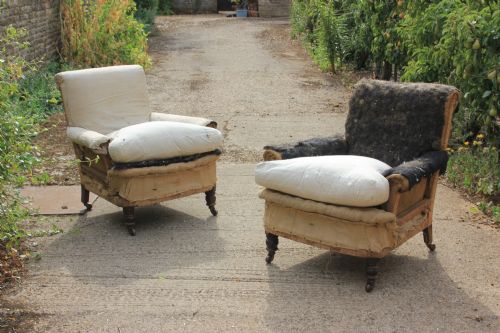
A turned leg club chair represents a substantial seating form designed for relaxation, frequently encountered in nineteenth-century and Victorian iterations across this selection. These pieces typically manifest as library armchairs, country house seating, or low tub chairs with upholstered frames.
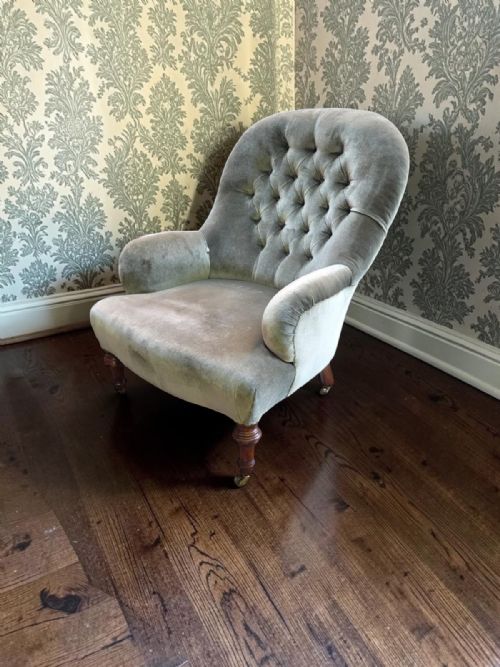
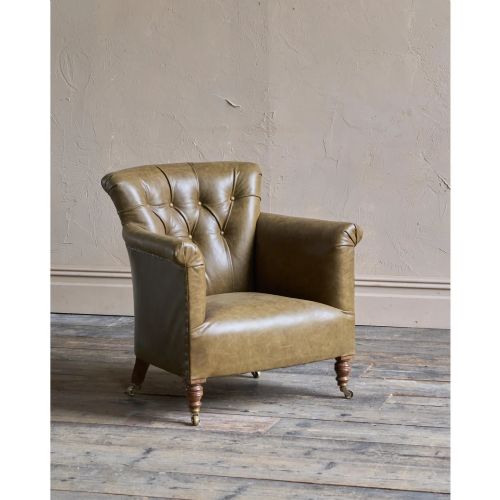
The materials span mahogany, walnut, and beech alongside various fabric coverings such as leather, calico, hessian, and velvet. Stylistic influences draw heavily from English country house traditions as well as French Napoleon III designs.
How they were made
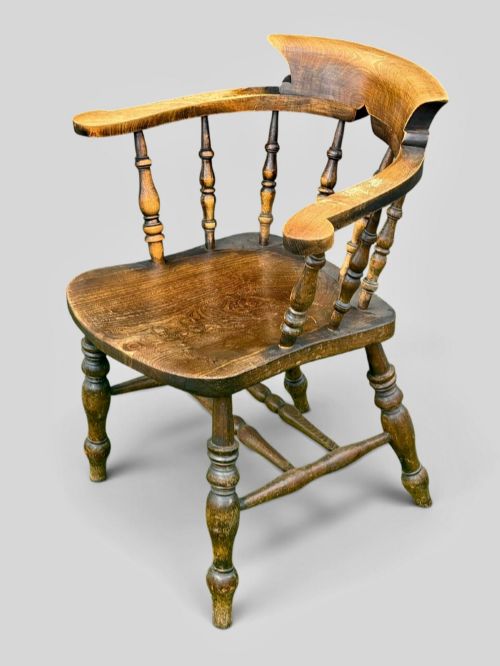
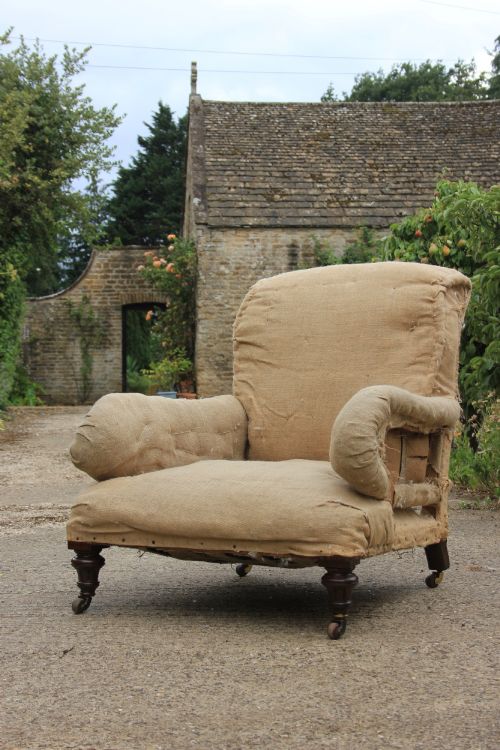
Frames rely on solid timbers like mahogany, walnut, beech, and elm, shaped and joined to support deep upholstery. Turned wooden legs provide the characteristic base support, often fitted with brass castors for mobility.
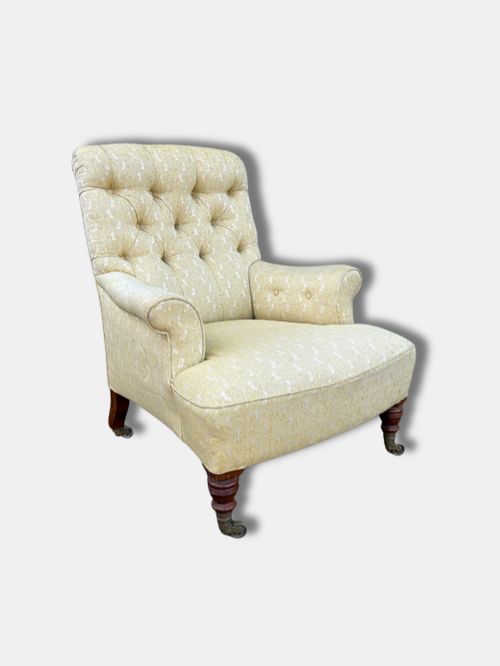
Upholstery techniques utilise traditional stuffings and webbing enclosed by heavy outer covers of leather, velvet, calico, or hessian. Buttoning and hand-tack work secure the textiles directly to the hardwood frames.
Listings feature nineteenth-century and Victorian pieces constructed from mahogany, walnut, and beech, upholstered in leather, velvet, calico, and hessian.
What varies in quality
Structural integrity of the underlying wooden frame and the precision of the woodturning dictate the fundamental build quality. Heavy timber framing with tight joinery separates substantial library and country house chairs from lighter variants.
The grade and authenticity of the upholstery materials, from supple leather to heavy velvet or original ticking, influence the overall character. Maker attribution also plays a role when specific workshops constructed the frame.
Howard and Sons·Morris And Co·Holland and Sons·Gillows·Mellier and Co
The Turned Leg Club Chair Glossary
- Tub chair
- An armchair with a continuous curved back and arms forming a single low enclosure. This form provides a compact yet supportive seat.
- Library armchair
- A large, upholstered seating piece designed for reading rooms, typically featuring padded arms and sturdy wooden legs. These chairs often utilise leather or heavy fabric.
- Castor
- A small wheel mounted on a swivel attached to the bottom of furniture legs. They allow heavy armchairs to move smoothly across floor surfaces.
- Button back
- An upholstery style where depressions are formed in the padding by stitches or buttons pulled tight. This technique secures internal stuffing while creating a geometric pattern.
Turned Leg Club Chair: Frequently Asked Questions
What is a turned leg club chair?
A turned leg club chair is a heavily upholstered seating piece featuring exposed wooden legs shaped on a lathe. These chairs prioritise deep comfort and solid proportions.
They appear across nineteenth-century styles, incorporating materials like mahogany, walnut, leather, and velvet within English and French traditions.
Where were these chairs used?
These armchairs primarily served in private libraries, drawing rooms, and country house reception spaces where long periods of sitting required substantial support.
Their robust construction and deep seats made them central fixtures for daily relaxation and reading in period homes.
How do I date a turned leg chair?
Dating relies on observing the timber choice, leg turning style, and upholstery methods characteristic of periods like the Victorian era or Edwardian times. Details such as mahogany frames or specific maker signatures help narrow the decade.
Comparing the structural silhouette against documented nineteenth-century forms provides further chronological context.
Are these chairs comfortable for daily use?
These pieces were originally built for sustained comfort, featuring deep seats and padded backrests designed for long periods of rest. Their robust frames and traditional sprung or stuffed interiors support modern daily sitting.
Maintenance of the upholstery and internal webbing ensures they remain functional seating options in contemporary rooms.