




Turned Leg Chaise Longue
A turned leg chaise longue brings nineteenth-century reclining comfort to a room, offering elegance and a place to rest during the day.

Turned Leg Chaise Longue
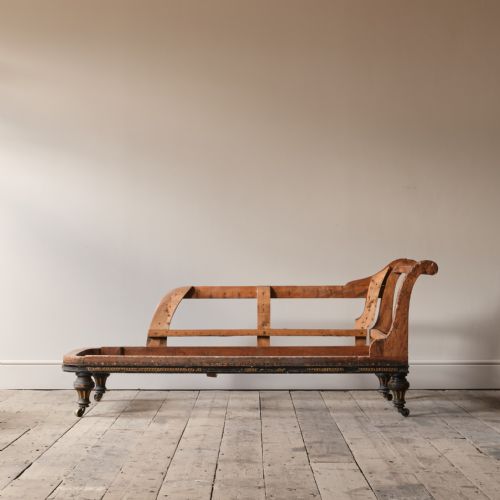
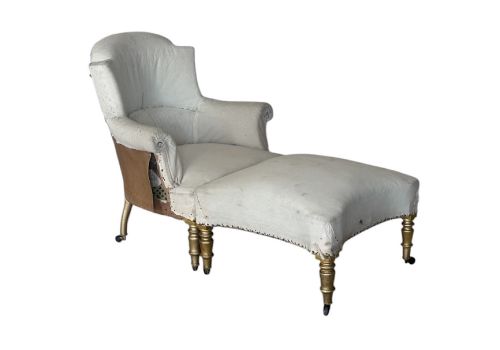
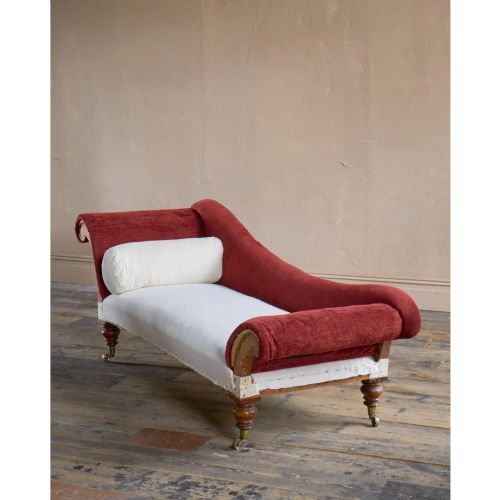
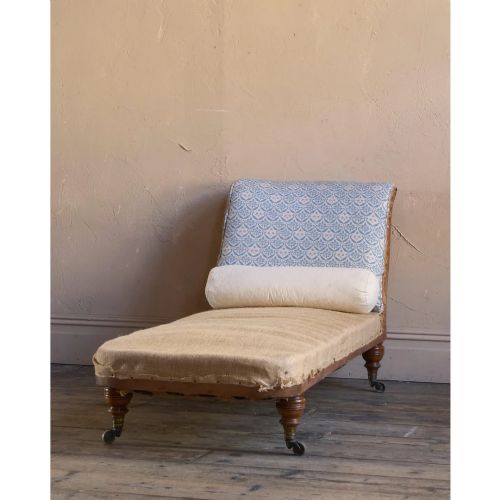
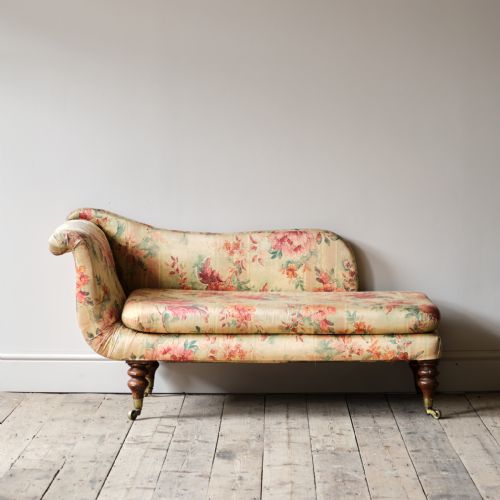
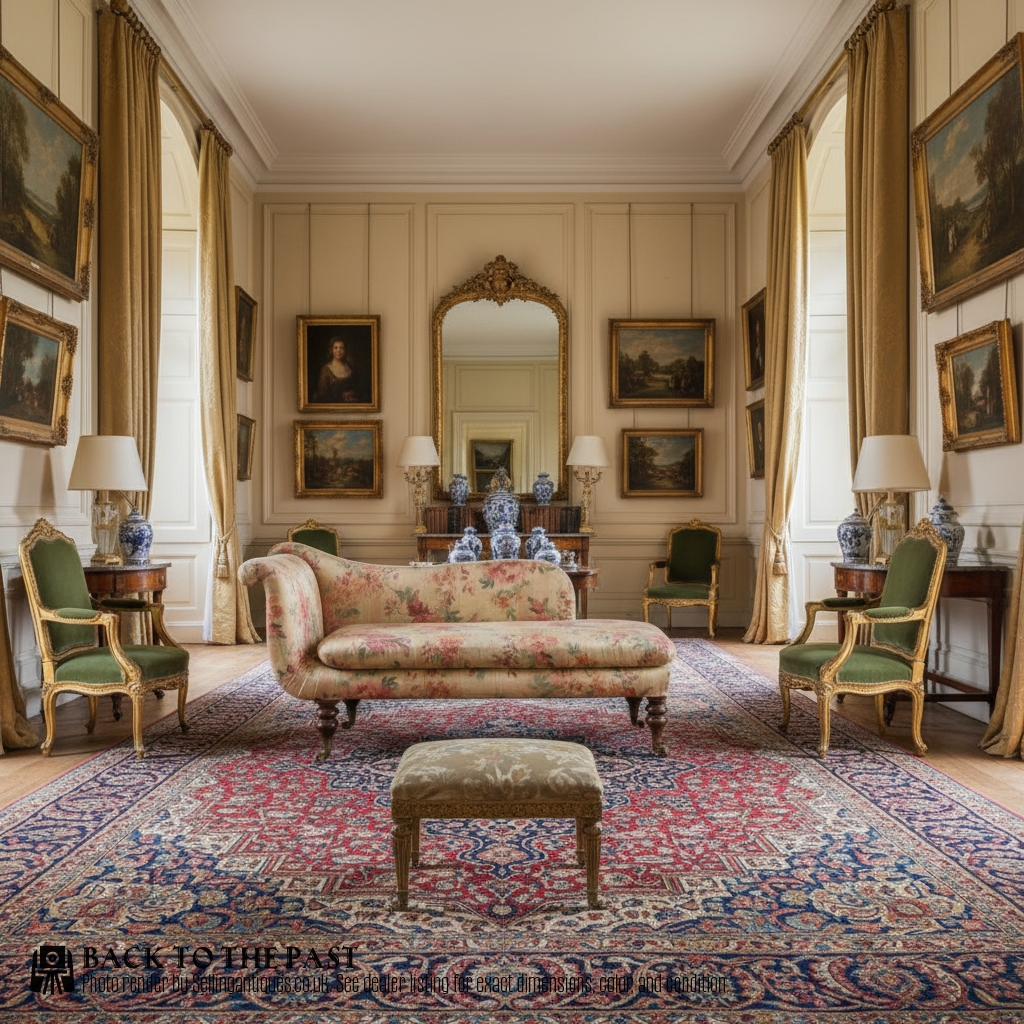
A turned leg chaise longue is a long seating form designed for reclining, appearing across nineteenth-century styles including Regency, Victorian, and Napoleon III. These pieces serve as day beds or salon seating, often featuring a raised end for the head.
The version most frequently met on this page carries nineteenth-century origins, spanning early Regency interpretations to late Victorian and 1800s examples. Makers such as Holland & Sons and Howard and Sons frequently produced these forms.
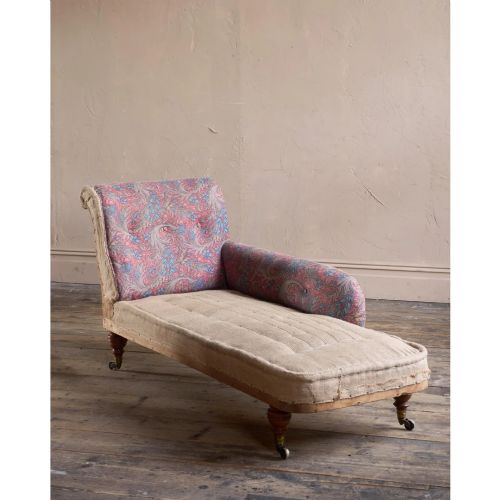
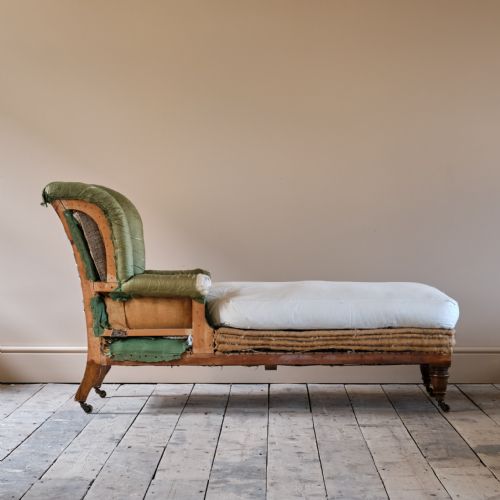
Makers utilised specific timbers and upholstery techniques to build these day beds, pairing mahogany, walnut, and ebonised wood with brass castors. Buyers encounter both fully restored leather pieces and frames ready for calico or velvet recovering.
What varies in quality
The sophistication of the timber turning and the precision of the frame construction define the upper tier of these pieces. Cabinetmakers such as Gillows, Holland & Sons, and Howard and Sons applied superior joinery and refined proportions that elevate certain examples.
The integrity of the internal stuffing and the choice of surface covering - whether original brown leather, velvet, or calico - distinguish standard production from exceptional workshop output. High-quality pieces retain their original castors and structural firmness within the wooden frame.
Turned Leg Chaise Longue Retail Price Guide 2026
Typical asking prices for turned leg chaise longue among the pieces listed under this phrase on Sellingantiques today, from the lower quarter to the upper quarter. They describe what is for sale here now, not the wider market.
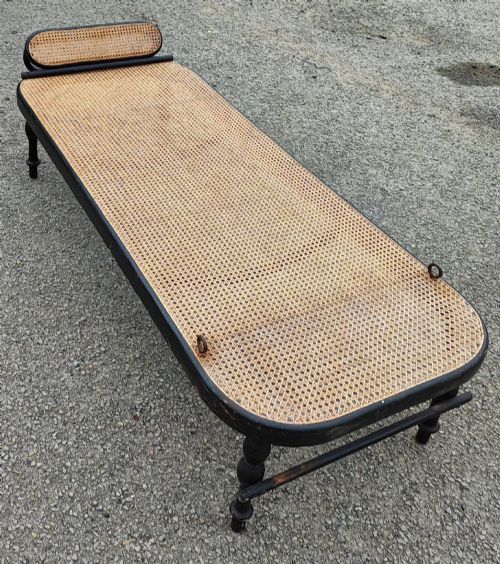
Materials recorded on this page include brass castors, velvet, calico, hessian, leather, and traditional canework.
Holland & Sons·Howard and Sons·Miles & Edwards·Gillows
The Turned Leg Chaise Longue Glossary
- Chaise longue
- A long seated piece of furniture for reclining, literally translating from French as long chair. These day beds combine the backrest of a sofa with the extended seat of a stool.
- Castor
- A small wheel fitted to the base of a furniture leg to allow smooth movement across floors. Brass mounts frequently secure these wheels to nineteenth-century wooden legs.
- Ebonised wood
- Timber treated with a dark finish to imitate expensive ebony. This technique gained popularity during the nineteenth century for formal seating frames.
- Calico
- A plain-woven cotton fabric utilised as a tight under-upholstery layer. Pieces offered in calico allow buyers to apply their own top fabric.
- Buttoning
- An upholstery technique where twine pulls the fabric deep into the stuffing to form padded geometric patterns. This method secures the internal filling while adding texture to velvet or leather covers.
Turned Leg Chaise Longue: Frequently Asked Questions
Where should a chaise longue go?
These pieces suit living rooms, large bedrooms, or studies where adequate floor space allows the long frame to sit away from walls. Placing the raised end to catch light from a window creates a traditional reading corner.
The linear form requires clearance on all sides to display the turned legs and timber frame properly without crowding other furniture.
How do I choose upholstery?
Selecting a covering depends on whether the piece retains historic leather or requires a complete textile transformation. Velvet and heavy fabrics suit formal nineteenth-century settings, while calico serves as a base for bespoke top materials.
Consider the daily use the day bed will receive, as buttoned leather offers durability while patterned fabrics add softness to a drawing room.
Are these pieces comfortable?
Nineteenth-century day beds were built for reclining during daytime hours, featuring angled headrests and sprung or stuffed bases. The comfort level relies on the condition of the internal webbing and stuffing.
Restored examples provide firm support for reading or resting, whereas frames sold in calico may require new interior padding to achieve optimal softness.
How do I date a turned leg piece?
Dating relies on observing the turning style of the legs, the timber used, and any maker stamps on the wood or castors. Regency pieces often display polished mahogany, while Victorian and Napoleon III examples utilise walnut or ebonised finishes.
Structural details and upholstery remnants further help narrow the decade of production within the nineteenth century.