




Turned Boxwood Treen
Turned boxwood treen items are small domestic wooden objects shaped on a lathe, prized for their dense grain and warm honey colour.
Turned Boxwood Treen
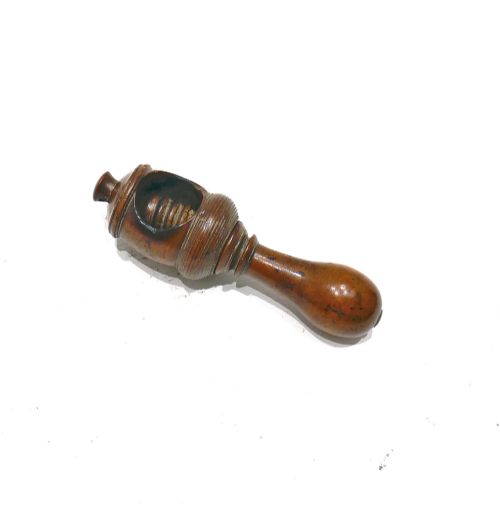
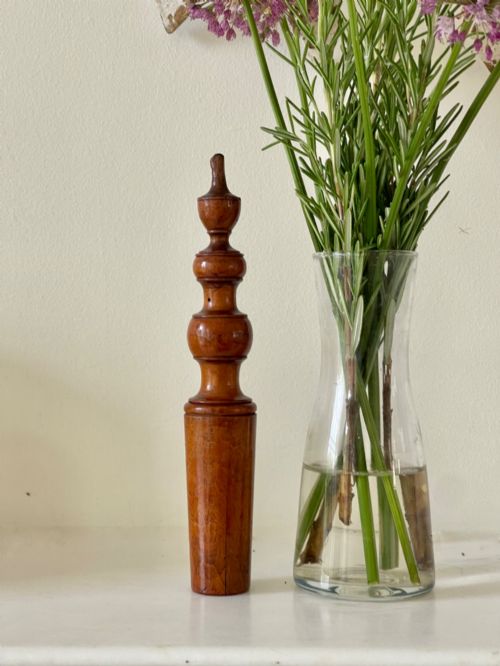
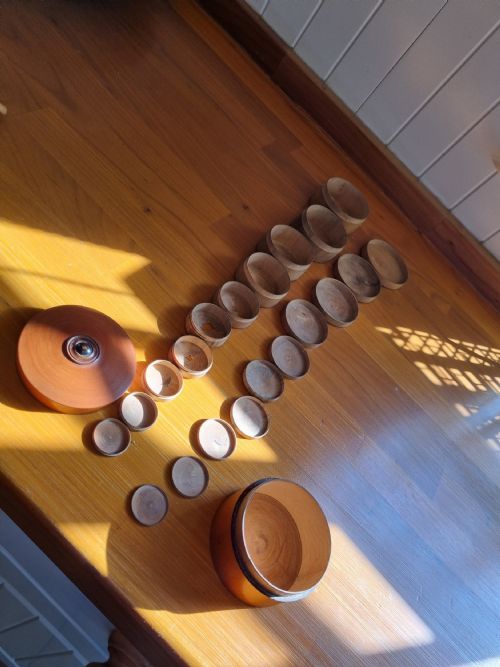
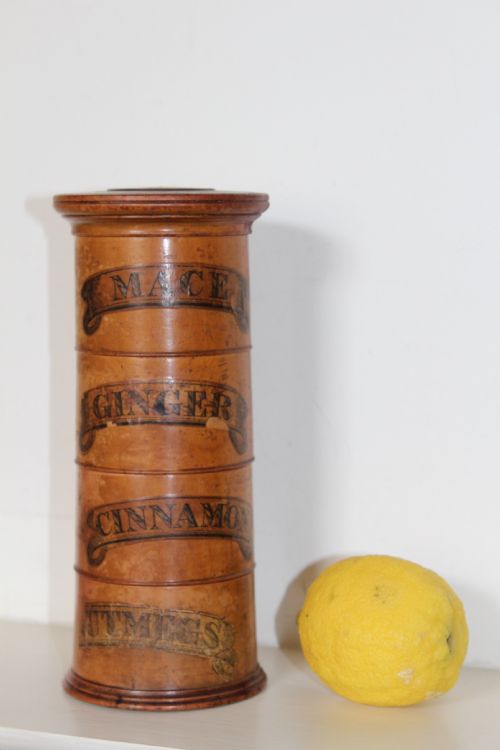
When you search for turned boxwood treen, you are looking at small utility objects shaped on a lathe from dense hardwood, spanning the eighteenth, nineteenth, and early twentieth centuries. These listings include practical domestic and scientific items such as spice towers, nutcrackers, apothecary pill rounders, pocket compass sundials, and children's rattles.
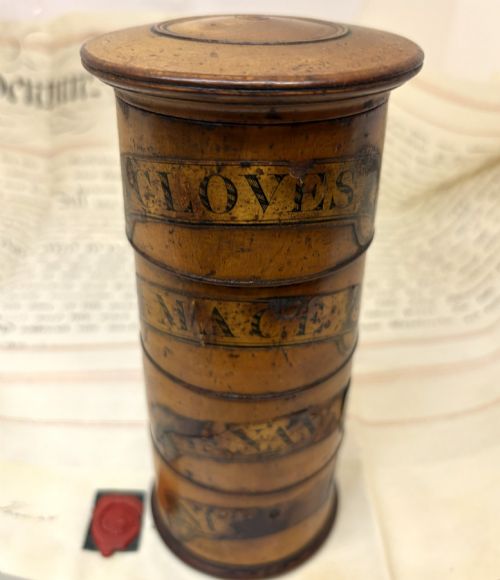
The most common examples you will meet on this page are multi-tiered spice towers and turned containers dating from the Georgian and Victorian eras. These items served everyday domestic or professional purposes in British households before mass production replaced hand-turned treen.
How they were made
The maker shaped seasoned boxwood timber on a lathe, utilising fine cutting tools to create incised ring turnings, threaded sections, and hollowed chambers. Boxwood was chosen specifically for its tight, uniform grain, which allowed for precise details like screw threads and thin walls without splitting.
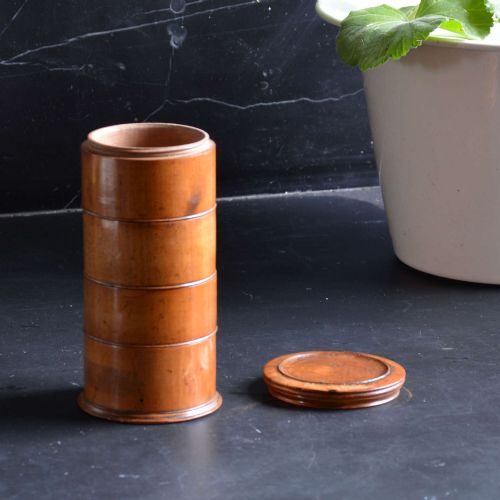
Many of these pieces rely entirely on friction-fit joints and hand-cut threads to secure multiple compartments together, such as nesting spice towers and pill containers. The natural timber was left unpainted, relying on the smoothing action of the lathe and decades of handling to develop a subtle sheen.
Turned Boxwood Treen Retail Price Guide 2026
Typical asking prices for turned boxwood treen among the pieces listed under this phrase on Sellingantiques today, from the lower quarter to the upper quarter. They describe what is for sale here now, not the wider market.
Listings on this site feature boxwood treen spanning the eighteenth, nineteenth, and early twentieth centuries, encompassing domestic, scientific, and playful forms.
What varies in quality
Quality in turned boxwood treen rests upon the crispness of the lathe work and the complexity of the object's construction. Pieces featuring sharp, delicate ring turnings and accurately fitting multi-tier threaded sections demonstrate superior craftsmanship compared to simpler, plain-turned utility pieces.
The condition of the timber and the retention of its original warm tone also dictate the desirability of an object. Examples that retain working multi-part components, such as nested containers or functioning screw threads, represent the higher end of surviving domestic treen.
The Turned Boxwood Treen Glossary
- Treen
- Small handmade wooden domestic objects. The word derives from an old term for tree.
- Boxwood
- A dense, pale yellow hardwood with a very fine grain. It was the preferred material for precision turning and scientific instruments.
- Spice tower
- A stacked, multi-tiered container used for storing various culinary spices. Each section typically screws or fits snugly into the one below.
- Ring turning
- A decorative technique executed on a lathe where parallel grooves and ridges are cut into the surface of the wood.
- Pill rounder
- A hinged apothecary tool used to shape medicinal pastes into uniform spheres. These were frequently turned from boxwood for its resistance to wear.
Turned Boxwood Treen: Frequently Asked Questions
How were spice towers used?
Spice towers held small quantities of valuable culinary spices in separate stacked compartments within a single vertical column. Each tier fitted securely into the next to preserve the aroma and prevent mixing.
They sat on dining tables or kitchen shelves in wealthy households during the eighteenth and nineteenth centuries.
Why was boxwood used for treen?
Boxwood possesses an exceptionally tight and uniform grain that allows woodworkers to cut extremely fine details, such as screw threads and thin walls. Its natural density resists splitting under the pressure of a lathe.
This made it the ideal material for items requiring precision, such as scientific instruments, pill rounders, and small threaded containers.
How do I date turned boxwood items?
Dating relies on stylistic clues, the type of object, and the complexity of the turning methods used. Georgian pieces often feature precise, intricate incised ring work, while later Victorian examples include diverse domestic novelties and folk art.
Comparing the construction methods to dated examples helps narrow down the period of manufacture.
How should I care for boxwood treen?
Boxwood treen requires stable indoor humidity away from direct heat sources and strong sunlight to prevent the timber from drying out or splitting. Gentle dusting with a dry cloth is sufficient for maintenance.
Avoid applying modern waxes or oils unless necessary, as traditional treen benefits from preserving its natural surface evolution.