
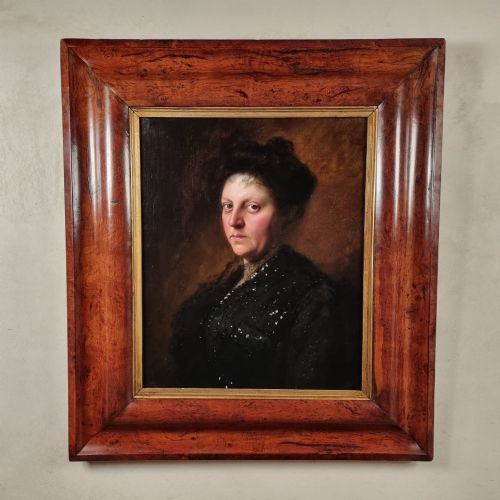


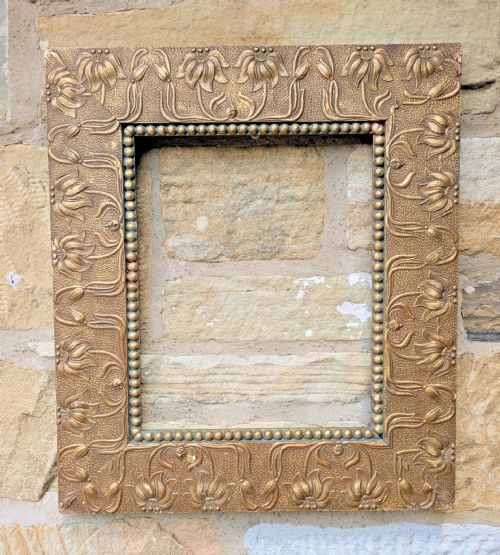


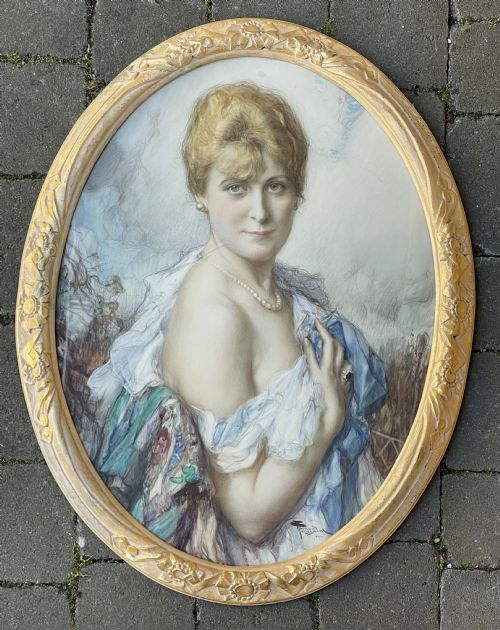


Turn of Century Picture Frame
A turn of century picture frame houses late Victorian and Edwardian works in wood, gesso, and gilt.
Turn of Century Picture Frame
A turn of century picture frame provides housing for works originating from the late Victorian, Edwardian, and Art Nouveau periods. These items typically accompany oil paintings, watercolours, pencil drawings, and prints created around nineteen hundred.
The most common versions met on this page combine wooden structures with gilded gesso ornamentation or simpler mouldings suited to portraits and landscapes. They reflect the stylistic shifts occurring between eighteen ninety and nineteen twenty.
Buyers look for these pieces to display period artwork within authentic surrounds that match the aesthetic of early twentieth century domestic interiors. Each example holds historical artwork or serves as a standalone display mount.
How they were made
Makers constructed these frames primarily using wood, applying layers of gesso to form intricate relief decoration before adding gold leaf or gilding. This technique allowed workshops to produce ornate surface textures characteristic of Art Nouveau and Edwardian design.
Alternative examples rely on plain timber construction or silver plating for photograph displays, demonstrating varied approaches to framing depending on the intended medium. Glass and paper components frequently accompany the primary wooden structures to protect enclosed watercolours and prints.
Listings feature items spanning the years eighteen ninety to nineteen twenty, incorporating materials such as wood, glass, and gilt.
What varies in quality
The depth and hand-carving of gesso ornament separate standard production frames from finer artistic examples. Superior pieces display crisp detailing in floral or linear motifs without the smoothing of edges seen in mass-produced alternatives.
The integrity of the original gilt surface and the preservation of the timber substrate determine the overall standard of a piece. Original matching backboards and intact glass also contribute to the integrity of early twentieth century framing.
Alfred George Morgan·Willem E Roelofs jr·Fernand Toussaint·Charles Prosper Sainton·Eduard Veith·Helen Donald Smith
The Turn of Century Picture Frame Glossary
- Gesso
- A plaster mixture applied to wood frames as a base for gilding or painting. Artisans carved and moulded this substance to create relief decoration.
- Gilt wood
- Timber treated with a thin layer of gold leaf or metallic powder. This finish provided a reflective surface popular in late nineteenth and early twentieth century interiors.
- Art Nouveau
- A stylistic movement defined by organic lines and plant-inspired motifs. Frames from this period often incorporate flowing, asymmetrical patterns.
- Edwardian
- A period spanning the early twentieth century characterised by refined elegance. Associated frames frequently complement delicate portraits and watercolours.
Turn of Century Picture Frame: Frequently Asked Questions
How do I date a frame?
Dating relies on stylistic clues such as Art Nouveau curves or Edwardian proportions, alongside construction methods like traditional mitre joints and timber types.
Examining any accompanying artwork, labels, or backing materials often narrows down the production era to the turn of the twentieth century.
Are these frames suitable for modern art?
These pieces complement historical watercolours, drawings, and oils from the periods they represent. Many buyers pair them with compatible artwork from the same decade.
Placing contemporary pieces inside requires careful measurement to ensure the rebate depth and visible window match the artwork dimensions.
What woods were commonly used?
Workshops utilised various timbers including oak and general hardwoods as the structural base for mouldings. Softer woods were often chosen when the surface was destined to receive heavy gesso and gilding.
The choice of timber typically depended on the weight of the intended painting and the desired decorative finish.
How should I clean gilded frames?
Maintenance requires gentle dusting with a soft dry brush to remove particles without disturbing delicate gesso or gold leaf. Moisture and chemical solvents must be avoided to prevent lifting the historic finish.
Professional conservation is recommended for pieces showing significant flaking or structural instability.