
Turn of Century Candlesticks
Turn of century candlesticks bring together heavy brass, dark turned wood, and period lighting forms that anchor a room with steady domestic history.
Turn of Century Candlesticks
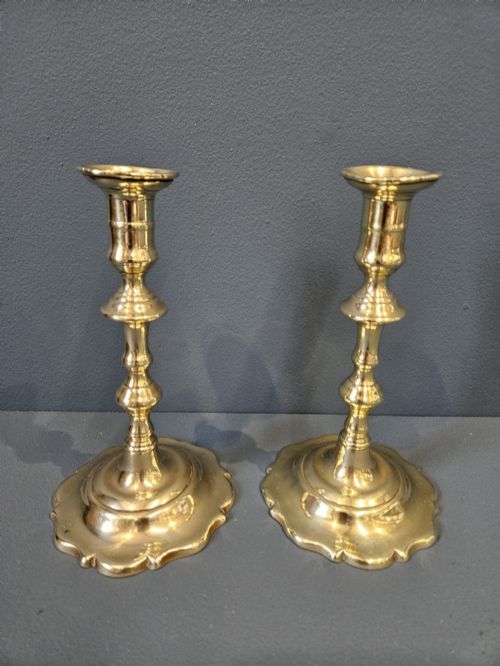
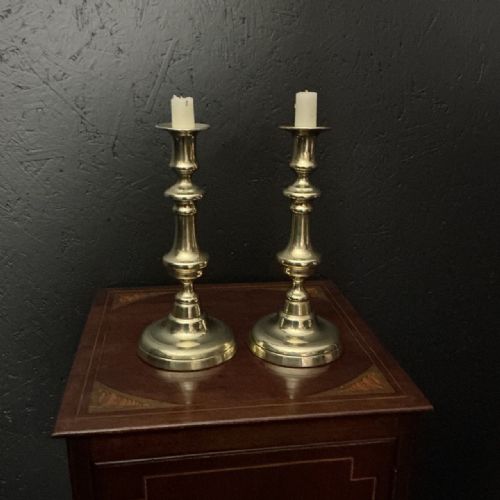
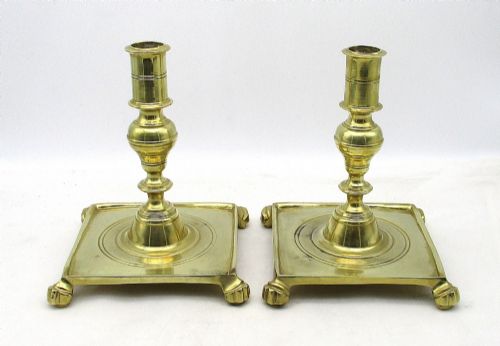
When you search for turn of century candlesticks, you meet domestic lighting hardware spanning the Victorian, Edwardian, and turn of the twentieth century periods. The selection runs from practical brass examples to decorative turned wood and converted table lamps.
Most entries belong to the nineteenth and early twentieth centuries, drawing on earlier Georgian and seventeenth century revival styles. Brass and mahogany dominate, accompanied by lignum vitae, walnut, fruitwood, and silver plate.
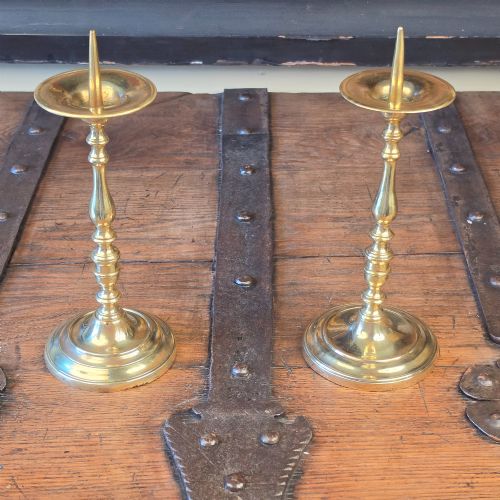
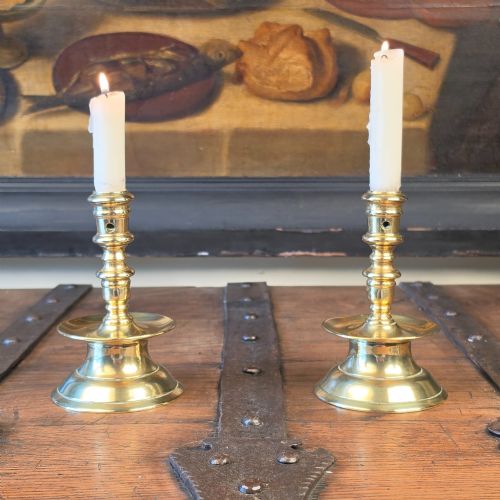
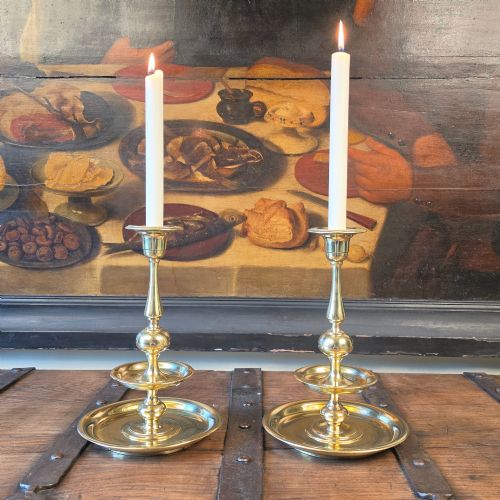
Forms include standard candlesticks, chamber sticks, pricket sticks, and candelabra alongside taller torchere stands and table lamps. Pairs appear frequently alongside individual items created for domestic illumination.
How they were made
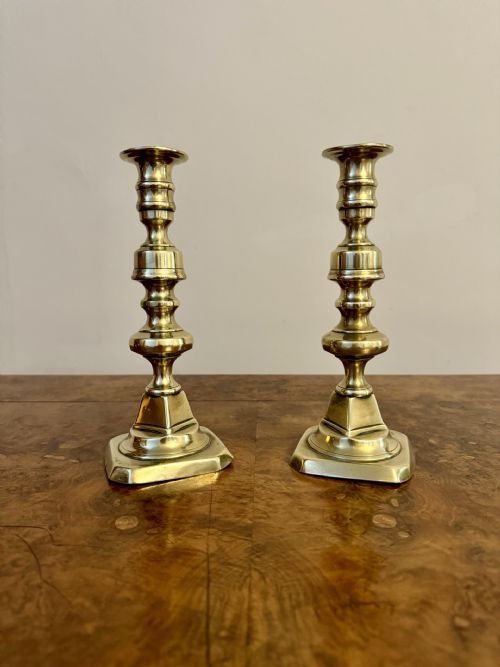
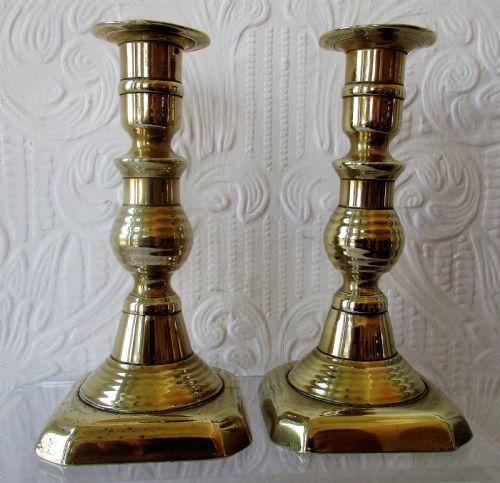
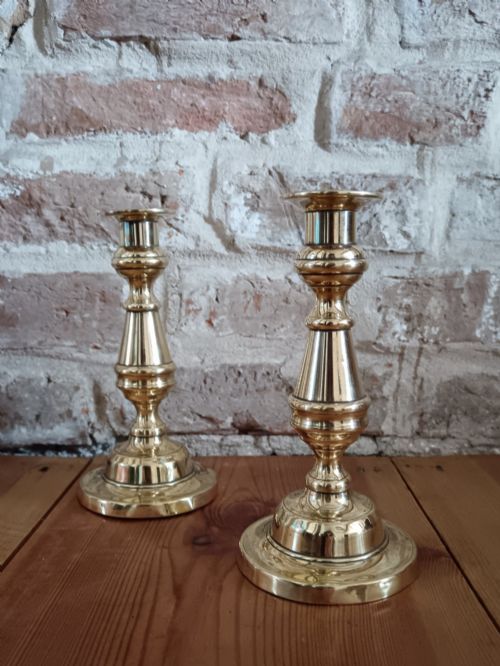
Metal items rely on brass casting and plating techniques, yielding petal bases, ejector mechanisms, and smooth structural shafts. These pieces often combine weighted components to ensure stability under the reach of a candle.
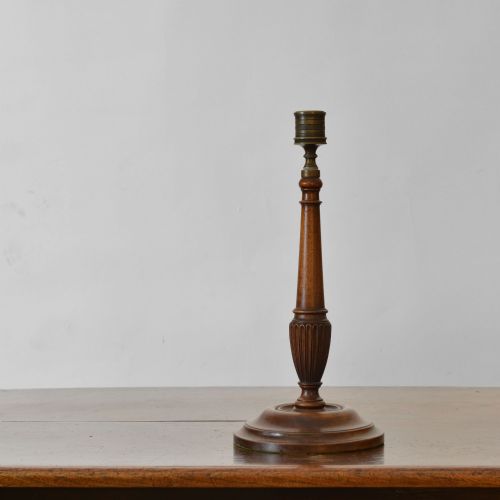
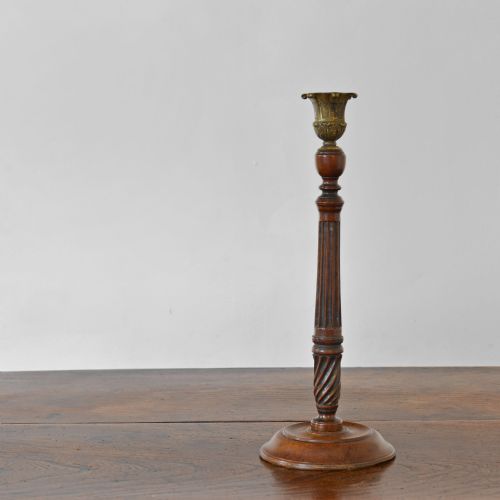
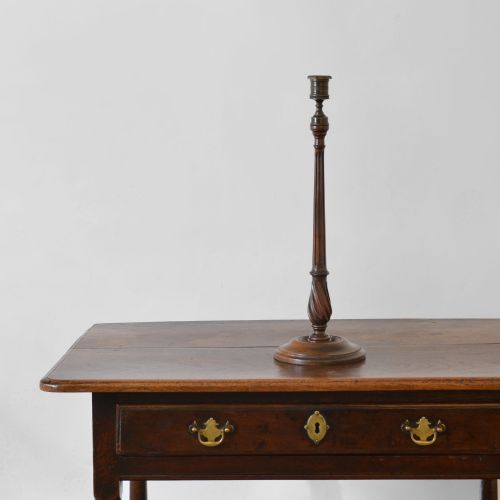
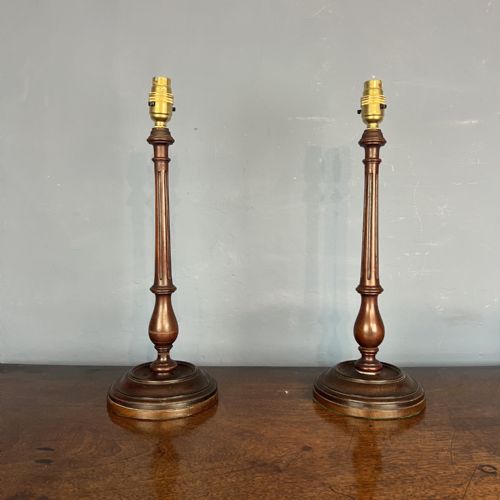
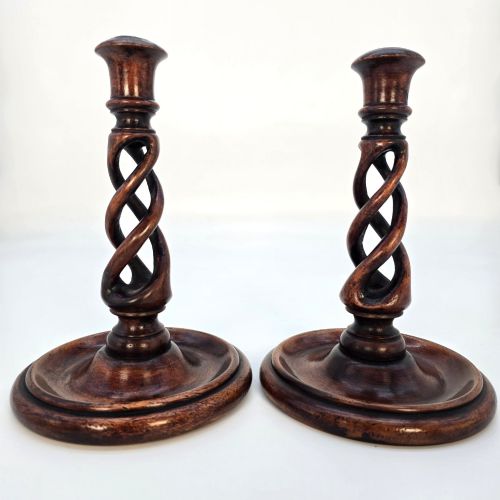
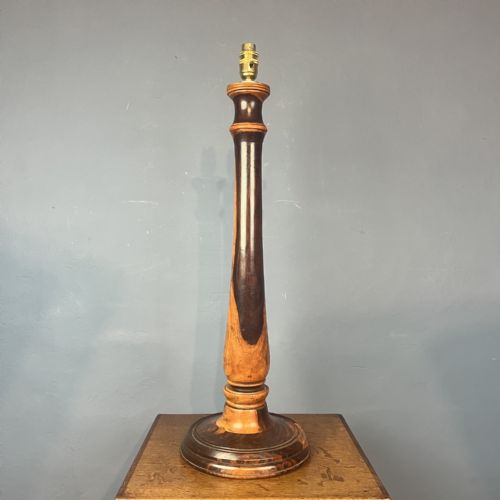
Wooden examples utilise turning on a lathe, producing open twist columns, spiral carver designs, and solid treen bodies in mahogany, walnut, and lignum vitae. Carved pinewood and handpainted surfaces add variety through folk-art and continental interpretations.
Some folk-art candlesticks appear with delightfully uneven twists carved by hands that clearly ignored a ruler.
What varies in quality
Weight and balance set finer examples apart from lighter production items, particularly in cast brass and dense turned hardwoods. A solid feel in the hand indicates substantial metal thickness or dense timber selection.
Precision in the turning and crispness of cast details reveal the maker's hand, where sharp mouldings and clean open twists hold visual clarity. Proportion between the base, stem, and drip pan dictates the elegance of the silhouette.
Abel Landry·WM Tonks & Sons
The Turn of Century Candlesticks Glossary
- Treen
- Small handmade wooden objects produced through domestic or folk traditions. These items display the grain and turned marks of timbers such as boxwood, walnut, and lignum vitae.
- Pricket
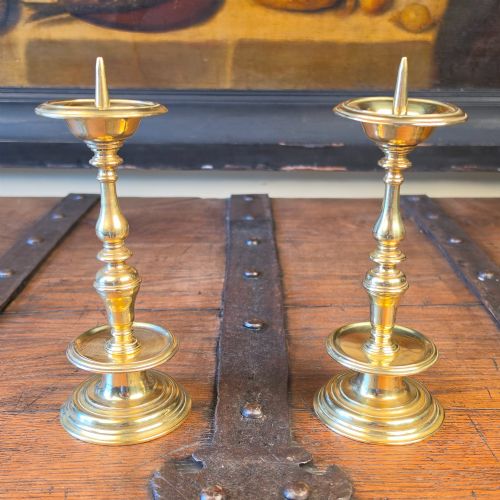
- A sharp metal spike set in the drip pan to hold a candle upright. This medieval form persists in later revival pieces.
- Ejector
- A concealed internal mechanism operated by a thumb slider to lift the candle stub out of the socket. It represents a practical nineteenth century mechanical refinement.
- Torchere
- A tall standing candlestick or pedestal designed to support a light source or decorative object. Examples in the evidence include carved pinewood from continental workshops.
- Jugendstil
- The continental German-language variant of Art Nouveau. It manifests in flowing metallic lines and organic decorative motifs on plated silver wares.
Turn of Century Candlesticks: Frequently Asked Questions
How do I clean antique brass candlesticks?
Wash the metal gently with warm soapy water and a soft cloth to remove surface dust without stripping the aged patina. Avoid aggressive chemical polishes that remove the darker historical tones accumulated over decades of use.
Dry the pieces thoroughly with a lint-free cloth after washing to prevent water spotting. Leave small residual areas of darker oxidation alone, as they confirm the age of the cast brass.
Can I convert these lamps safely?
Many turned wood and metal pieces arrive pre-converted into table lamps using period-appropriate wiring routes. Check the internal channels to ensure modern insulated flex passes without pinching against the original timber or brass.
Consult a qualified electrician to inspect old lampholders and earth connections before regular use. Preserving the outer wooden or metal shell allows you to enjoy domestic lighting while keeping the antique structure intact.
What is the difference between treen and standard wood?
Treen describes small functional domestic wooden items shaped by turning, carving, or cooperating trades. These objects celebrate the dense grain of timbers like lignum vitae, walnut, and fruitwood through everyday utility.
Standard wooden pieces often form parts of larger furniture or architectural fittings rather than small handheld items. Treen candlesticks and chamber sticks remain intimate portable objects shaped for close daily contact.
How do I date a turned wooden candlestick?
Examine the turning style, tool marks left on the underside, and the specific timber species utilised. Georgian and Victorian turnery methods leave distinct concentric ridges that differ from heavier twentieth century production.
Compare the base construction and any integrated brass fittings with dated stylistic parallels in the listings. Timber shrinkage and dry surface patination also offer reliable clues to nineteenth century origin.