




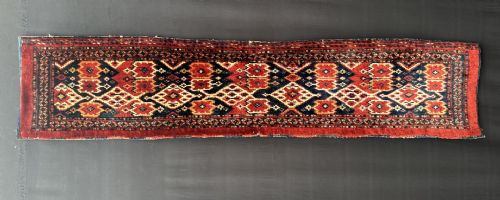


Turkmen Wedding Rug
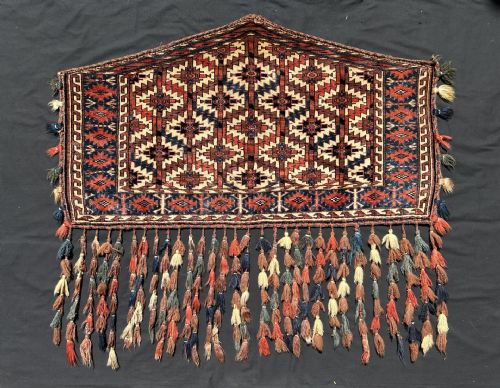
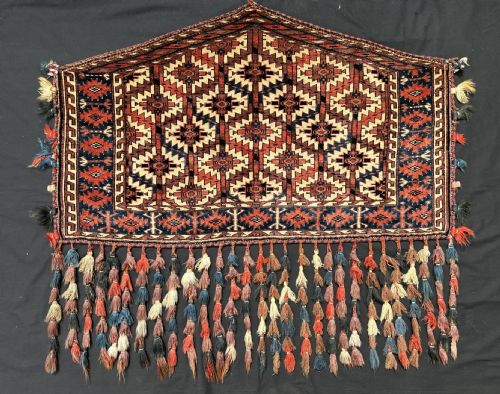
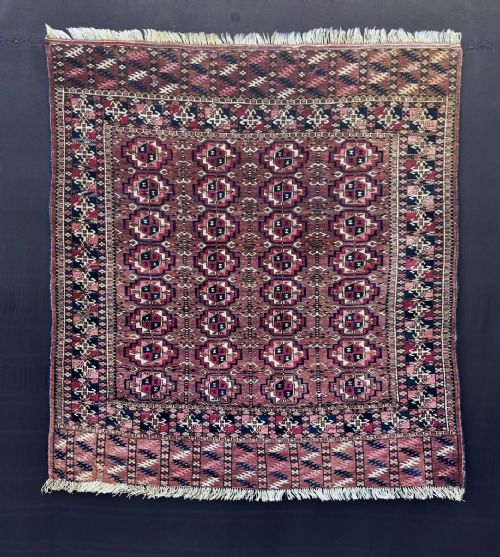
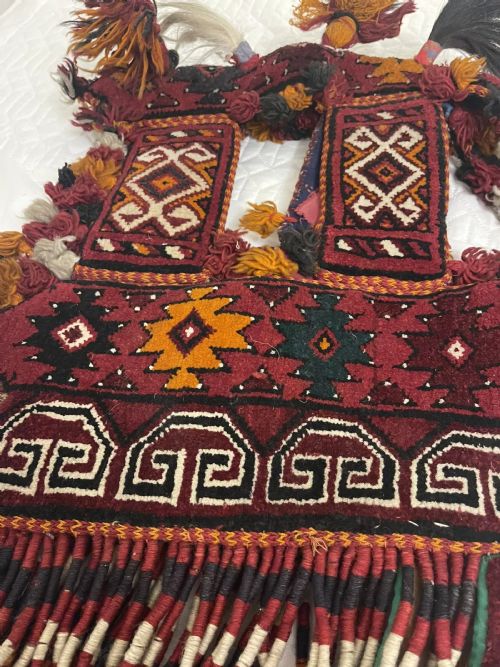
These pieces are a turkmen wedding rug, woven by Central Asian tribal groups as ceremonial dowry trappings.
Turkmen Wedding Rug
A turkmen wedding rug is a ceremonial textile woven by tribal groups across Central Asia, specifically associated with marriage dowries and camel or horse trappings. Collectors seek these pieces for their rich tribal history and distinctive regional patterns.
The pieces on this page originate from the nineteenth century, spanning decades from eighteen-fifty to nineteen-hundred. They appear in forms such as asmalyks, dizlyks, and square dowry rugs.
Tribes including the Tekke, Yomut, Ersary, and Karadashli produced these works across regions like the Trans-Caspian steppes and the Merv oasis. Each group utilised specific design motifs that identify their provenance.
How They Were Made
These textiles are constructed primarily from wool foundations and pile, sometimes incorporating cotton elements or silk highlights. The weavers employed durable knotting techniques suited to nomadic life and ceremonial use.
Natural dyes provide the characteristic colour palette seen in these tribal rugs. Artisans extracted hues from plants and minerals found in the Middle Amu Darya region and surrounding steppes.
Camels dressed in these elaborate trappings must have turned every head on the Trans-Caspian steppes.
What Varies in Quality
The refinement of the wool pile and the crispness of the tribal motifs distinguish individual examples. Finer knot density allows for sharper definition in complex geometric patterns.
Completeness of original elements, such as tassels and full pile preservation, sets certain pieces apart. The depth and stability of the natural dyes also influence the visual strength of the textile.
The Turkmen Wedding Rug Glossary
- Asmalyk
- A pentagonal trapping traditionally hung on the flanks of a bride's wedding camel. These pieces display elaborate tribal guls and geometric borders.
- Gul
- A repeating primary medallion motif used by Turkmen tribes to denote specific clan lineages. Each pattern varies subtly between groups like the Tekke and Yomut.
- Dizlyk
- A knee-cover trapping placed on ceremonial animals during wedding processions. These narrower textiles feature specialised tribal iconography.
- Dowry rug
- A square or rectangular weaving prepared for a bride's household. They incorporate auspicious symbols meant to bring prosperity to the marriage.
Turkmen Wedding Rug: Frequently Asked Questions
What is a turkmen wedding rug?
A turkmen wedding rug is a ceremonial textile created by Central Asian tribes as part of a bride's dowry. These pieces often served as camel or horse trappings during traditional marriage processions.
The textiles feature distinctive regional patterns and tribal guls that identify the specific group of weavers. They represent an important tradition of nomadic and semi-nomadic craftsmanship.
How were these rugs used originally?
Nomadic tribes utilised these weavings primarily as decorative trappings for wedding camels or horses during ceremonial processions. They formed a key part of the bride's dowry display.
Following the ceremonies, families often used them within the yurt as significant household furnishings or wall hangings. Their intricate designs held symbolic meanings related to protection and prosperity.
How do I care for an antique textile?
Keep these wool and natural dye textiles away from direct, prolonged sunlight to prevent fading. Gentle vacuuming without a beater bar helps remove dust from the pile.
Consult a specialist in antique oriental rugs for professional cleaning rather than attempting wet washing at home. Proper support when hanging protects the structural integrity of the foundation.
How can I tell different tribal designs apart?
Tribal attribution relies heavily on the specific primary guls and border motifs woven into the pile. Tekke and Yomut weavers utilised distinct geometric vocabularies and colour arrangements.
Geographic origins such as the Merv oasis or the Middle Amu Darya region also dictated specific stylistic conventions. Comparing the knotting structure and palette aids in identifying the maker tribe.