


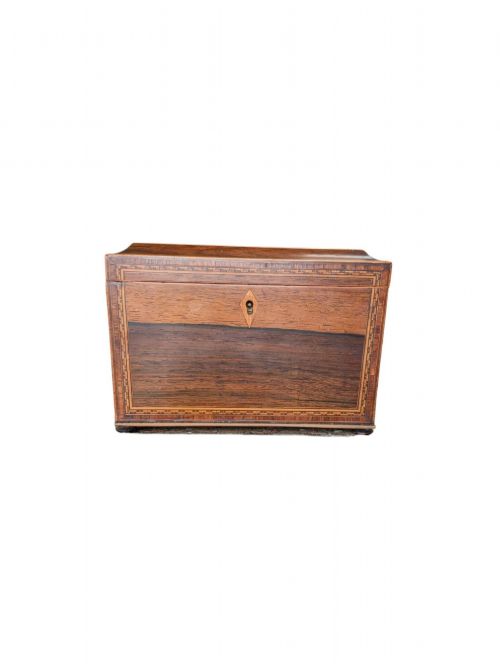


Tunbridge Ware Inlay
Tunbridge ware inlay brings together miniature wood mosaic work and practical household objects from the nineteenth century.
Tunbridge Ware Inlay
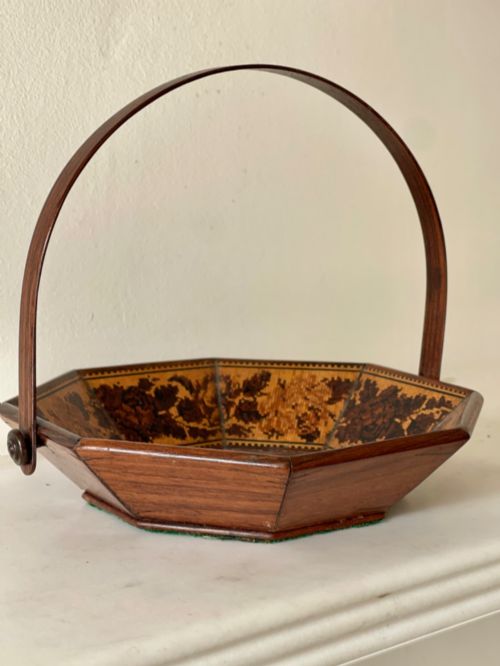
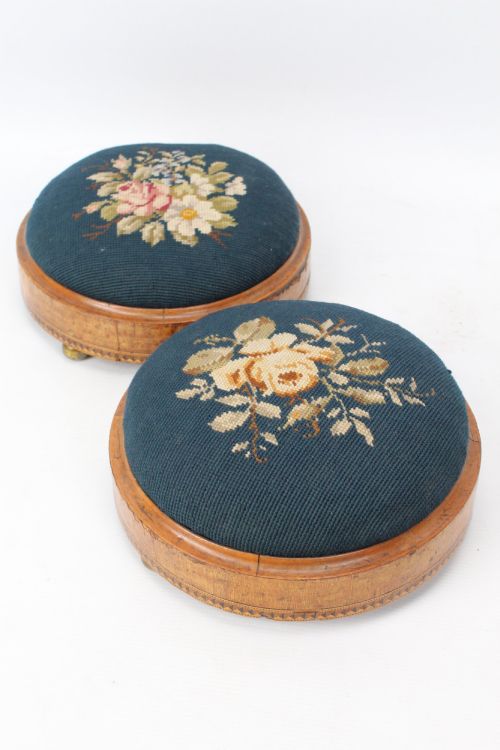
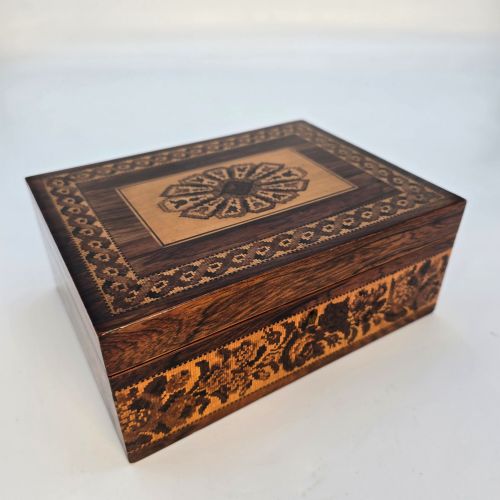
Tunbridge ware inlay consists of small boxes, tea caddies, writing slopes, and footstools decorated with precise geometric or pictorial wood mosaics. The pieces span periods from the Georgian era through the Victorian period, with walnut and rosewood forming the foundation for many items.
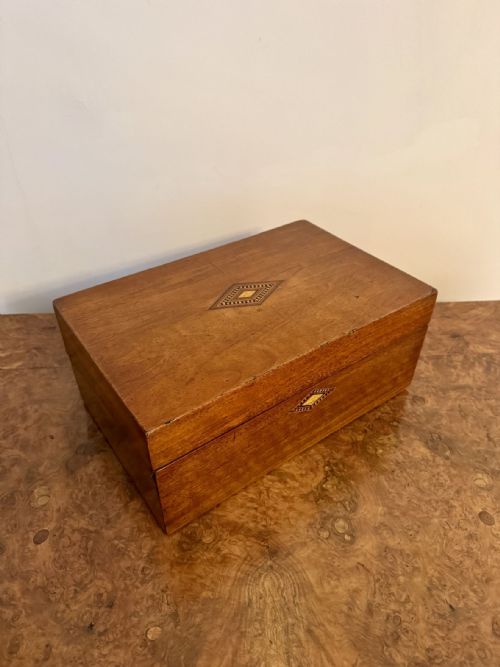
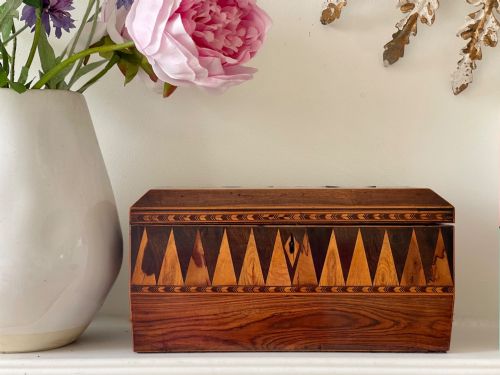
Tea caddies, writing slopes, and sewing boxes represent the domestic objects most frequently found. Makers constructed these items to hold correspondence, tea, trinkets, or needlework materials while displaying intricate banded borders and central mosaic motifs.
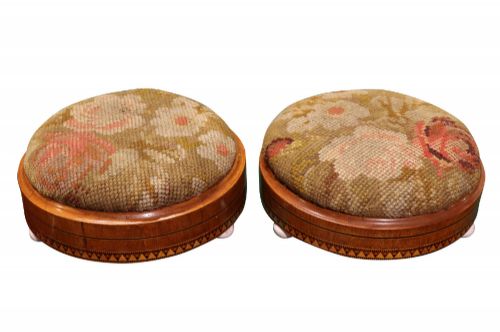
Footstools, card tables, and overmantel mirrors also appear in walnut and mahogany, carrying the characteristic wood inlay work. These larger pieces introduce parquetry panels and mosaic borders into living spaces alongside smaller desk accessories.
How tunbridge ware inlay was made
Craftsmen built these items using dense timbers such as walnut, rosewood, burr walnut, and sycamore as foundations for the surface decoration. Boxwood and various other native and exotic woods provided the contrasting colours required to construct the mosaic patterns.
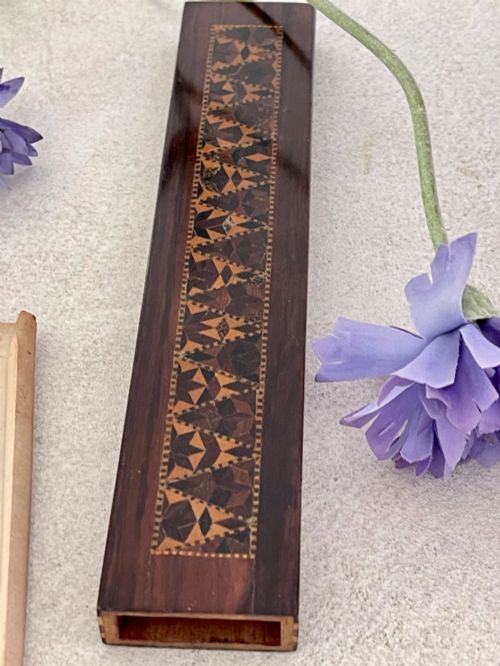
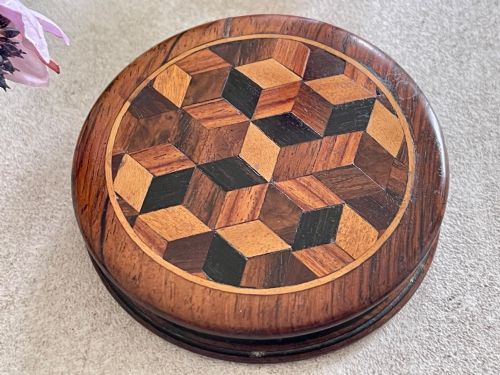
The mosaic imagery relies on assembling thousands of tiny wood blocks cut from multi-coloured rods, then sliced across to form identical pictures or geometric tessellations. This technique created the detailed floral panels, butterflies, and perspective cubes applied to tea caddies and boxes.
Tunbridge Ware Inlay Retail Price Guide 2026
Typical asking prices for tunbridge ware inlay among the pieces listed under this phrase on Sellingantiques today, from the lower quarter to the upper quarter. They describe what is for sale here now, not the wider market.
Intricate wooden butterflies and cribbage boards prove that nineteenth-century desk accessories could handle both correspondence and leisure.
What varies in quality
The precision and complexity of the wood mosaic separate standard boxes from exceptional examples. Finer pieces incorporate elaborate pictorial panels and multiple borders of contrasting wood inlay rather than repetitive geometric bands.
The choice of cabinet timber impacts the overall presence of the object, with figured burr walnut and rosewood offering richer surfaces than plain mahoganies or standard walnut. Fitted interiors with original compartments and working brass locks also elevate the standing of a tea caddy or writing slope.
Edmund Nye·Henry Hollamby
The Tunbridge Ware Inlay Glossary
- Tunbridge ware
- Woodware decorated with mosaic veneer depicting landscapes, flowers, or geometric designs. The craft flourished in Kent during the nineteenth century.
- Parquetry
- Geometric mosaic woodwork formed of wood blocks arranged in patterns on box lids and table tops. This technique underpins the architectural borders seen on many Victorian writing slopes.
- Tea caddy
- A container designed for storing loose tea leaves inside partitioned interiors. These boxes often feature intricate inlay work on the lid and front panels.
- Writing slope
- A portable desk with a hinged sloping lid that opens to reveal a writing surface and compartments for stationery. Fine examples incorporate mosaic borders around the edges.
Tunbridge Ware Inlay: Frequently Asked Questions
What is tunbridge ware inlay?
Tunbridge ware inlay is a form of decorative woodwork featuring mosaic designs assembled from thousands of tiny tinted wood blocks. These detailed panels adorn nineteenth-century boxes, tea caddies, and small desk accessories.
Craftsmen in Kent produced these items using native and exotic timbers to create floral motifs, geometric bands, and architectural views. The resulting surfaces transform everyday receptacles into miniature works of art.
How were tea caddies used?
Tea caddies served to store expensive tea leaves securely under lock and key in the formal rooms of nineteenth-century homes. The hinged lids opened to reveal lidded compartments designed to keep different varieties separate.
Because tea carried significant value during the Victorian and Georgian periods, these caddies combined practical security with decorative inlay work suited for display on a sideboard or table.
How do I care for inlaid wood?
Inlaid wooden boxes and writing slopes require stable indoor humidity away from direct sunlight and heat sources. Extreme temperature shifts can cause the tiny mosaic blocks to expand or contract independently from the base timber.
Maintenance involves gentle dusting with a soft dry cloth and occasional application of appropriate furniture wax to preserve the finish of the walnut or rosewood.
How can I date a piece?
Dating relies on observing the cabinet form, construction methods, timber choices, and the specific style of the mosaic decoration. Georgian and Regency pieces generally display simpler geometric bands, whereas high Victorian examples often feature elaborate floral or pictorial panels.
Signatures or paper labels inside boxes, when present, can identify prominent makers such as Edmund Nye or Henry Hollamby to narrow the period of manufacture.