



Tufted Wingback Armchair
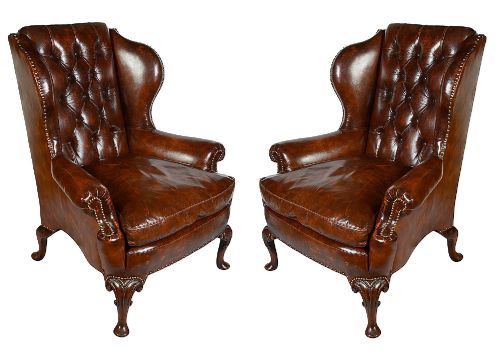
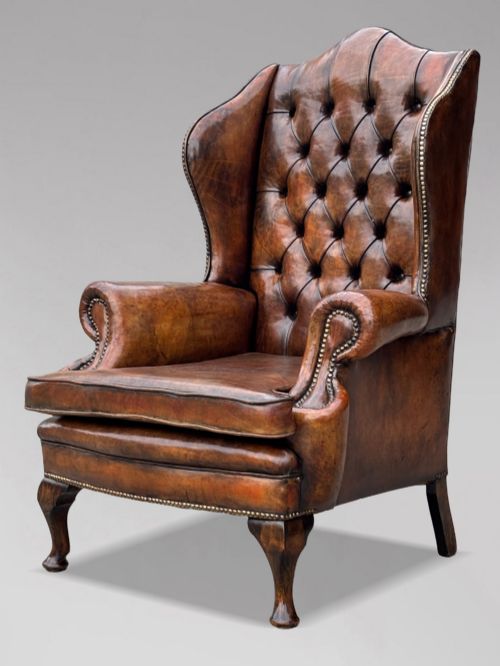
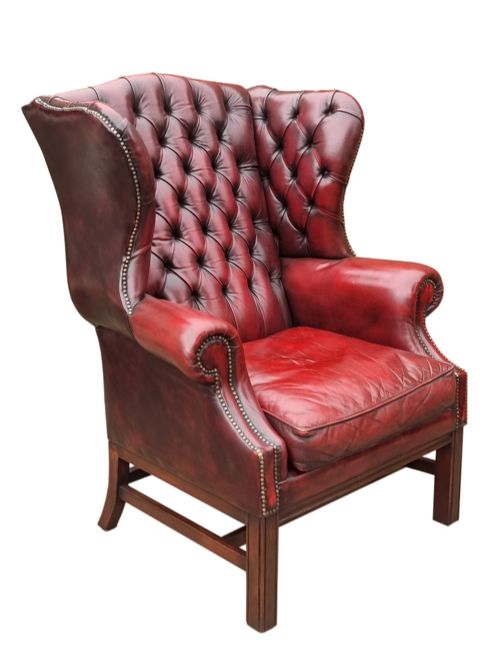
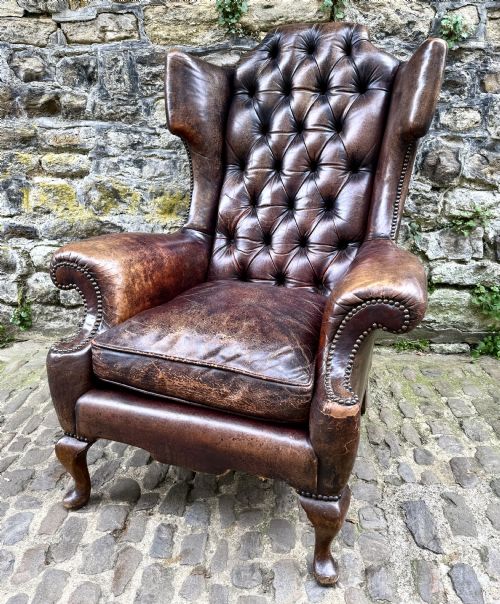
A tufted wingback armchair brings deep buttoning and draught-defying side panels into a room.
Tufted Wingback Armchair
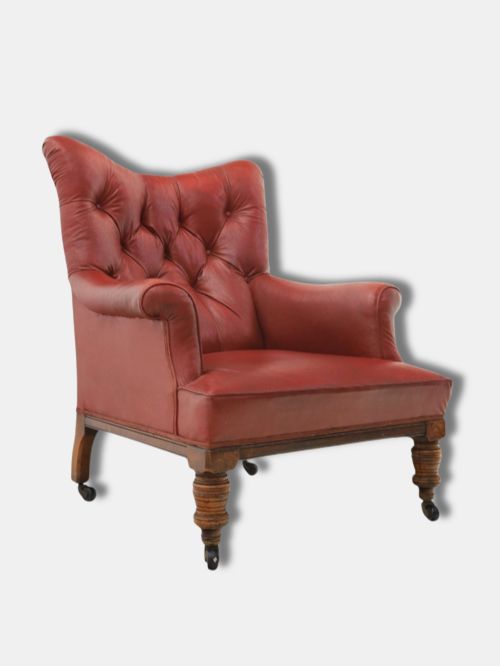
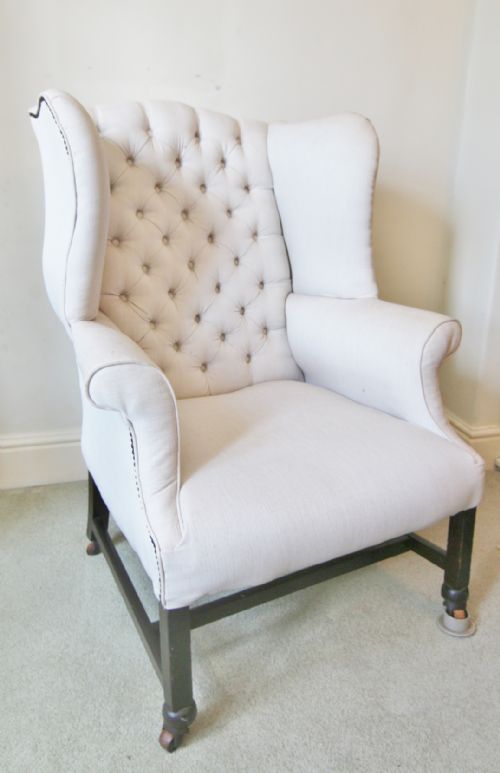
A tufted wingback armchair is a substantial seating form designed to shield the sitter from draughts while providing upright support. These chairs emerge across multiple eras, ranging from 18th Century and Georgian originals to Victorian, Edwardian, and 1920s revivals.
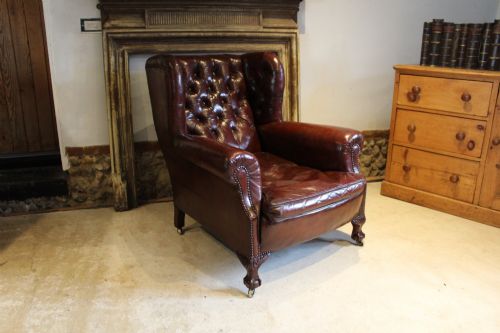
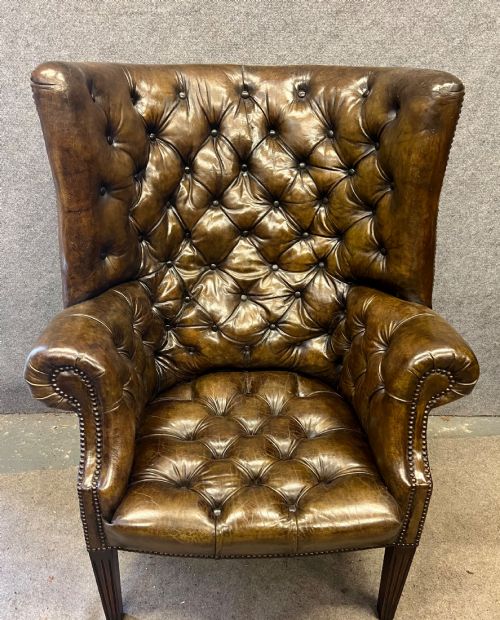
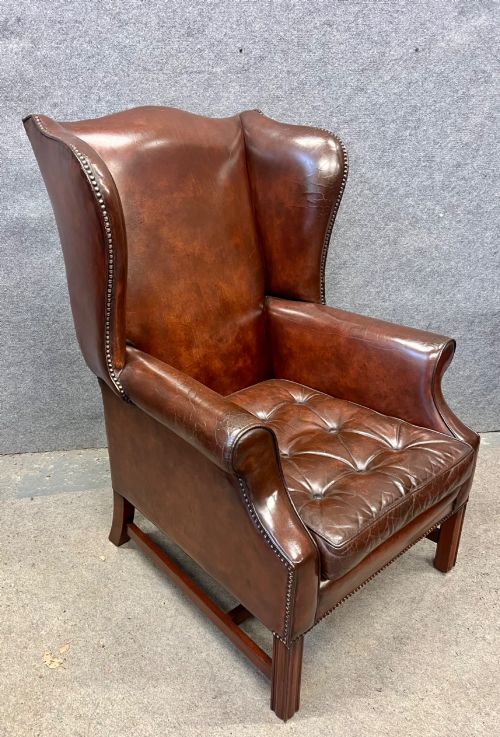
The most common examples on this page are finished in leather with deep buttoning, spanning George III styles through to vintage oxblood and tan Chesterfields. Buyers frequently encounter barrel back variants and generous proportions supported by timber frames.
Judging Quality and Character
The depth of the buttoning and the integrity of the leather separate standard examples from finer pieces. Hand-dyed finishes and rich patination on older hides indicate superior ageing.
Proportion and frame carving dictate the presence of the chair. Generous library proportions and substantial wing contours command greater visual weight than simpler revival iterations.
Tufted Wingback Armchair Retail Price Guide 2026
Typical asking prices for tufted wingback armchair among the pieces listed under this phrase on Sellingantiques today, from the lower quarter to the upper quarter. They describe what is for sale here now, not the wider market.
Several armchairs incorporate lion carved details, letting fierce wooden beasts guard your elbows while you read.
The Tufted Wingback Armchair Glossary
- Wingback
- A chair style featuring extended panels, or wings, attached to the arms and framing the back to trap heat and block draughts. These evolved in the 18th century for fireside use.
- Buttoning
- An upholstery technique where strings or twine pull the covering deep into the padding to secure the stuffing in a diamond pattern. This creates the characteristic tufted surface.
- Barrel Back
- A semicircular seating form where the back and arms merge into one continuous, curved enclosure. It offers a particularly snug seating experience.
- Oxblood
- A deep, dark reddish-brown leather colour frequently associated with traditional Chesterfield seating. It develops a rich patina over decades of use.
- Mahogany
- A durable tropical hardwood prized for its deep reddish-brown tone and strength in chair frames. It was widely utilised throughout the Georgian and Victorian periods.
Tufted Wingback Armchair: Frequently Asked Questions
What is a tufted wingback armchair?
A tufted wingback armchair is a high-backed seat featuring protective side panels and deep button upholstery. These chairs were originally designed to shield sitters from cold draughts near fireplaces.
Today, they serve as prominent statement pieces in studies, libraries, and living rooms. Their combination of enclosed seating and buttoned padding offers both physical comfort and visual presence.
How do I date a leather wing chair?
Dating involves examining the frame timber, the style of the legs, and the method of upholstery. Georgian examples often display finer mahogany woodwork and more restrained wing proportions.
Later Victorian and Edwardian revival pieces frequently incorporate heavier buttoning and bolder carved details. The type of leather finish and wear patterns also help establish the period of manufacture.
Are all wingback chairs antique?
Not all wingback chairs are antique, as the style has been continuously reproduced across centuries. This page includes 18th Century and Georgian originals alongside later Victorian, Edwardian, and 1920s revivals.
Revival pieces from the early 20th century share the traditional form and buttoned leather finish of older originals. Checking the timber construction and wear helps clarify the exact age.
What is a Chesterfield armchair?
A Chesterfield armchair is a fully upholstered seating form characterised by rolled arms of the same height as the back. These chairs are typically finished in deep buttoned leather.
They frequently feature oxblood or brown hides and heavy stud work along the arms and base. The style provides a robust, traditional silhouette well suited to studies and reading rooms.
How do I care for leather upholstery?
Leather upholstery requires regular dusting and occasional conditioning to prevent the hide from drying out. Keeping the leather away from direct heat sources preserves the natural oils and finish.
Gentle cleaning with appropriate leather balms maintains the patina built up over decades. Avoiding harsh chemical cleaners ensures the surface colour remains intact.