



Linen Deep Buttoned Chair
A linen deep buttoned chair brings tactile texture and structured form into a room, offering both upright support and deep seating comfort.
Linen Deep Buttoned Chair
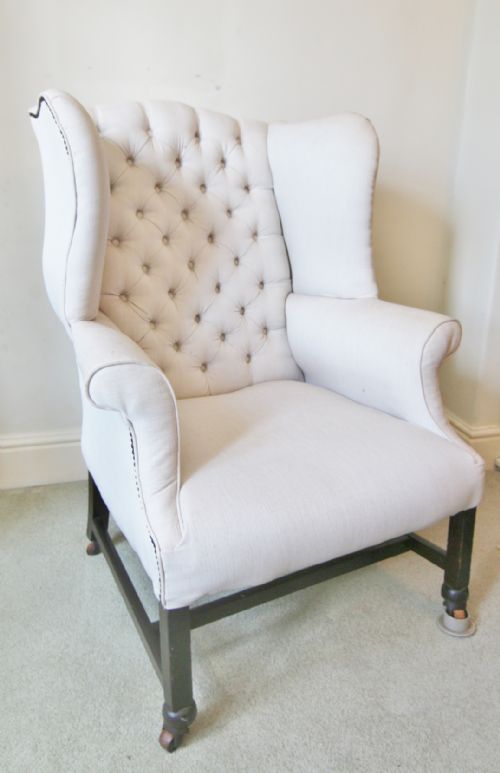
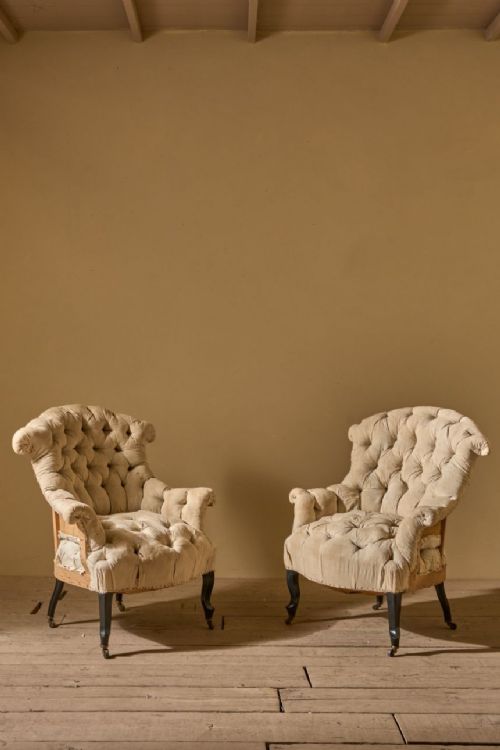
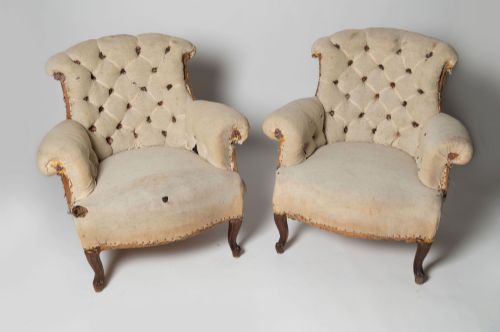
A linen deep buttoned chair encompasses seating forms designed for comfort and presence, spanning armchairs, wing armchairs, and slipper chairs. When exploring this selection, a buyer encounters pieces originating from the 18th century, 19th century, and Edwardian periods.
The styles represented across these listings reflect Georgian, Victorian, French Napoleon III, and Edwardian design traditions. Wing armchairs and open armchairs dominate the heavier forms, while lower slipper chairs offer alternative seating profiles.
How they were made
Construction relies upon robust timber frames built from mahogany, walnut, beech, and general wood. These structural skeletons provide the necessary rigidity to support deep upholstery and tensioned buttoning.
Upholstery methods combine heavy linen or cotton textiles with traditional stuffing techniques, secured by deep buttoning that pulls the fabric tight against the interior padding. Brass elements occasionally accent the structural or decorative components.
Linen Deep Buttoned Chair Retail Price Guide 2026
Typical asking prices for linen deep buttoned chair among the pieces listed under this phrase on Sellingantiques today, from the lower quarter to the upper quarter. They describe what is for sale here now, not the wider market.
Slipper chairs were originally designed low to the floor so ladies could change their shoes without assistance.
What varies in quality
Quality rests upon the integrity of the underlying timber frame and the precision of the joinery. Pieces utilising dense hardwoods like mahogany and walnut maintain structural stability better than softer timber alternatives over centuries of use.
The execution of the deep buttoning and the choice of textile also define the standard of a piece. Tightly woven vintage linen and balanced pleating demonstrate superior craftsmanship compared to loose fabric application and irregular tufting.
The Linen Deep Buttoned Chair Glossary
- Deep buttoned
- Upholstery technique where buttons are driven deep into the padding and secured to the frame in a grid pattern. This method creates characteristic diamond folds that hold the filling firmly in place.
- Wing armchair
- Seating form featuring protective side panels attached to the backrest. These wings historically blocked drafts and retained warmth from fireside placement.
- Slipper chair
- Low-seated upholstered chair traditionally used in bedrooms for dressing. The compact height makes these pieces versatile for casual seating.
- Napoleon III style
- Mid-to-late 19th-century French design aesthetic known for eclectic revivalism and comfortable padded forms. This style frequently incorporates curved frames and buttoned upholstery.
Linen Deep Buttoned Chair: Frequently Asked Questions
What is a linen deep buttoned chair?
A linen deep buttoned chair is an upholstered seating piece featuring fabric pulled into deep tufts by buttons across the backrest or seat. These chairs range from grand 18th-century wing armchairs to 19th-century French models.
They combine structural wooden frames with tactile linen textiles to create supportive and visually textured furniture.
How do I place one in a room?
These chairs function well as focal points in living spaces, studies, or bedrooms due to their sculptural silhouettes and textured upholstery. Pairing a large wing armchair with a reading lamp or placing a slipper chair in a bedroom makes effective use of their proportions.
Their varied historical styles allow them to anchor both traditional and eclectic interior schemes.
How do I identify the period?
Period identification relies upon examining the underlying frame style, woodwork characteristics, and upholstery layout. Mid-Georgian pieces exhibit mahogany frames and distinct wing profiles, while Edwardian examples show lighter construction.
French Napoleon III pieces often feature distinct buttoned back and seat arrangements characteristic of the 19th century.
What materials are used?
Construction materials primarily include timbers such as mahogany, walnut, beech, and general wood for the internal frames and exposed legs. Brass components may appear as decorative or structural accents.
The upholstery consists of durable textiles like linen and cotton, often paired with traditional padding.