


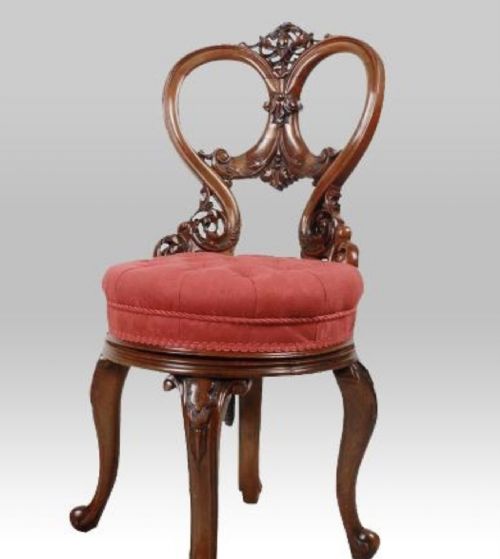


Tufted Rosewood Chair
A tufted rosewood chair brings rich grain and deep buttoning together, offering substantial seating from the nineteenth century.
Tufted Rosewood Chair
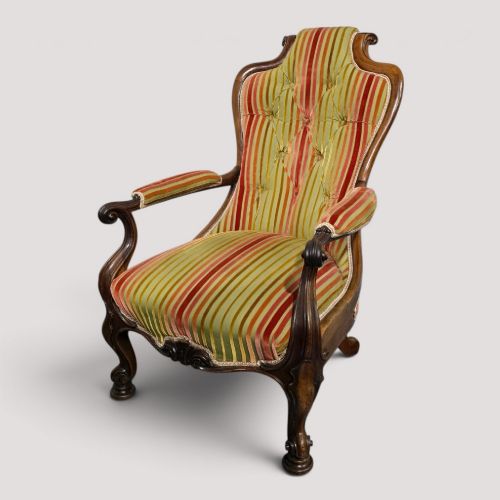
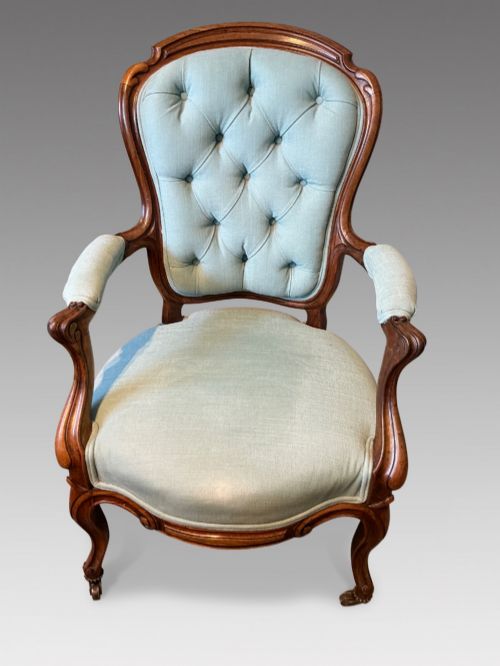
The version you are most likely to meet on this page is a Victorian or Regency armchair featuring buttoned upholstery. Makers of the period utilised rosewood frames alongside forms such as balloon backs, open armchairs, and music chairs.
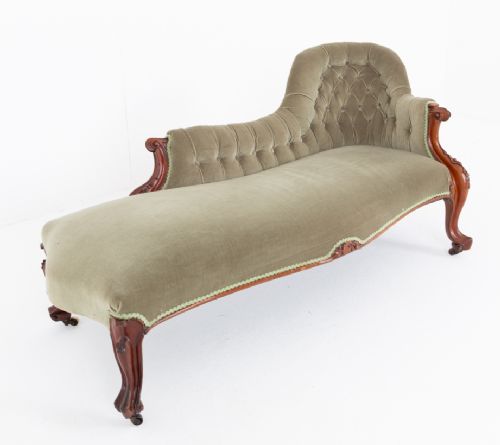
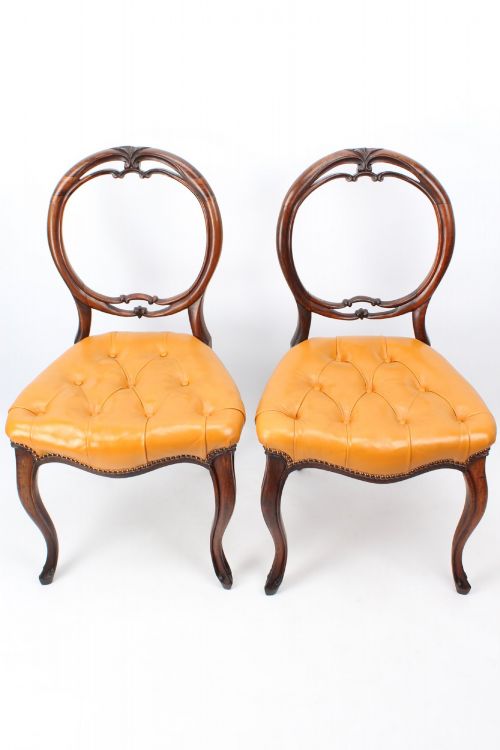
Beyond standard armchairs, the selection includes dining chairs, window seats, and corner bedroom chairs. Each form highlights the deep reddish-brown tones and distinctive grain of the timber paired with textured upholstery.
Materials and construction methods
Frames are constructed primarily from solid rosewood or rosewood veneer over secondary timbers, often shaped with carved showwood details. Artisans incorporated turned elements and supported the heavy frames on brass castors.
Upholstery relies on traditional stuffing techniques finished with leather, velvet, satin, or wool fabric. Deep buttoning secures the textiles to create the characteristic tufted surface seen across armchairs and library chairs.
Listings feature nineteenth-century seating in rosewood, walnut, and brass alongside textiles including velvet, leather, satin, and wool.
Distinguishing quality in nineteenth-century seating
The standard of a piece rests upon the crispness of the rosewood carving and the depth of the timber's grain. Heavier library chairs and large armchairs often demonstrate more ambitious joinery and substantial framing than smaller companion pieces.
Upholstery execution also defines the tier of a chair, from straightforward fabric coverings to finely fitted red leather and complex button tufting. The presence of matching stools or original brass hardware further distinguishes the construction.
Gillows
The Tufted Rosewood Chair Glossary
- Rosewood
- A dense, heavily figured hardwood with rich dark brown and reddish tones utilised for high-status nineteenth-century furniture frames.
- Buttoned back
- An upholstery technique where indentations are formed across the padded surface by pulling twine tightly through to secure buttons.
- Showwood
- Timber framing left visible around the upholstered portions of a chair to display the carved grain and polish.
- Balloon back
- An oval-shaped chair back resembling a balloon, popular during the Victorian era for dining and parlor seating.
- Castors
- Small wheel attachments fitted beneath the legs of heavier armchairs and library chairs to ease movement across flooring.
Tufted Rosewood Chair: Frequently Asked Questions
How do I care for rosewood furniture?
Rosewood requires stable indoor humidity and protection from direct sunlight to preserve the deep reddish-brown grain and polished finish. Regular dusting with a soft, dry cloth maintains the timber.
Avoid harsh chemical cleaners or excess moisture, which can damage the polished surface and affect the underlying wood over time.
What periods do these chairs represent?
The pieces span the nineteenth century, encompassing Regency, William IV, and Victorian stylistic periods. Makers of these eras favored dense tropical hardwoods for formal seating.
Specific dates within the listings point to mid-nineteenth-century production, particularly around eighteen-fifty to eighteen-seventy.
Where were these chairs used originally?
These seating pieces furnished principal rooms such as libraries, parlours, and drawing rooms in large nineteenth-century homes. Larger library chairs provided heavy comfort, while smaller side and nursing chairs suited bedrooms and intimate spaces.
Music chairs and chaise longues served specialised seating needs in private quarters and formal reception areas alike.