

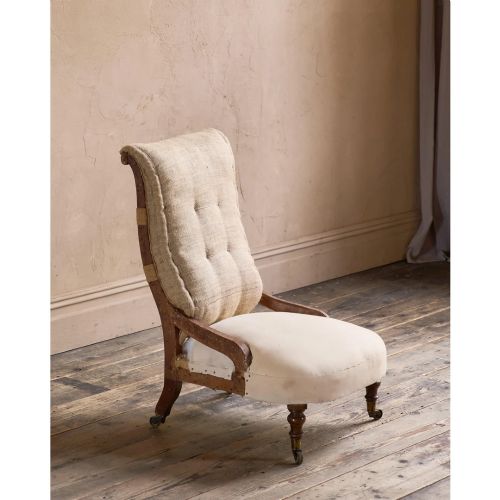
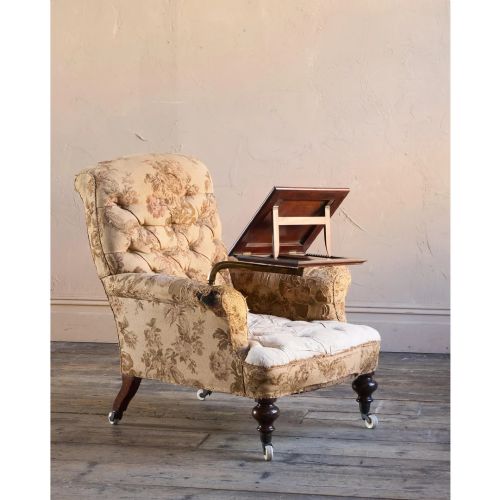

Tufted Library Chair
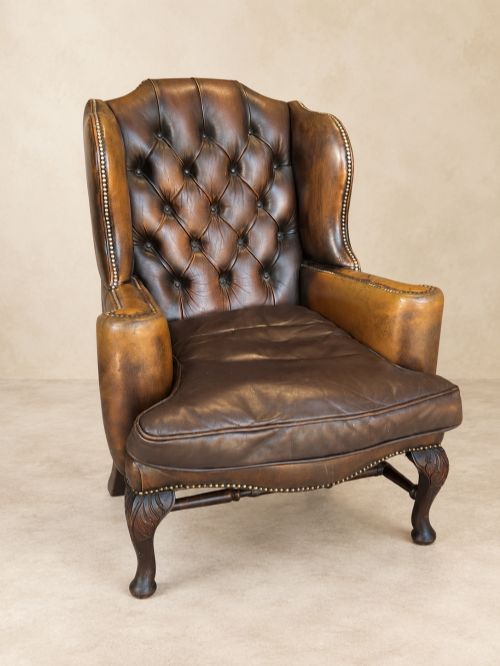
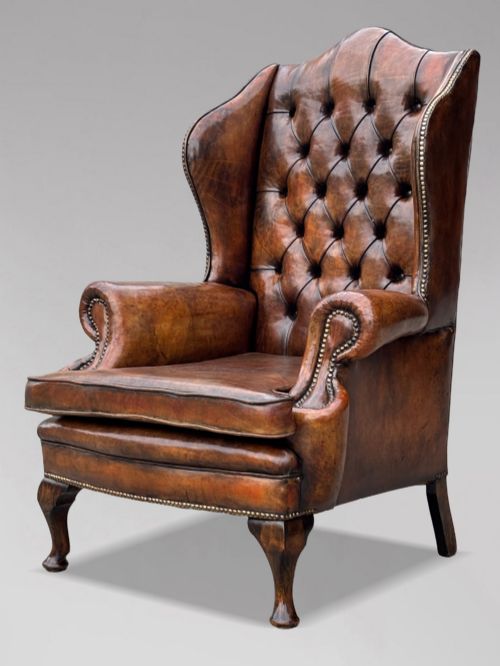
A tufted library chair offers deep seating and buttoned support, shaped for hours of reading in nineteenth-century studies.
Tufted Library Chair
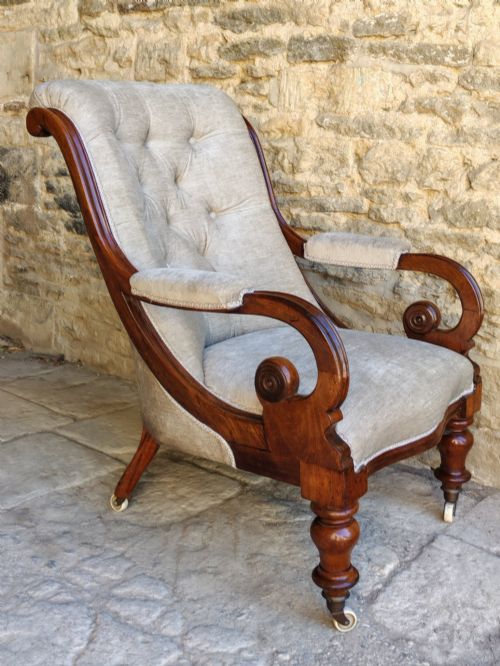
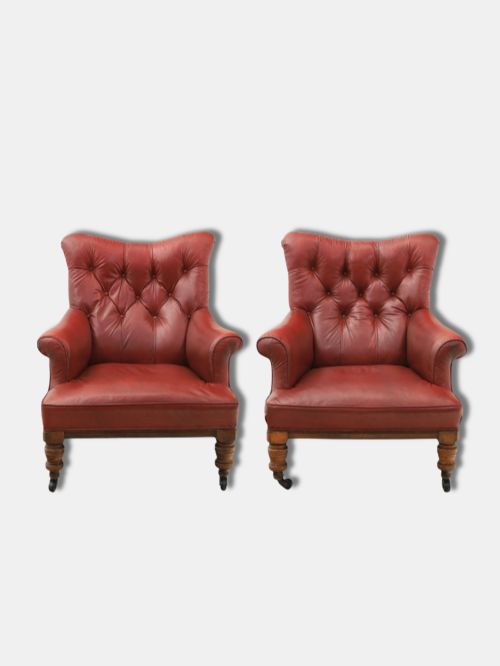
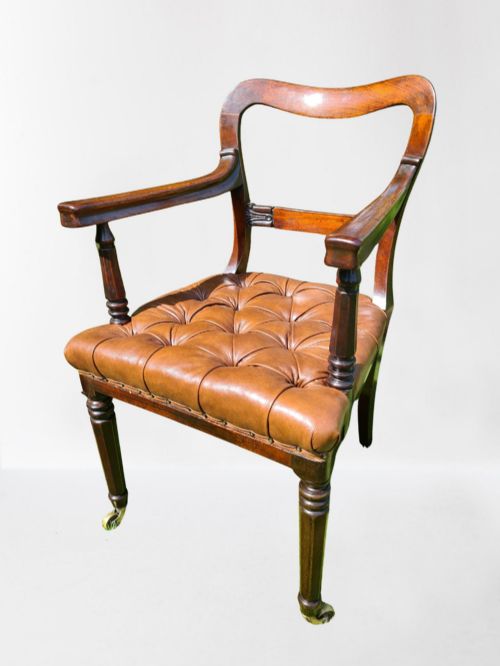
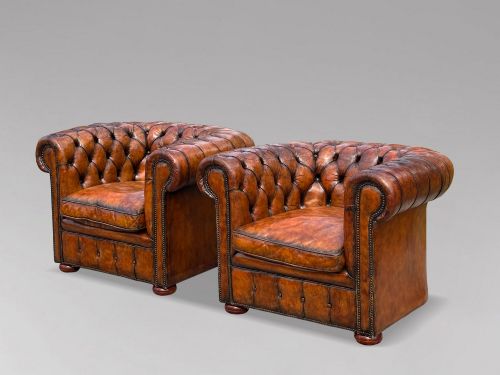
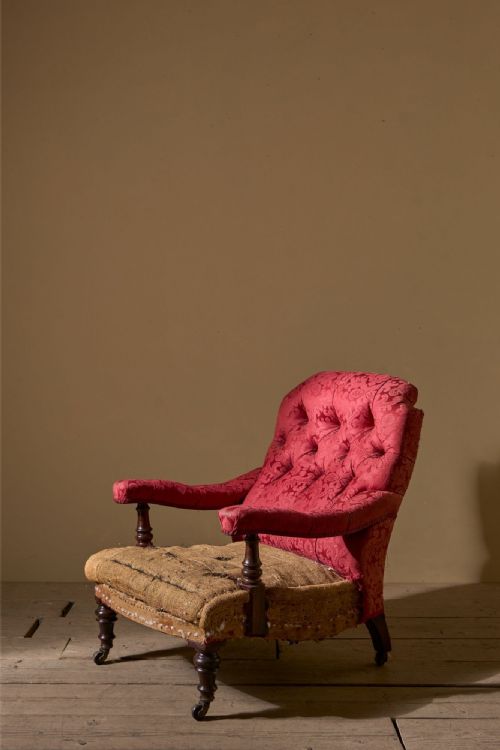
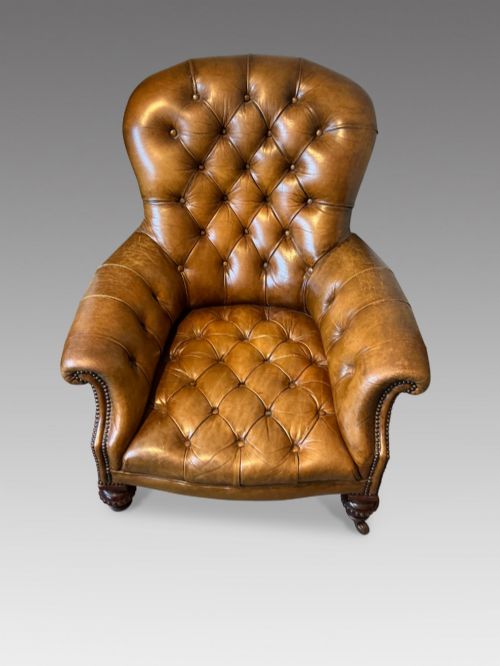
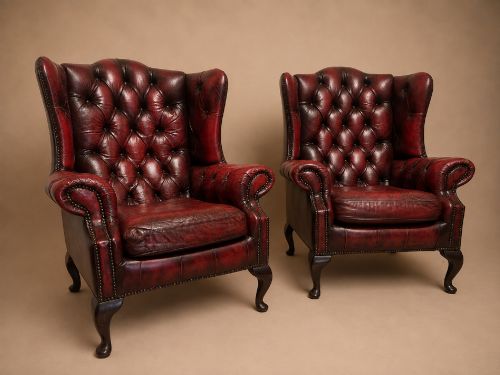
When you search for a tufted library chair, you encounter robust seating designed for Victorian studies, gentlemen's rooms, and country houses. The examples available span the nineteenth century through the early twentieth century, taking the form of wing armchairs, desk chairs, and club chairs.
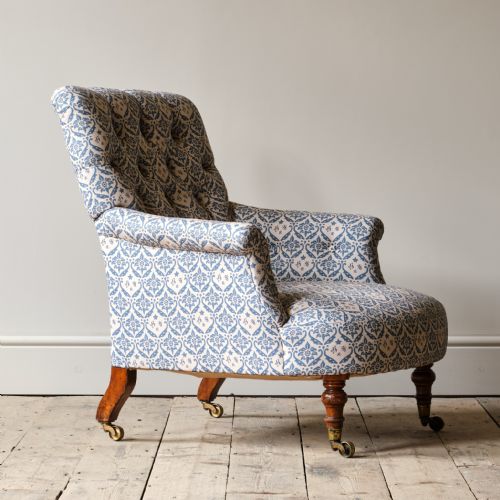
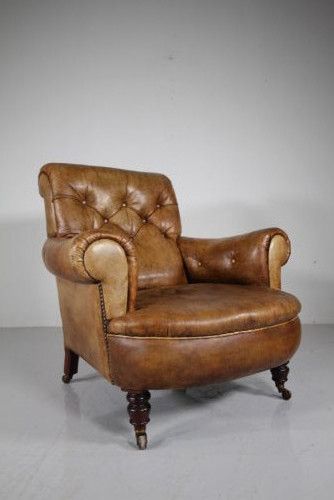
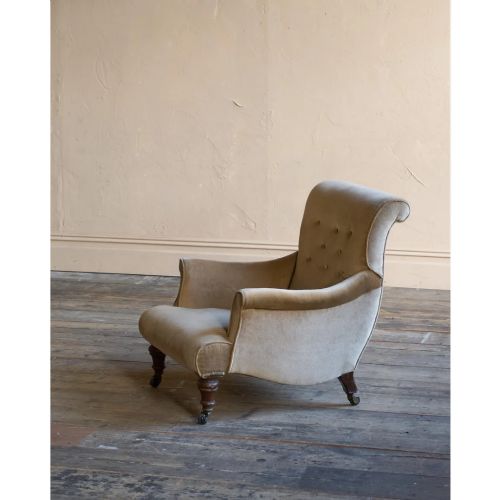
Victorian and nineteenth-century pieces dominate the selection, often featuring deep buttoned upholstery and substantial proportions. You also find occasional Regency and Edwardian variants, alongside mahogany and walnut frames fitted with leather, velvet, or fabric.
Materials and construction
Makers built the structural frames using dense hardwoods like mahogany, walnut, oak, and general timber. These frames support extensive padding upholstered in leather, rexine, fabric, or velvet.
Detailed work involved brass hardware, such as castors or inlay, alongside careful buttoning techniques that secure the upholstery. Carved mahogany and turned wooden elements frequently define the arm supports and legs.
Listings feature nineteenth-century and Victorian periods predominantly, alongside Regency, Edwardian, and 1920s examples.
Evaluating quality
The distinction between standard examples and superior pieces rests on the integrity of the timber frame and the depth of the carving. Heavier scale and refined mahogany or walnut construction elevate a seating piece above routine workshop production.
Upholstery finish also separates grades, particularly the suppleness of the leather and the precision of the buttoning work. Maker attribution further distinguishes exceptional chairs from anonymous output.
Howard & Sons·Holland & Sons·Hindley & Sons
The Tufted Library Chair Glossary
- Buttoned
- Upholstery secured with deep indentations formed by stitching through the padding to create geometric tufts. This technique keeps internal stuffing evenly distributed.
- Wing armchair
- A high-backed seat with side panels designed to shield the sitter from draughts. These panels extend downward from the backrest to form arm rests.
- Desk chair
- A sturdy swivel or fixed armchair configured for use at a writing table. They frequently incorporate mahogany frames and leather pads.
- Rexine
- A leathercloth material manufactured from cotton fabric coated with nitrocellulose. It served as a durable upholstery substitute in the early twentieth century.
Tufted Library Chair: Frequently Asked Questions
What is a tufted library chair?
A tufted library chair is a heavy nineteenth-century armchair featuring buttoned upholstery designed for prolonged sitting in private studies or reading rooms.
These pieces typically combine sturdy mahogany, walnut, or oak frames with leather or fabric coverings to withstand daily use.
How do I identify a Victorian library chair?
Victorian examples generally display dark wood frames, deep buttoned leather upholstery, and substantial proportions intended for comfort. Look for turned wooden legs and traditional sprung seats characteristic of the period.
Makers from this era often incorporated reading stands or brass castors to increase the functional utility of the armchair.
Where should I place a library chair?
These armchairs suit studies, home offices, and living rooms where generous proportions can be accommodated. Their traditional aesthetic pairs well with wooden desks and bookshelves.
Ensure adequate floor space around the chair so the wings and wide armrests do not crowd surrounding furniture.
How do I care for leather upholstery?
Leather upholstery requires regular dusting and occasional treatment with suitable conditioning balms to prevent the hide from drying out. Keep the chair away from direct heat sources and strong sunlight to preserve the colour.
Gentle cleaning maintains the natural texture of nineteenth-century and vintage leather surfaces without harming the material.