

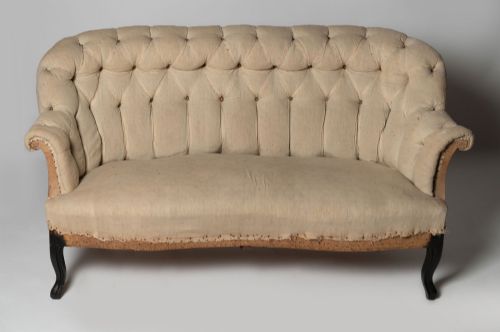
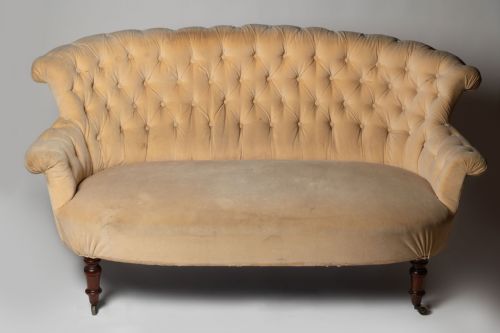


Tufted French Settee
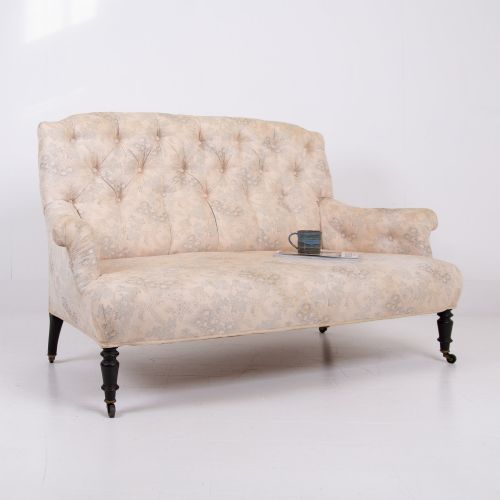
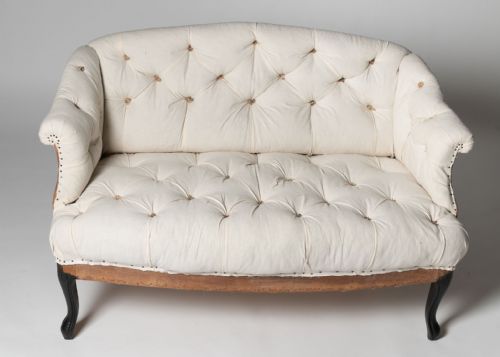
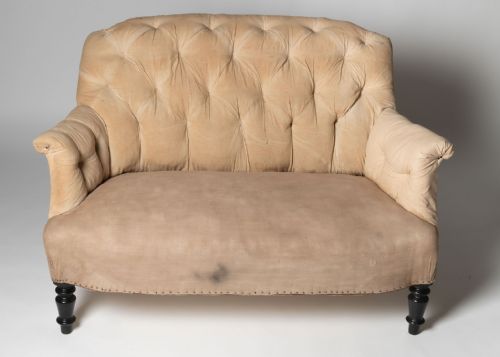
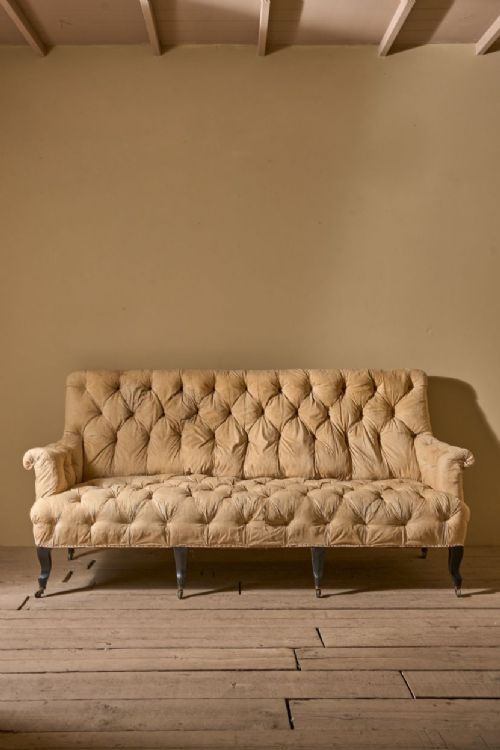
These tufted french settee pieces combine buttoned upholstery and carved timber frames, offering deep seating and traditional elegance for the sitting room.
Tufted French Settee
A tufted french settee brings nineteenth century seating forms into the home, including buttoned high back models and double end settees. Buyers exploring this category encounter nineteenth century pieces alongside Victorian and Edwardian examples.
Makers shaped these sofas for formal parlours and bedrooms, utilising carved walnut, rosewood, and gilt wood. The most frequently met variations include buttoned back designs and cameo settees.
How they were made
Carpenters shaped frames from solid timber such as walnut, mahogany, and rosewood, applying carved detail and gilt finishes. Craftsmen then structured the sprung seats and deep backs before applying textile coverings.
Upholsterers secured velvet, calico, and fabric finishes using buttoning techniques to create distinct tufted patterns. Brass elements and tassel trims frequently finished the upholstered surfaces.
Tufted French Settee Retail Price Guide 2026
Typical asking prices for tufted french settee among the pieces listed under this phrase on Sellingantiques today, from the lower quarter to the upper quarter. They describe what is for sale here now, not the wider market.
One Victorian bedroom sofa arrives complete with a tassel trim, proving that nineteenth century comfort occasionally demanded a swinging fringe.
What varies in quality
The refinement of the timber carving sets superior examples apart, particularly where walnut and rosewood show crisp detail along the frame. Simpler frames rely on painted or gilt surfaces rather than intricate woodwork.
The execution of the buttoned upholstery and the choice of covering material dictate the overall finish. Pieces retaining original gilt or specific textile trims demonstrate higher craftsmanship.
The Tufted French Settee Glossary
- Buttoned back
- Upholstery pulled tight and secured with buttons to form a diamond pattern. This technique provides firm support while adding decorative texture.
- Canapé
- A traditional French settee with an exposed wooden frame and upholstered seat and back. These pieces often reflect Louis XVI or Rococo Revival designs.
- Cameo settee
- A small sofa featuring an oval or cameo shaped padded back panel set within a carved wooden frame. Such pieces typically date from the nineteenth century.
- Gilt
- A thin layer of gold leaf applied to the wooden frame for decoration. This finish appears frequently on French style seating.
- Double end settee
- A sofa form with raised scrolls or backs at both ends rather than a single headboard. This layout allows for versatile lounging positions.
Tufted French Settee: Frequently Asked Questions
Where did people place a tufted french settee?
These settees served primarily in formal drawing rooms, parlours, and large bedrooms during the nineteenth century. Owners utilised them for social gathering and quiet relaxation.
Today, buyers place them in living rooms, hallways, and master bedrooms as statement seating. Their decorative frames suit both traditional interiors and mixed design schemes.
How do I identify a nineteenth century settee?
Examination of the timber frame, joinery, and upholstery style reveals the period of manufacture. Nineteenth century examples often utilise solid walnut, mahogany, or rosewood alongside hand-carved details.
Stylistic cues such as Rococo Revival curves or Louis XVI gilt finishes point to specific decades. Buttoned upholstery and traditional fabric choices further support the dating of each piece.
What is the difference between a settee and a sofa?
Historical terminology often treats settees and sofas interchangeably, though settees traditionally denote lighter, upholstered seating with exposed wooden frames. Sofas frequently imply larger, fully upholstered forms designed for heavier lounging.
In nineteenth century French and Victorian furniture, these boundaries blur depending on the specific maker and style. Both terms describe comfortable multi-seat furniture designed for formal interiors.
Can I reupholster an antique settee?
Reupholstering is a common practice for antique seating that has suffered fabric wear over time. Many pieces survive with worn textiles while retaining sound timber frames and traditional spring structures.
Retaining the original buttoning pattern and using appropriate materials preserves the character of the piece. Buyers often select calico, velvet, or traditional fabrics to match the original aesthetic.