
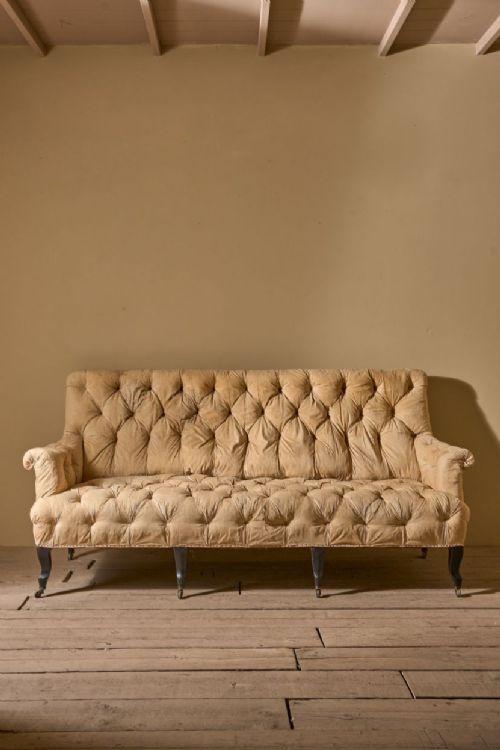
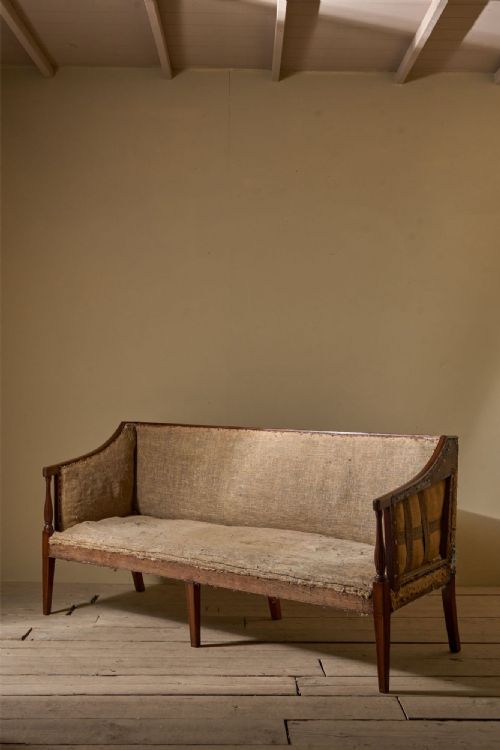


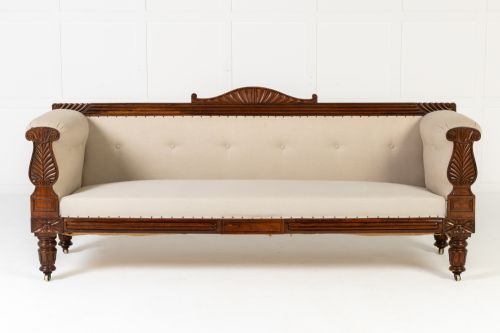


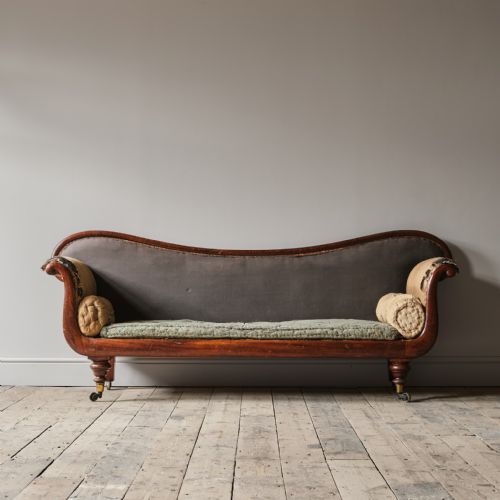


Large Upholstered Settee
A large upholstered settee anchors a room with generous proportions and historic character, bringing deep seating and traditional craftsmanship to domestic spaces.
Large Upholstered Settee
A large upholstered settee spans multiple centuries of design, with nineteenth century examples appearing most frequently alongside pieces from the eighteenth and early twentieth centuries. These seating forms range from formal Regency and William IV frames to relaxed English country house models.
Makers constructed these substantial seats for reception rooms, drawing rooms and grand salons, utilising robust timber foundations to support wide expanses of upholstery. Buyers encounter both show wood designs where carved frames remain visible and pieces requiring complete re-upholstering.
The selection includes specific regional and continental variations, such as French giltwood frames, Irish carved mahogany structures, and Edwardian country house sofas. These pieces function as primary seating furniture, offering room for three or four occupants.
Assessing the pieces
Quality resides in the integrity of the timber frame and the sophistication of the carving, where crisp architectural mouldings or fluid Rococo details distinguish finer workshops from simpler production. The heft and selection of the underlying wood, whether rich mahogany or gilded walnut, set the baseline for longevity.
Proportion and scale dictate the visual success of the piece, as master carvers balanced expansive seating areas with harmoniously weighted legs and arm supports. Pieces retaining original show frames or documented maker attribution carry distinct distinctions in craftsmanship.
Original ticking fabric survives on select Edwardian frames, preserving decades of hidden history beneath the surface.
Howard and Sons·William Birch
The Large Upholstered Settee Glossary
- Show frame
- The exposed wooden structure of a sofa that remains visible around the upholstered sections. Craftsmen carved these frames to display decorative styles like Rococo Revival or Regency motifs.
- Giltwood
- Timber treated with a thin layer of gold leaf applied to the carved surface. This finish appears frequently on formal French and English salon settees.
- Hessian
- A dense woven fabric used as a foundational layer in traditional upholstery work. It provides structural support beneath top covers like velvet or linen.
- Ticking
- A tightly woven cotton or linen textile traditionally used to contain stuffing materials inside upholstered furniture. Original ticking denotes untouched interior construction.
- Chaise
- An extended seating form designed for reclining, often sharing proportions with large settees. These pieces appear in nineteenth-century salon contexts.
Large Upholstered Settee: Frequently Asked Questions
How do I choose the right size?
Measure your floor space carefully, accounting for the generous depth and width inherent in these substantial seating designs.
Consider the clearance needed around the piece for movement within a drawing room or reception space.
Can I use these for daily seating?
Most of these pieces were built for heavy domestic use in grand country houses and formal reception rooms.
Their robust timber frames and deep seating provide durable comfort for modern living areas.
What does reupholstering involve?
Pieces described as needing upholstery allow you to select fabrics that match your interior scheme.
Traditional methods often utilise hessian and existing frame foundations to restore the piece properly.
How do I identify a Regency frame?
Look for architectural lines, classical motifs, and dark timber such as mahogany or rosewood.
These pieces typically date from the early nineteenth century and feature restrained decorative carving.