



Tufted Fainting Couch
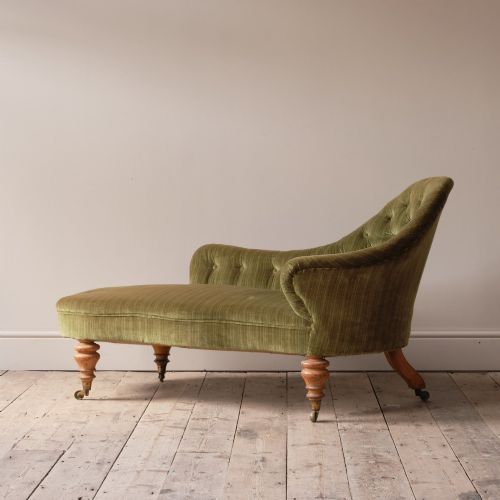
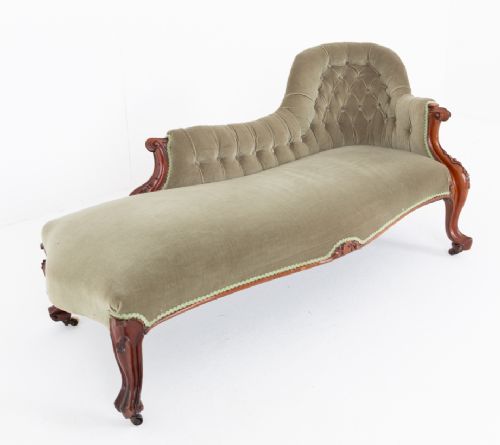
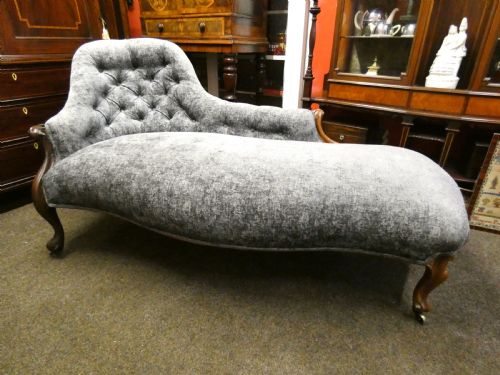
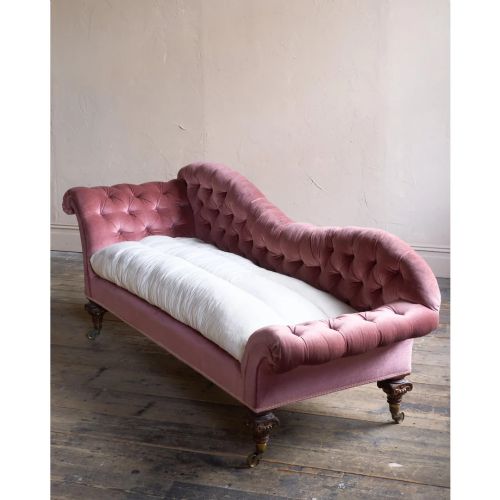
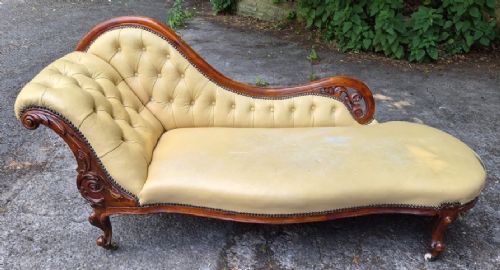
A tufted fainting couch offers a reclining form designed for nineteenth-century repose, combining sturdy timber frames with deep buttoning.
Tufted Fainting Couch
When you search for a tufted fainting couch, you encounter nineteenth-century chaise longues, daybeds, and scroll-ended day beds spanning the Victorian and Regency eras. These pieces provide an elongated seat with a raised end for resting in a semi-reclined posture without lying flat.
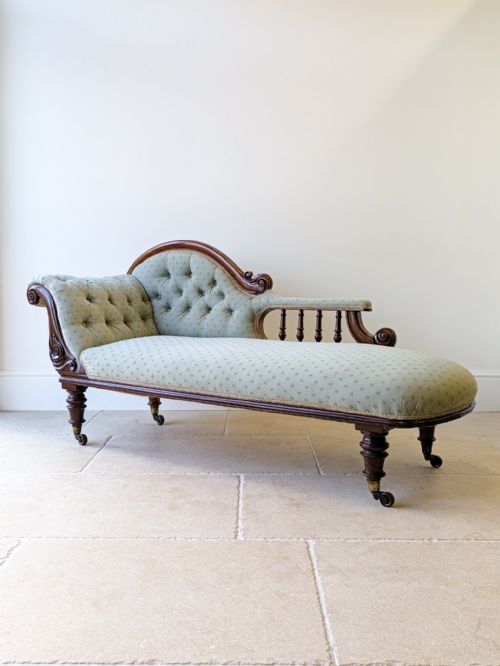
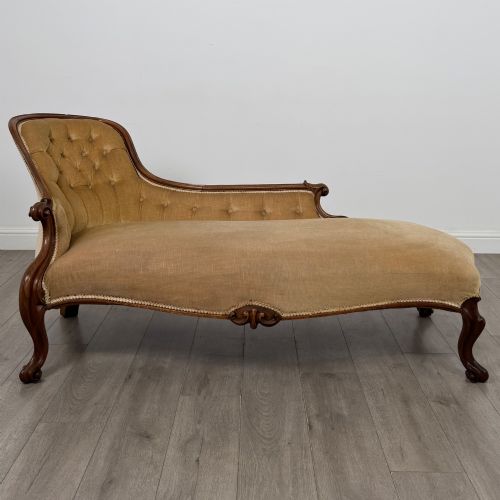
The versions most common on this page date from the Victorian period, frequently formed from rosewood or mahogany with upholstered bodies. Makers of the time shaped these daybeds and settees with carved wooden frames and buttoned upholstery designed for formal parlours and drawing rooms.
How they were made
Makers built the structural frames of these pieces using dense hardwoods such as mahogany and rosewood, often carving details directly into the wood along the show-rails and legs. Brass castors frequently support the feet beneath turned or fluted pillar supports.
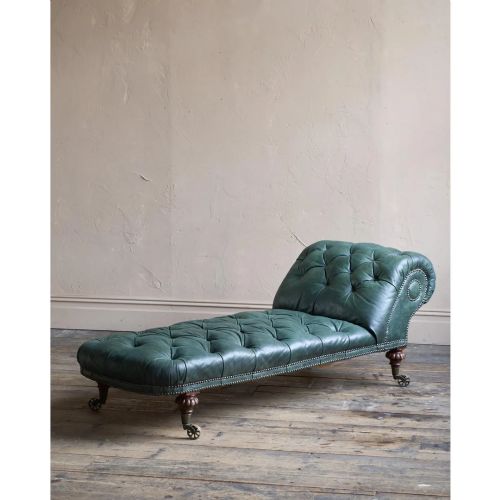
Upholstery relies on buttoning techniques across velvet, leather, and fabric surfaces, securing the padding in a diamond pattern. This method shapes the profile and holds the interior stuffing firmly within the upholstered body.
Tufted Fainting Couch Retail Price Guide 2026
Typical asking prices for tufted fainting couch among the pieces listed under this phrase on Sellingantiques today, from the lower quarter to the upper quarter. They describe what is for sale here now, not the wider market.
Victorian etiquette permitted ladies to recline publicly on these couches without removing their tightly laced corsets.
What varies in quality
The refinement of the timber carving and the weight of the underlying frame separate standard examples from finer works. Higher quality pieces display crisp carving along rosewood or mahogany rails, whilst simpler items rely on plain moulded wood.
The execution of the upholstery and the choice of covering material dictate the overall standard of the finish. Dense buttoning and well-chosen velvet or leather distinguish more ambitious workshops from basic production.
Howard & Sons·H Goodall & Sons·Holland & Sons·Jas Shoolbred·Miles & Edwards
The Tufted Fainting Couch Glossary
- Chaise longue
- An elongated seat or day bed allowing a person to recline with legs supported. The term translates from French as long chair.
- Buttoning
- An upholstery technique where buttons are pulled through the padding to create tufted indentations. This secures the filling and gives a patterned surface texture.
- Day bed
- A piece of furniture serving as both a sofa and a bed for resting during daytime hours. These forms date across the Regency and Victorian periods.
- Spoonback
- A chair or settee backrest shaped in a concave oval resembling the bowl of a spoon. It fits the human form closely for support.
- Castor
- A small wheel mounted on a swivel attached to the foot of a piece of furniture. It permits movement across carpets and flooring.
Tufted Fainting Couch: Frequently Asked Questions
How do I use a fainting couch today?
These pieces function well as daybeds in studies or living rooms, providing a comfortable spot for reading or resting.
Their elongated form fits neatly against a wall or serves as a room divider when the carved back faces outward.
Were these couches really used for fainting?
Victorian domestic tradition linked these reclining seats to restrictive garments that made semi-reclining necessary.
In practice, households utilised them for daytime relaxation and afternoon lounging rather than medical emergencies.
How do I distinguish Victorian from Regency examples?
Regency pieces tend to show neoclassical influences with cleaner lines and lighter wood tones.
Victorian versions generally feature heavier carved rosewood or mahogany frames with deep buttoned upholstery and ornate details.
What materials cover these historic daybeds?
Original and replacement coverings include silk velvet, damask, leather, and woven fabric.
Buttoning secures these textiles tightly across the padded frame to maintain the shape.