

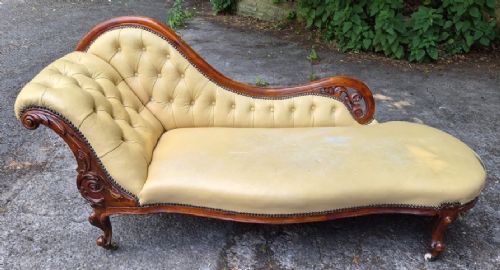


Tufted Chaise Longue
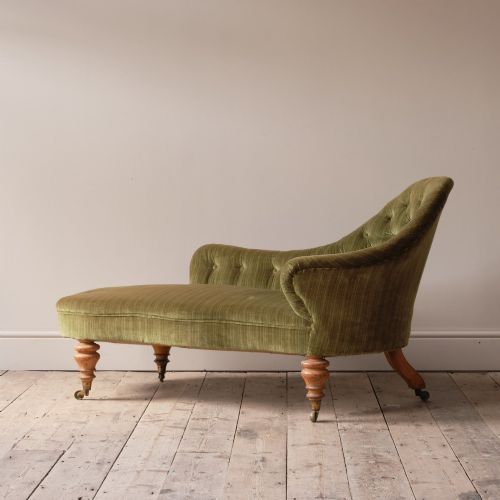
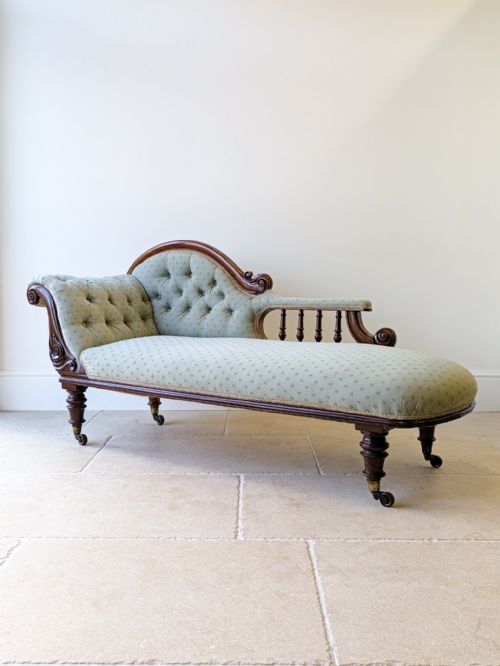
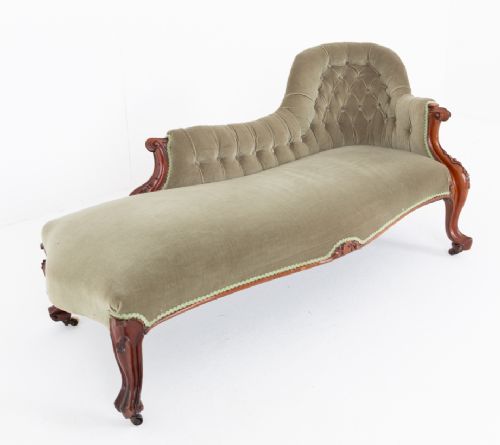
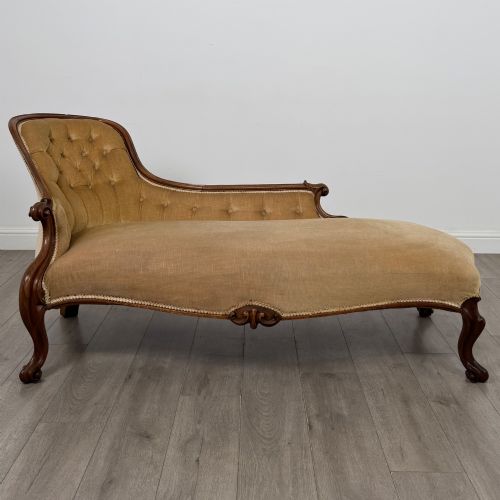
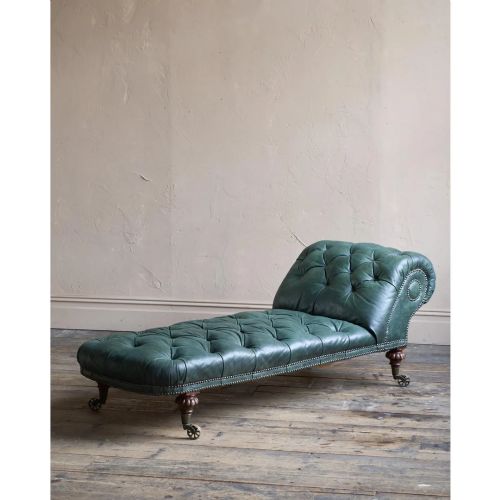
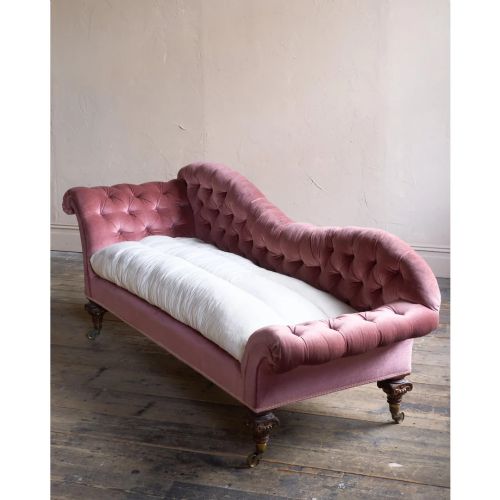
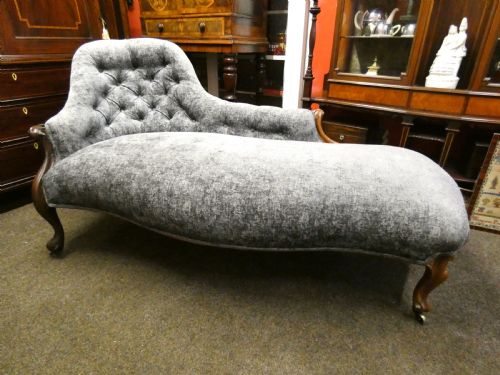
A tufted chaise longue offers a reclining seat designed for interior lounging, combining period timber frames with deep button upholstery.
Tufted Chaise Longue
A tufted chaise longue is a lengthened seating form intended for reclining, appearing frequently across nineteenth-century and Victorian domestic interiors. Buyers searching for a tufted chaise longue encounter nineteenth-century examples shaped by Victorian, Regency, and Louis XVI Revival aesthetics.
These pieces encompass various day beds, settees, and scroll end forms constructed during the eighteen-fifties, eighteen-sixties, and eighteen-seventies. The prevailing format pairs an elevated single headrest with an elongated upholstered body supported on exposed timber legs.
Makers such as Howard and Sons, Holland and Sons, and Jas Shoolbred produced notable iterations of these day beds and couches. Surviving examples range from mahogany and rosewood frames to walnut and gilt decorated day beds.
How They Were Made
Frames rely on dense hardwoods including mahogany, rosewood, and walnut, shaped through carving, turning, and joinery. Structural stability stems from solid timber rails and legs, occasionally featuring brass castors for mobility.
Upholstery techniques involve deep buttoning, known as tufting, applied to velvet, leather, damask, and woven fabric over internal stuffing. Wood surfaces receive polish or wax to accentuate grain patterns in rosewood and mahogany.
Tufted Chaise Longue Retail Price Guide 2026
Typical asking prices for tufted chaise longue among the pieces listed under this phrase on Sellingantiques today, from the lower quarter to the upper quarter. They describe what is for sale here now, not the wider market.
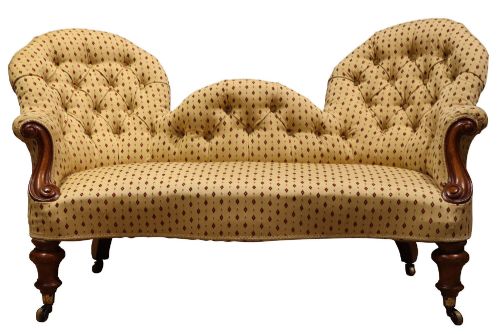
Conversation seats allowed two people to sit facing opposite directions while maintaining intimate eye contact.
What Varies in Quality
The sophistication of the timber carving and the complexity of the frame geometry determine the distinction between standard and ambitious pieces. Elaborate scroll ends, double spoon backs, and ionic column legs demonstrate higher design ambition.
The execution of the upholstery tufting and the selection of covering materials, such as whisky brown leather or patterned silk velvet, reflect the original commission cost. Maker attribution to workshops like Howard and Sons or Miles & Edwards separates standard vernacular production from documented cabinet-maker output.
Howard and Sons·Holland and Sons·Jas Shoolbred·Miles and Edwards·H. Goodall and Sons
The Tufted Chaise Longue Glossary
- Button back
- An upholstery method where tufting thread pulls the fabric deep into the stuffing to secure geometric patterns.
- Scroll end
- A sweeping wooden or upholstered terminal curving outward at the head of the day bed.
- Double spoon back
- A double-curved timber backrest profile mimicking the bowl of a spoon, seen on nineteenth-century salon furniture.
- Barley twist
- A spiral turning technique applied to wooden legs and structural supports during the Victorian period.
Tufted Chaise Longue: Frequently Asked Questions
Where were these placed in nineteenth century homes?
These seating forms occupied withdrawing rooms, grand parlours, and private chambers where domestic leisure took precedence over formal gatherings.
Their elongated proportions allowed occupants to recline partially while reading or receiving visitors during the afternoon.
How do I identify a Victorian example?
Victorian pieces display characteristic timber choices like rosewood and walnut, paired with deep button upholstery and heavy carved ornamentation.
Scroll ends and turned wooden legs further anchor these items firmly in the mid to late nineteenth century.
What is the difference between a day bed and a chaise longue?
A chaise longue incorporates a raised headrest at one end with a partial backrest sloping down the length of the frame.
Traditional day beds often present simpler horizontal platforms intended for general resting rather than seated reclining.
How do I care for antique leather upholstery?
Leather surfaces require regular applications of neutral wax or conditioner to prevent the hide from drying and cracking over time.
Keeping the piece away from direct sunlight and heat sources preserves the suppleness of nineteenth-century leather.