
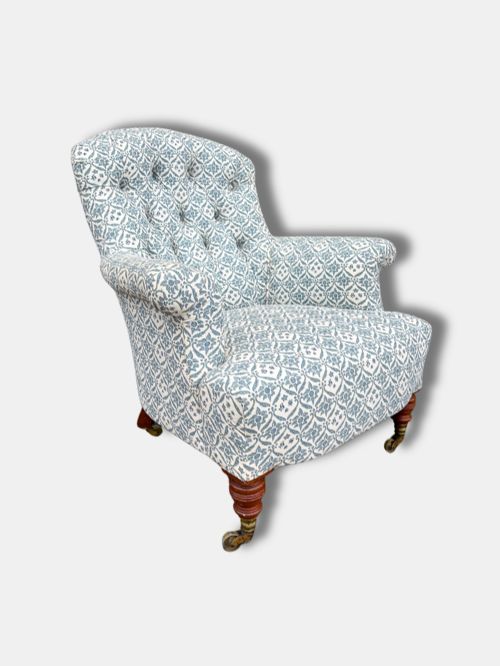
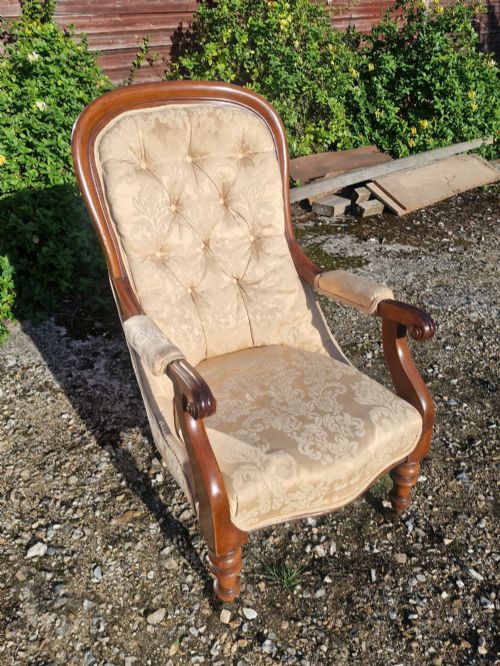
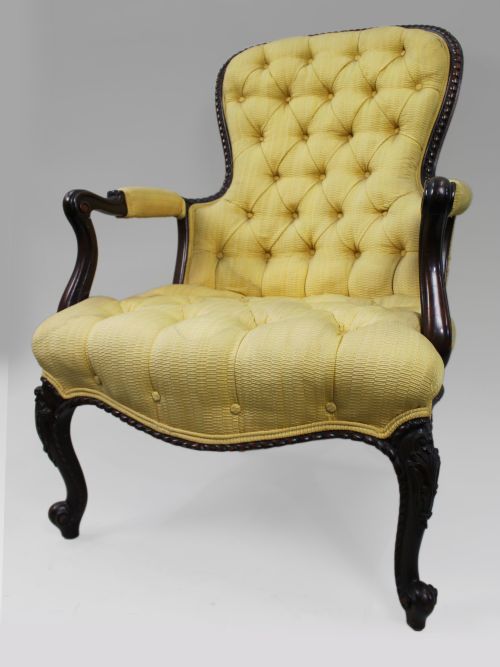
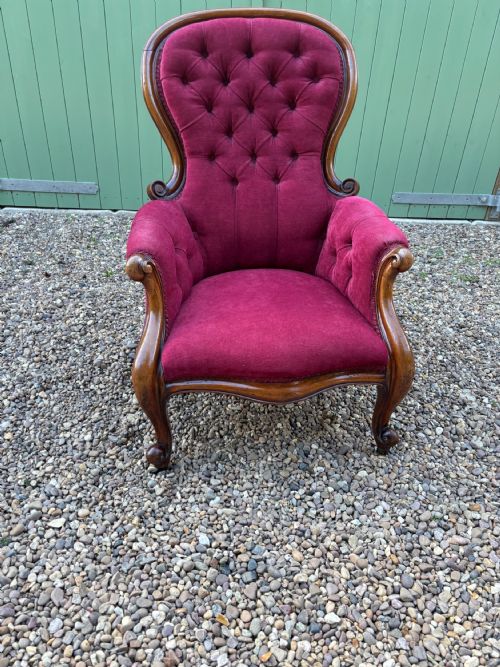

Tufted Back Reading Chair
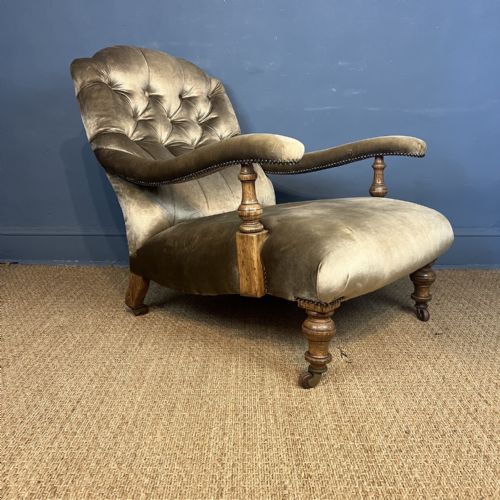
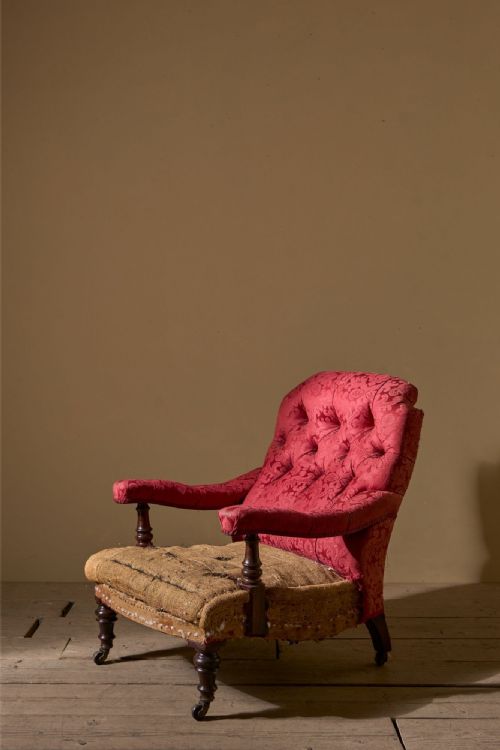
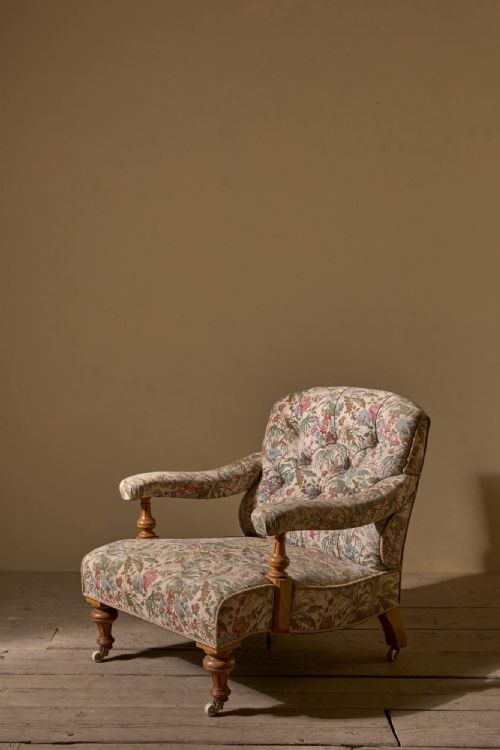
A tufted back reading chair offers deep upholstery and buttoning designed for hours spent with a book.
Tufted Back Reading Chair
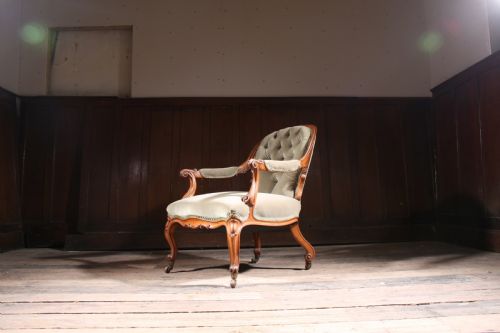
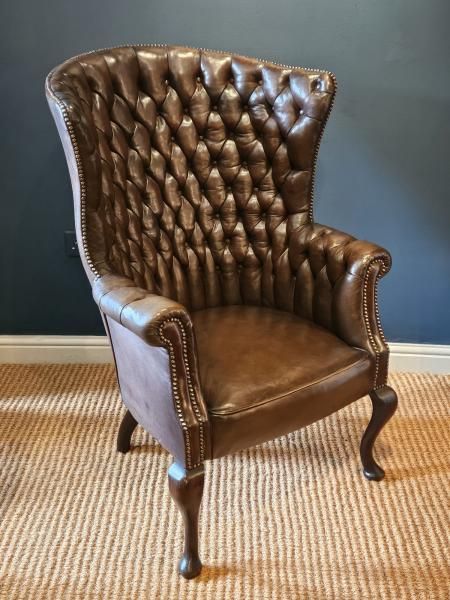
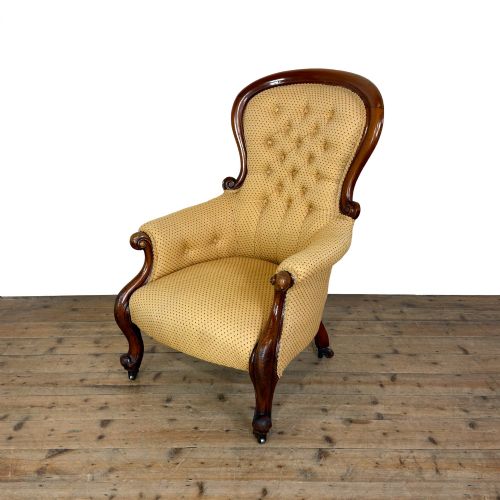
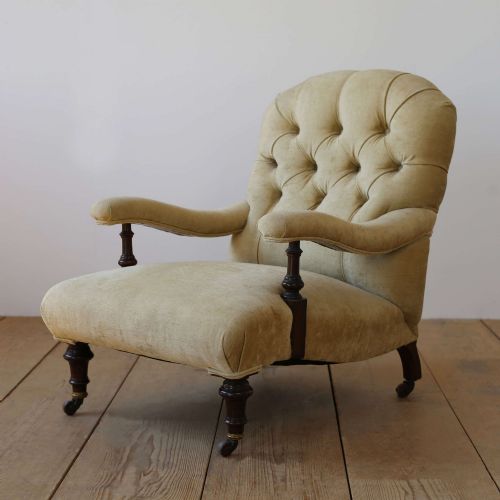
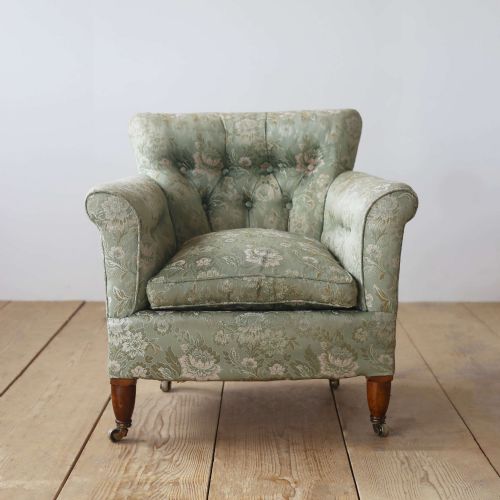
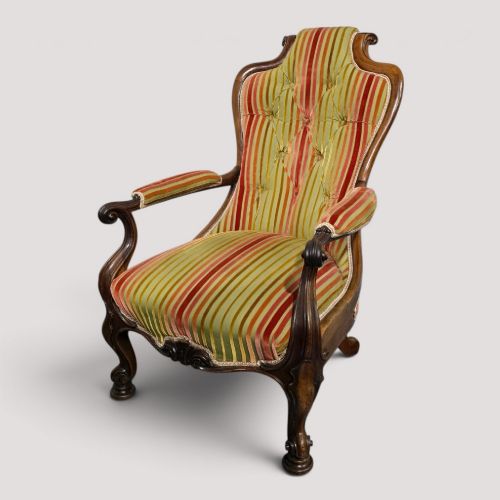
A tufted back reading chair brings together nineteenth-century seating forms designed for private libraries, studies and country house drawing rooms. The pieces appearing here span the Victorian, Regency and Edwardian eras, with nineteenth-century examples dominating the selection.
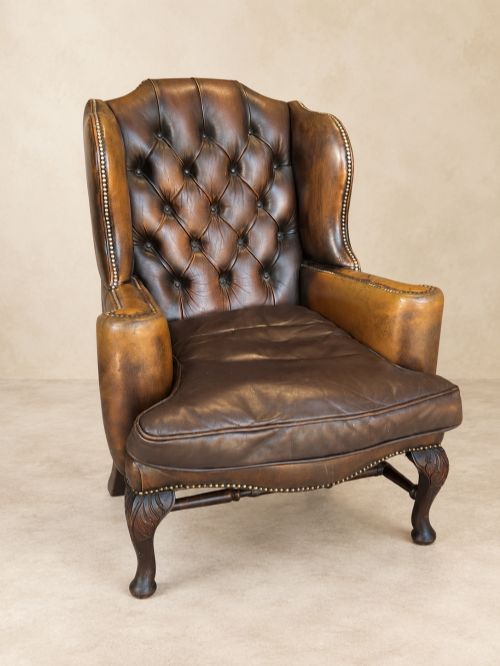
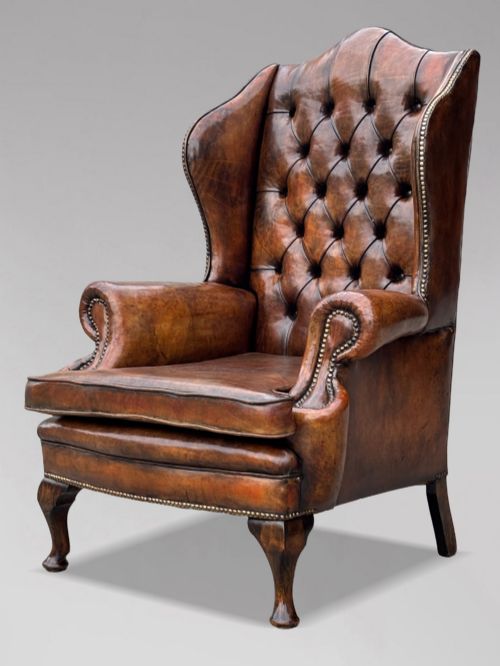
Most entries take the form of library armchairs, gentleman's chairs or button-back wing chairs built for substantial comfort. These seats often feature low profiles, deep seats and padded arms intended to support long periods of sitting.
Makers and workshops of the period utilised robust hardwoods such as mahogany, walnut, oak and rosewood to form the internal frames and exposed legs. Upholstery choices range from deep brown leather to patterned velvet, damask and textured fabric.
What varies in quality
The distinction between standard commercial seating and top-tier workshop production lies in the integrity of the internal frame and the precision of the upholstery work. Maker attribution plays a significant role, with pieces bearing stamps or signatures from established firms commanding particular attention.
Grade is also determined by the choice of primary timber and the execution of carved details on the legs and arm supports. Finely figured walnut or rosewood and crisp, deep buttoning indicate a higher standard of original craftsmanship.
Some nineteenth-century library models included an attached reading stand, anticipating the modern bedside book holder by over a century.
Howard and Sons·Holland and Sons·Hindley and Sons
The Tufted Back Reading Chair Glossary
- Tufted back
- A method of upholstery where twine is pulled through the padding and secured with buttons to form a diamond pattern. This technique keeps the internal stuffing evenly distributed.
- Library armchair
- A sturdy, upholstered seat designed for nineteenth-century reading rooms and studies. These chairs prioritise ergonomic comfort and durable coverings like leather.
- Wing armchair
- A high-backed seat featuring protective side panels designed to shield the sitter from draughts. Early versions were frequently upholstered in heavy leather or damask.
- Cabriole leg
- A furniture leg that curves outward in a convex arc before tapering inward in a concave sweep. It typically terminates in a scroll or pad foot.
- Button-back
- An alternative descriptor for tufted upholstery where fabric is pulled tight and punctuated by cloth-covered or leather buttons. It creates a supportive, textured surface.
Tufted Back Reading Chair: Frequently Asked Questions
What is a tufted back reading chair?
A tufted back reading chair is a nineteenth-century upholstered seat built with deep buttoning designed to provide ergonomic support for extended reading. These pieces usually feature sturdy wooden frames and comfortable padded armrests.
They originated in studies, libraries and country houses where comfortable seating was essential for long hours spent with books and newspapers.
How do I date a Victorian reading chair?
Dating these chairs involves examining the primary timber, the style of the legs and the method of upholstery construction. Walnut and rosewood were favoured in different decades, while leg styles shifted from Regency curves to heavy Victorian cabriole supports.
Maker stamps on the wooden frame or webbing can also help narrow down the production period to a specific workshop.
Are these chairs comfortable for daily use?
These seats were originally engineered for heavy domestic use, employing robust internal springing and dense stuffing materials. Their deep proportions and padded backs make them well-suited for modern living spaces.
Many examples retain durable leather or heavy fabric coverings that withstand regular sitting while maintaining their structural shape.
What wood types should I look for?
Mahogany, walnut and oak form the primary structural timbers found across nineteenth-century seating. Walnut and rosewood often appear on more decorative pieces from the mid-Victorian and Regency periods.
Oak and mahogany were typically selected for heavy library chairs requiring maximum structural strength and durability.