
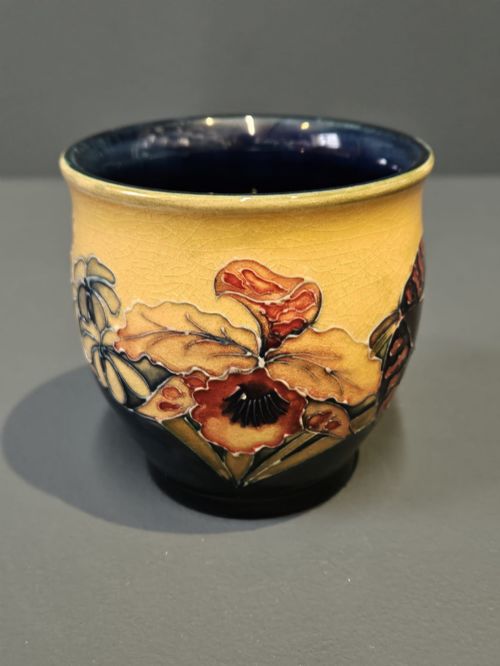
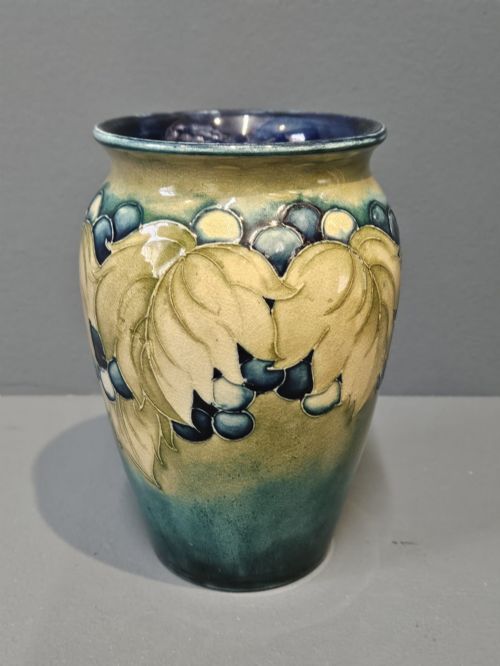
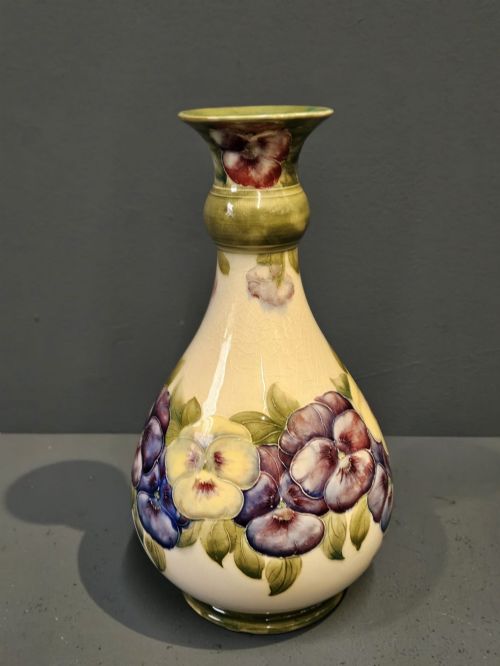


Tubelined Earthenware Vase
A tubelined earthenware vase brings raised clay outlines and rich glazes to a room, offering a tactile focal point that catches the light.
Tubelined Earthenware Vase
When you search for a tubelined earthenware vase, you encounter vessels shaped from clay and decorated with raised lines that contain pools of coloured glaze. These pieces emerged through periods spanning the late nineteenth century into the interwar decades, capturing the shifts from ornate botanical motifs to geometric modernist forms.
The versions you are most likely to meet on this page hail from the Arts and Crafts, Art Nouveau, and Art Deco movements. They range from miniature flower holders to large display vessels, often bearing floral patterns or lustrous finishes.
The forms originate from British makers working across eras like 1880, 1900, 1910, 1920, and 1930. Each vessel displays the characteristic profile of its decade, whether the bulbous bodies of early output or the streamlined profiles of later years.
How they were made
Potters formed the body from earthenware or ceramic, sometimes utilising stoneware for added density. The distinctive raised lines were applied using a technique of squeezing liquid clay through a tube onto the surface, creating compartments for subsequent decoration.
Coloured glazes or enamel were then carefully painted into the outlined sections by hand before the piece went into the kiln for firing. This process locked the colours behind a glassy finish, which could include lustrous effects to catch the eye.
Early decorators had to squeeze the clay lines with the steady hand of a pastry chef.
What varies in quality
Quality rests in the crispness of the raised clay lines and the precision with which the glazes stay within their defined borders. Stronger examples exhibit a confident hand in both the initial piping and the subsequent brushwork.
The complexity of the design and the richness of the colour palette also separate standard production from superior pieces. Deeper glazes and well-balanced compositions elevate a vessel above simpler output.
Moorcroft·Charlotte Rhead·Minton·Doulton
The Tubelined Earthenware Vase Glossary
- Tubelining
- A decorative technique where liquid clay is squeezed through a nozzle onto a ceramic body to form raised outlines before glazing. This creates distinct cells that hold pools of colour during firing.
- Earthenware
- A porous pottery body fired at lower temperatures than stoneware and porcelain. It requires a glaze to render it waterproof and forms the base for most pieces here.
- Lustre
- A type of metallic glaze that produces an iridescent sheen when fired in a reduced oxygen atmosphere. It adds a shimmering surface effect to ceramic vessels.
- Enamel
- Opaque vitreous colours applied over a fired glaze and heated again to fuse. This allows for fine details and vibrant hues on the finished ceramic.
- Stoneware
- A hard, dense ceramic fired at high temperatures until vitrified and non-porous. It provides a sturdy alternative to softer earthenware bodies.
Tubelined Earthenware Vase: Frequently Asked Questions
How do I care for a tubelined vase?
Dust these vessels gently with a soft, dry cloth to protect the raised clay lines and glossy finish. Avoid using water or cleaning solutions, as moisture can penetrate porous earthenware bodies over time.
Keep them away from direct sunlight to preserve the richness of the glazes and enamels. Display them on stable surfaces where they will not be knocked or vibrated.
What styles are common?
The pieces span Arts and Crafts, Art Nouveau, and Art Deco aesthetics. Arts and Crafts and Art Nouveau examples typically feature organic floral motifs like pansies, orchids, and pomegranates.
Art Deco items lean towards geometric patterns and lustrous finishes. Each style reflects the design priorities of its respective era, from natural forms to modern abstraction.
How do I date a piece?
Dating relies on stylistic markers, shapes, and the specific decorative motifs present on the ceramic body. Pieces from the early decades often showcase flowing floral designs, while later 1930s examples adopt sharper lines.
Maker signatures, stamps, and pattern names provide further context for establishing a timeline. Comparing the glaze palette and form against known periods helps narrow down the decade of creation.
What materials were used?
Makers relied primarily on earthenware and ceramic bodies to form the core of each vessel. Stoneware also appears among the listings, offering a heavier and denser alternative.
Surfaces received glazes and enamel colours to create the finished appearance. Lustre finishes were occasionally applied to introduce metallic sheens to the ceramic.