


Collectable Moorcroft Pottery
Collectable moorcroft pottery pieces are distinctive British ceramics defined by rich glazes and tube-lined floral motifs that bring vibrant colour to any room.
Collectable Moorcroft Pottery
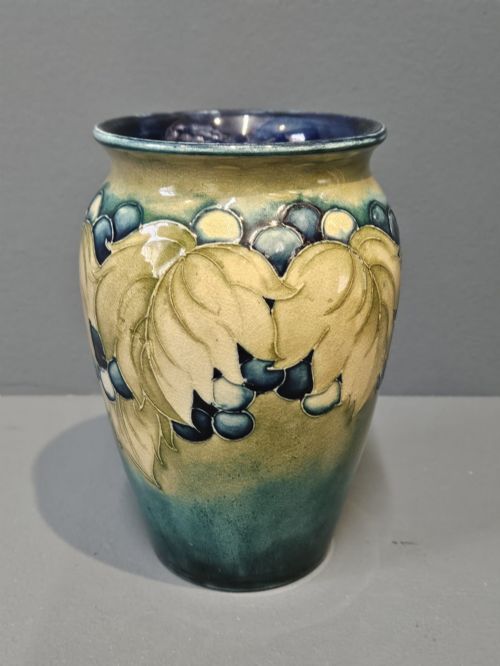
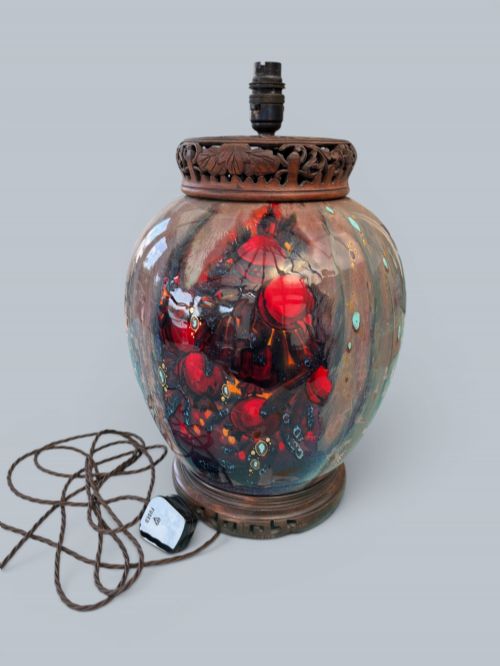
Collectable moorcroft pottery encompasses decorative wares produced across the early twentieth century, spanning the 1910s, 1920s and 1930s. Buyers searching for collectable moorcroft pottery will encounter distinct forms including vases, decorative bowls, table lamps and decorative plates.
The pieces on this page display prominent design movements such as Arts and Crafts, Art Nouveau and Art Deco. Iconic patterns like Pomegranate, Leaf and Berries, and Moonlit Blue dominate the selection, alongside early collaborations with Macintyre and Liberty.
How they were made
Makers shaped these items from earthenware and ceramic bodies, applying thick coloured glazes to achieve deep tones. Salt glazing also appears on specific textured vessels.
Makers applied raised outlines using a tube-lining technique before hand-painting the vibrant pigments onto the damp clay body. Selected pieces incorporate additional materials like wood and brass, particularly in functional items such as table lamps.
Even the smallest miniature flower vases receive the same elaborate hand-painted fruit and foliage as their large bowl counterparts.
What varies in quality
Quality rests upon the crispness of the tube-lined design and the depth of the glaze application. Pieces featuring complex multi-coloured patterns show superior artistic ambition.
Early items designed by William Moorcroft or produced during periods like the 1910s hold particular distinction. Signed examples and pieces bearing distinct factory stamps carry additional provenance.
William Moorcroft·A Macintyre & Co.·Liberty & Co
The Collectable Moorcroft Pottery Glossary
- Tube-lining
- A decorative technique where liquid clay is piped onto a ceramic body to create raised outlines for subsequent glazing. This method defines the tactile surface of these ceramics.
- Earthenware
- A porous type of ceramic fired at lower temperatures, commonly utilised for pottery before being glazed. It serves as the primary body for these items.
- Arts and Crafts
- A design movement valuing handcraftsmanship and traditional materials over industrial mass production. This style influences many early patterns.
- Art Deco
- A twentieth-century style characterised by streamlined forms and geometric patterns. Pieces from the 1930s often reflect this aesthetic.
- Salt Glaze
- A finish created by throwing common salt into the kiln during high-temperature firing, producing a textured surface. This technique appears on specific decorative vessels.
Collectable Moorcroft Pottery: Frequently Asked Questions
How do I identify early moorcroft pottery?
Early pieces often feature specific signatures, factory stamps or collaboration marks on the base. Examining the pattern style, such as early Pomegranate designs, helps confirm the production period.
Looking closely at the glaze depth and colour palette provides further clues to dating. Comparing pieces to verified examples from the 1910s and 1920s ensures accurate attribution.
What patterns are most collectible?
Pomegranate, Leaf and Berries, and Moonlit Blue are among the most sought-after designs. These patterns showcase the distinctive tube-lining and rich colouration associated with the factory.
Collectors also prize early Macintyre-era collaborations and unusual forms like table lamps or miniature vases. Rarity of the pattern shape directly influences desirability.
How should I display table lamps?
Table lamps require stable placement away from heavy foot traffic to protect the ceramic body and any attached brass or wood components. Pairing them with a suitable shade allows the form to remain the focal point.
Ensure the electrical wiring meets modern safety standards while preserving the original ceramic base. Proper placement highlights the tube-lined details under interior lighting.