
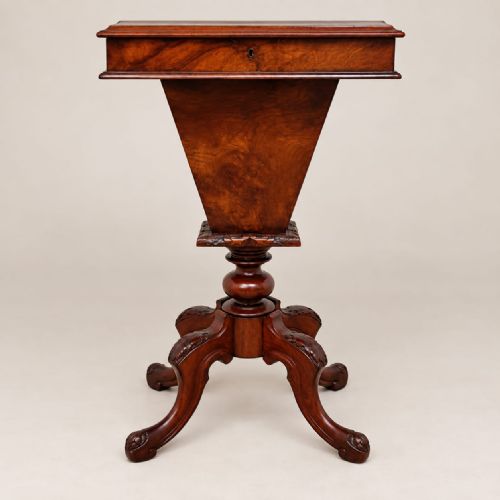


Tripod Sewing Box
A tripod sewing box brings together practical needlework storage and elegant pedestal furniture for the Victorian or Regency parlour.
Tripod Sewing Box
A tripod sewing box sits on a three-legged pedestal base, serving as a dedicated piece of furniture for domestic needlework and crafts. These items appear across nineteenth-century styles, functioning as work tables, sewing tables, and trumpet workboxes.
The most common examples on this page date from the Victorian period, frequently shaped as trumpets or octagonal boxes mounted on slender stems. Makers combined storage compartments with writing surfaces, chess boards, or reading stands to maximise usefulness in the home.
Origins stretch from Regency mahogany designs through to elaborate Victorian marquetry and Anglo-Indian variants. Buyers find pieces executed in rosewood, walnut, and burr walnut, often featuring fitted interior trays for threads and bobbins.
How they were made
Cabinet makers utilised dense timber foundations of mahogany, rosewood, and walnut, frequently selecting burr walnut veneers for rich surface figuring. Boxwood and brass inlay added linear definition to lids and friezes.
The pedestal construction required a sturdy tripod base, often carved with scroll feet or curving legs to support the weight of the upper compartment. Trumpet-shaped bodies relied on steam-bent staves or curved panels tapering down to a circular plinth.
Many Victorian workboxes hide secret compartments beneath their trays, designed to keep small embroidery scissors safely away from curious children.
What varies in quality
Superior examples display precise marquetry and wood inlay, where contrasting timbers fit tightly without visible gaps or excessive filler. The choice of burr walnut or figured rosewood veneer indicates a higher tier of workshop production.
Internal fittings dictate the refinement of the piece, with partitioned trays and velvet-lined compartments remaining intact and well-executed. Carving on the tripod base and pillar shows greater hand-work and sculptural depth in finer specimens.
The Tripod Sewing Box Glossary
- Trumpet workbox
- A sewing container shaped like an inverted trumpet, widening from a slender stem to a broad octagonal or circular hinged lid. This form became particularly popular during the Victorian era.
- Work table
- A multi-purpose piece of furniture containing compartments or a fabric bag beneath the top for storing sewing materials. These tables doubled as occasional or lamp tables in sitting rooms.
- Marquetry
- Decorative veneer work forming pictures or geometric patterns using various woods, metals, or shells. Artisans applied these patterns to the lids of work tables.
- Tripod base
- A three-legged support structure beneath a central pillar, providing stability for small tables and stands. This configuration allows the piece to sit firmly on uneven floorboards.
Tripod Sewing Box: Frequently Asked Questions
What is inside a sewing box?
Inside, these pieces typically contain a fitted wooden tray with small compartments, pin cushions, and slots for spools and bodkins.
Beneath this removable tray, a deeper well or a pleated silk storage bag holds larger fragments of fabric and wool.
How were work tables used?
Ladies utilised these tables in the parlour for needlework, embroidery, and mending while socialising or reading.
The sturdy top surface also served for writing letters, playing chess, or holding an oil lamp in the evening.
Where should I place mine?
A tripod sewing box suits a corner of the sitting room, beside an armchair, or as a decorative occasional table.
Keep the timber away from direct sunlight and heat sources to protect delicate veneers and original french polish.
How do I date these pieces?
Stylistic clues such as turned pedestals, wood species, and inlay techniques help distinguish Regency examples from later Victorian versions.
Regency pieces often favour plain mahogany or rosewood, whereas Victorian versions lean towards burr walnut and elaborate trumpet shapes.