






Tripod Dumbwaiter Stand
A tripod dumbwaiter stand brings tiered mahogany practicality to the dining room, offering revolving tiers for effortless serving without extra staff.
Tripod Dumbwaiter Stand
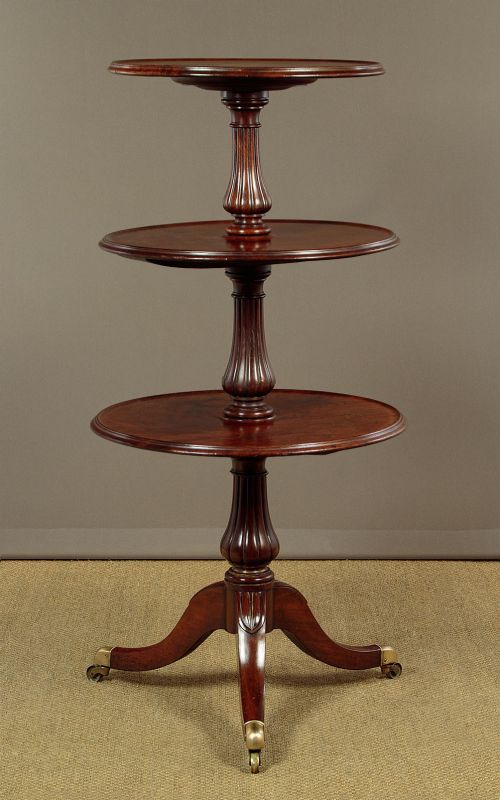
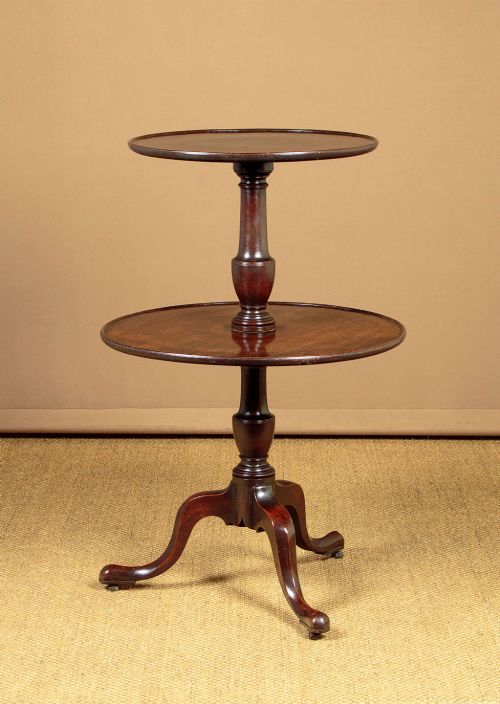
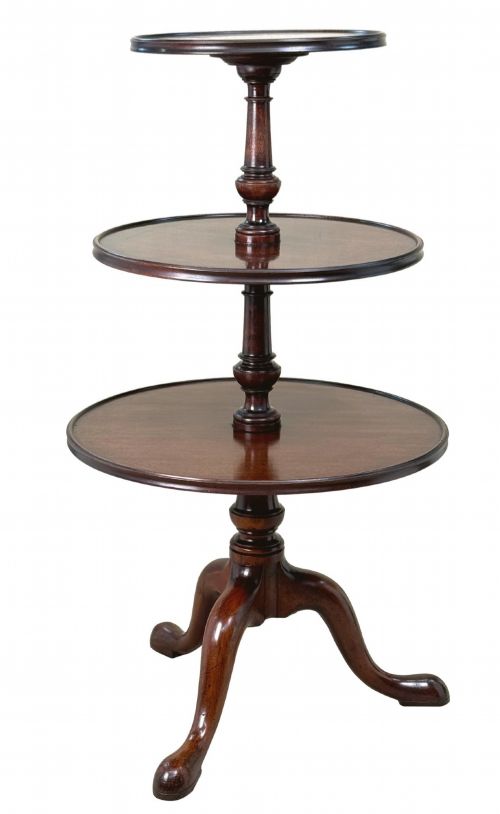
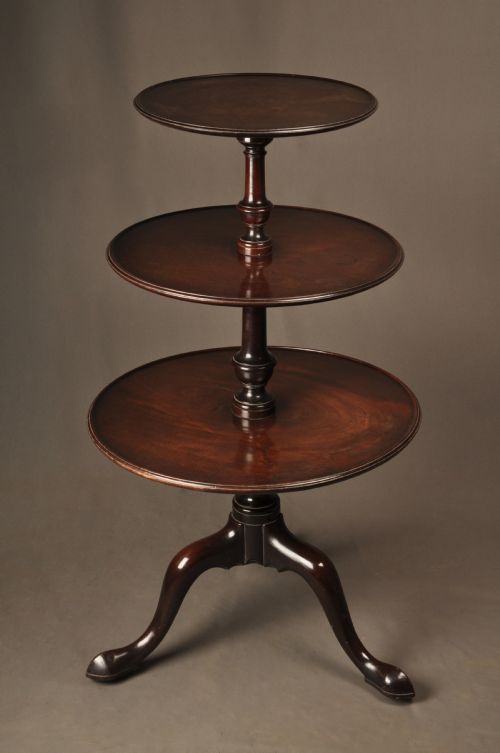
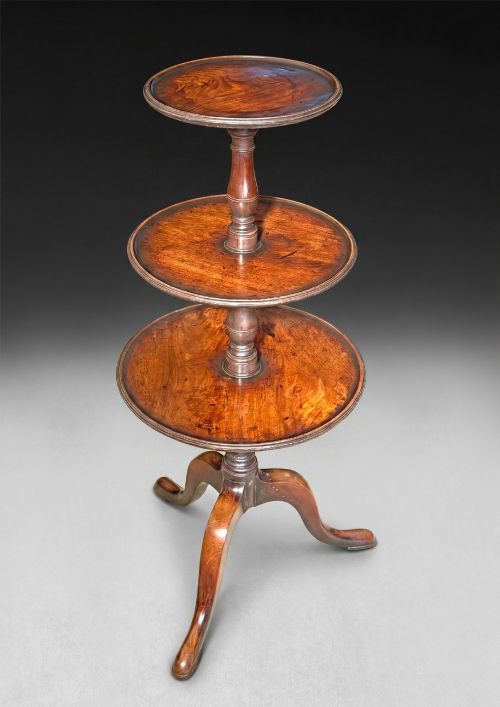
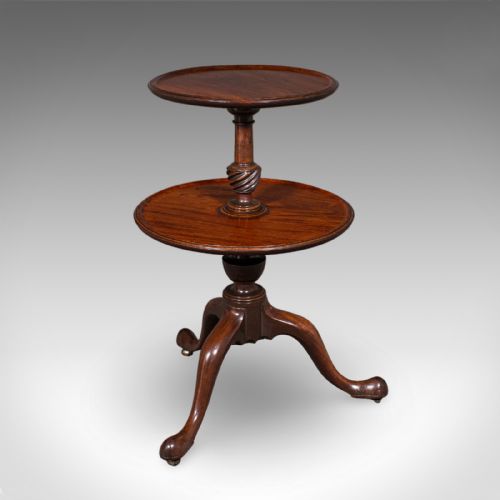
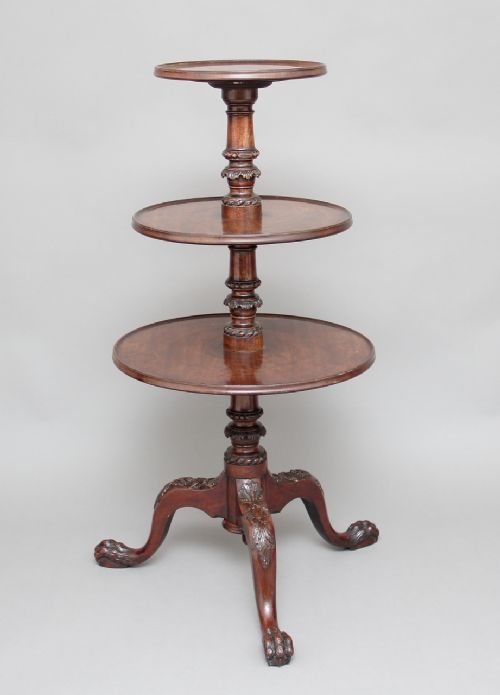
A tripod dumbwaiter stand is a tiered serving table designed to hold dishes and drinks near the dining table. These pieces primarily date from the Georgian and Regency eras, with many examples originating in the eighteenth century.
The most common format on this page is the multi-tiered circular mahogany stand supported by a central pillar and three cabriole legs. You will also encounter drop-leaf and folding variations that allow the shelves to stow away when not in use.
While many serve as occasional or side tables today, their original purpose was to hold courses and wine during formal meals. This heritage explains the sturdy timber construction and the revolving tiers designed for communal reach.
Materials and construction methods
Mahogany is the dominant timber across these listings, often selected for its dense grain and strength. Cabinet makers shaped solid mahogany for the tops and turned central pedestals to support the heavy tiered weight.
Brass fittings and castors frequently appear on the legs, allowing these heavy serving stands to glide across dining room floors. Some later examples incorporate painted decoration or subtle inlay upon the timber surfaces.
Tripod Dumbwaiter Stand Retail Price Guide 2026
Typical asking prices for tripod dumbwaiter stand among the pieces listed under this phrase on Sellingantiques today, from the lower quarter to the upper quarter. They describe what is for sale here now, not the wider market.
Listings span the eighteenth and nineteenth centuries, featuring solid mahogany construction, brass accents, and occasional painted or inlaid details.
Assessing quality in a tripod dumbwaiter stand
Quality rests heavily on the proportion of the graduated tiers and the crispness of the turned central column. Finer examples display superior timber selection with rich, figured grain across each circular shelf.
The mechanism of the revolving tiers or the folding drop-leaf action dictates the standard of manufacture. Original brass hardware and stable tripod bases with tight joints separate exceptional cabinet work from standard utility pieces.
The Tripod Dumbwaiter Stand Glossary
- Dumbwaiter
- A multi-tiered freestanding serving stand used in dining rooms. It allowed diners to help themselves to courses without domestic staff present.
- Tiered table
- A piece of furniture featuring multiple horizontal surfaces arranged vertically on a single central column. This design maximises display and storage space within a compact floor footprint.
- Drop-leaf
- A table design featuring hinged side flaps that lower or raise as needed. On these stands, folding shelves allow the tiers to drop vertically for compact storage.
- Tripod base
- A three-legged support structure radiating from a central pillar. This configuration ensures stability on uneven dining room floors.
- Revolving
- A mechanism allowing the wooden tiers to spin independently around the central shaft. This rotation gives diners access to dishes from any seated position.
Tripod Dumbwaiter Stand: Frequently Asked Questions
What is a tripod dumbwaiter stand used for?
These tiered stands originally held extra dishes, silverware, and wine bottles during formal dining occasions. They allowed guests to serve themselves without servants lingering in the room.
Today, they function well as decorative side tables or tiered display stands in living spaces and dining rooms.
How do I date a Georgian dumbwaiter?
Dating relies heavily on timber characteristics, leg profiles, and the turning style of the central column. Eighteenth-century versions often feature heavier solid mahogany construction and crisply carved tripod bases.
Later Regency and Victorian examples may incorporate brass details, reeded stems, or folding mechanisms tailored for changing domestic spaces.
What are folding dumbwaiters?
Folding dumbwaiters feature hinged tiers that drop down against the central pedestal when not in use. This clever mechanism saved valuable floor space in smaller dining rooms.
Craftsmen engineered these joints to maintain stability while supporting loaded plates and decanters during meals.
Are these stands stable on carpets?
The three-legged tripod base provides firm contact points on most floor surfaces. However, thick carpets can cause slight wobbles on heavy multi-tiered stands.
Positioning the stand on firm flooring or using appropriate caster cups ensures the revolving tiers remain steady during daily use.