




Mahogany Tripod Serving Stand
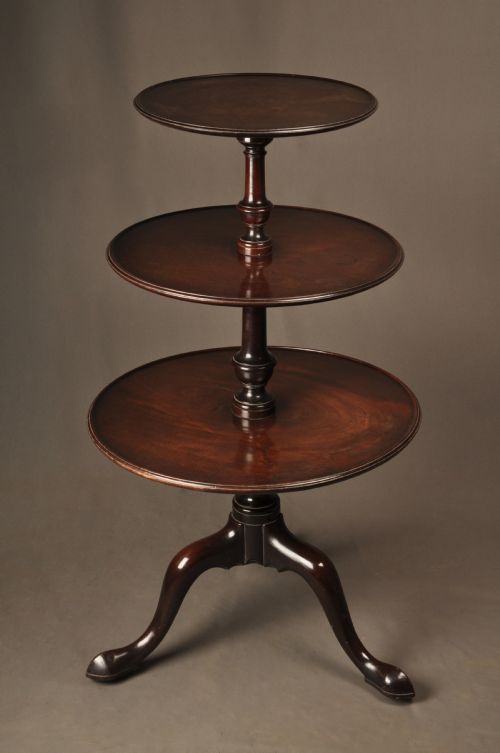
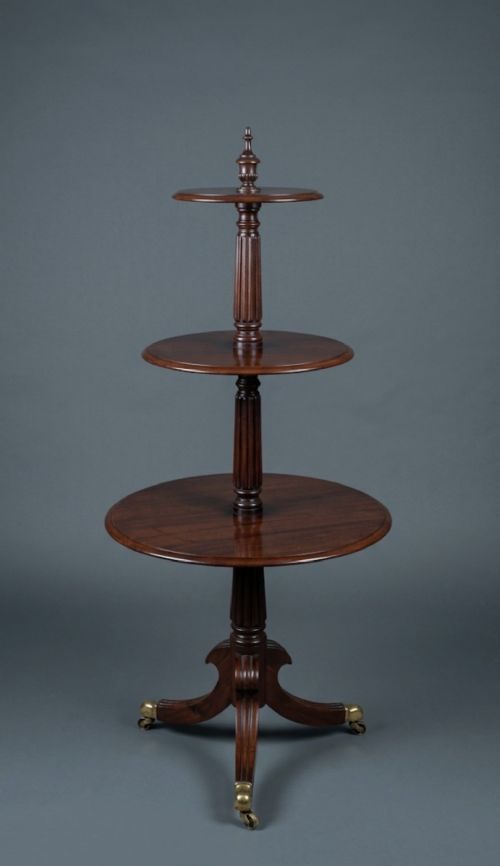
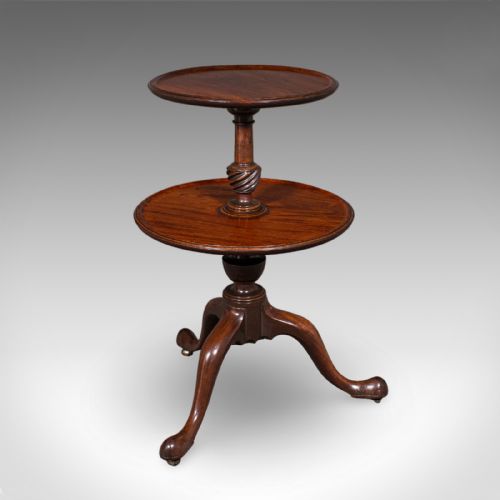
A mahogany tripod serving stand, known more traditionally as a dumb waiter, is a tiered dining accessory designed to hold dishes without servants.
Mahogany Tripod Serving Stand
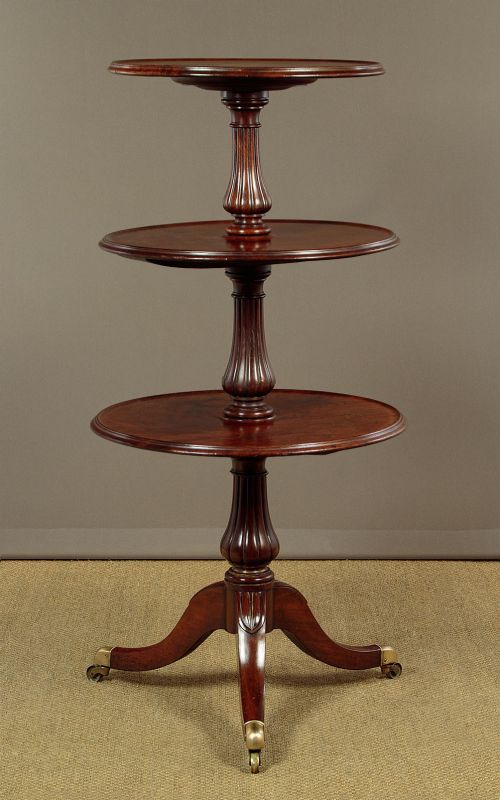
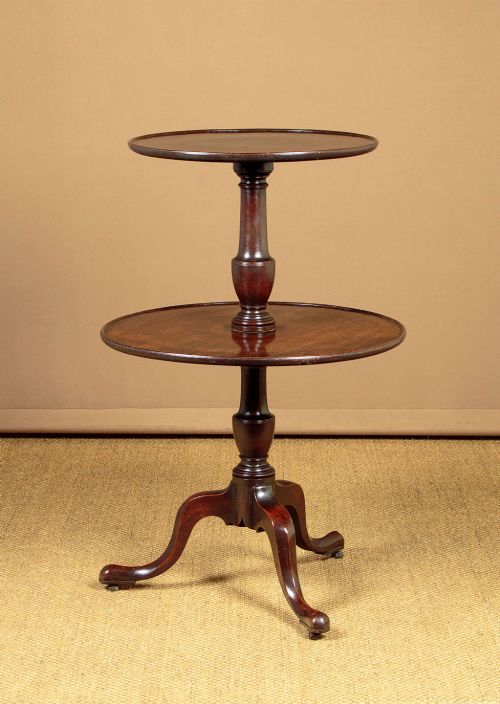
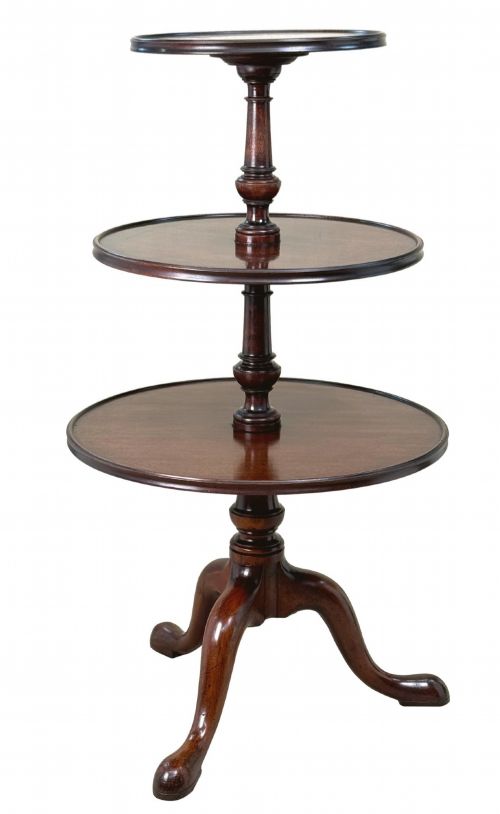
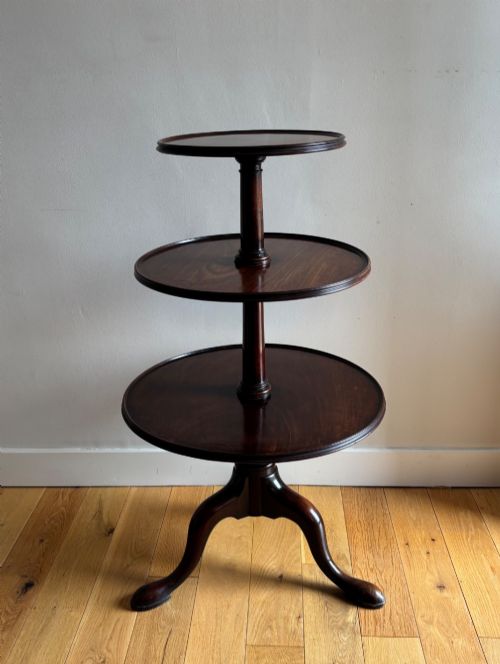
When you search for a mahogany tripod serving stand, you are looking at tiered dining furniture designed to hold plates, glasses, and food beside a table. These pieces typically feature multiple circular shelves graduated in size, supported by a central pillar and three splayed legs.
The version you are most likely to meet on this page is the Georgian or Regency dumb waiter, dating from the eighteenth or early nineteenth century. These items appear in both two-tier and three-tier formats, with some variations incorporating drop leaves or revolving trays.
How they were made
Cabinetmakers constructed these stands predominantly from solid mahogany, turning the central columns on lathes and shaping the tripod legs to terminate in pad feet, brass castors, or spade feet. The timber was valued for its deep reddish-brown grain and tensile strength, which permitted slender yet supportive columns.
Shelves were often turned from single boards of mahogany or built with concentric mouldings and raised galleries to prevent serving dishes from sliding off. Mechanisms for folding leaves or revolving tiers relied on brass hinges and pivots embedded directly into the woodwork.
Mahogany Tripod Serving Stand Retail Price Guide 2026
Typical asking prices for mahogany tripod serving stand among the pieces listed under this phrase on Sellingantiques today, from the lower quarter to the upper quarter. They describe what is for sale here now, not the wider market.
Listings feature periods spanning the eighteenth century through to the Regency era, with occasional pieces from the 1920s.
What varies in quality
The distinction between standard and superior pieces rests on the choice of timber and the precision of the turning. Finer examples display highly figured flame mahogany on the tiers and deeply carved tripod bases with crisp moulding along the legs.
Engineering also separates the levels of quality, particularly in revolving or folding mechanisms. Superior dumb waiters rotate smoothly on well-fitted brass pivots or feature drop-leaf joints that lock firmly into position without lateral wobble.
The Mahogany Tripod Serving Stand Glossary
- Dumb waiter
- A tiered serving stand designed to hold food and tableware independently of dining room attendants.
- Tripod base
- A three-legged support structure that provides stability on uneven dining room floors.
- Tiered table
- Furniture built with multiple stacked surfaces rising sequentially from a single central column.
- Drop-leaf
- A hinged section of a shelf that can be lowered when the stand is stored against a wall.
- Revolving tray
- A rotating mechanism incorporated into a tier to allow easy access to dishes from around the table.
Mahogany Tripod Serving Stand: Frequently Asked Questions
What is a dumb waiter?
A dumb waiter is a multi-tiered serving stand designed to hold plates, glasses, and food during meals without requiring the presence of servants.
These pieces typically feature circular shelves mounted on a central pillar with a tripod base, allowing them to sit discreetly beside a dining table.
How were these stands used?
Dining rooms utilised these stands to hold extra courses, wine bottles, and tableware within arm's reach of the host.
The revolving or multi-tiered design allowed guests to help themselves to food and drinks without interrupting the conversation.
How do I identify a Georgian dumb waiter?
Georgian examples are usually constructed from solid mahogany and date from the eighteenth or early nineteenth century.
They often feature traditional characteristics such as graduated circular tiers, turned central columns, and tripod bases fitted with brass castors.
Do all dumb waiters revolve?
Not all serving stands rotate, as many feature fixed shelves or drop leaves designed for compact storage.
Revolving versions incorporate a central pivot mechanism that allows the individual tiers to spin independently for easier access.
Where should I place a serving stand?
These stands fit naturally beside dining tables, in corners, or alongside sideboards as functional display surfaces.
Their compact tripod footprint makes them suitable for use as occasional tables or lamp stands in modern living spaces.