


Tripod Brass Standard Lamp
These tripod brass standard lamp pieces bring height and adjustable warmth to a room, offering the classic forms that collectors prize.
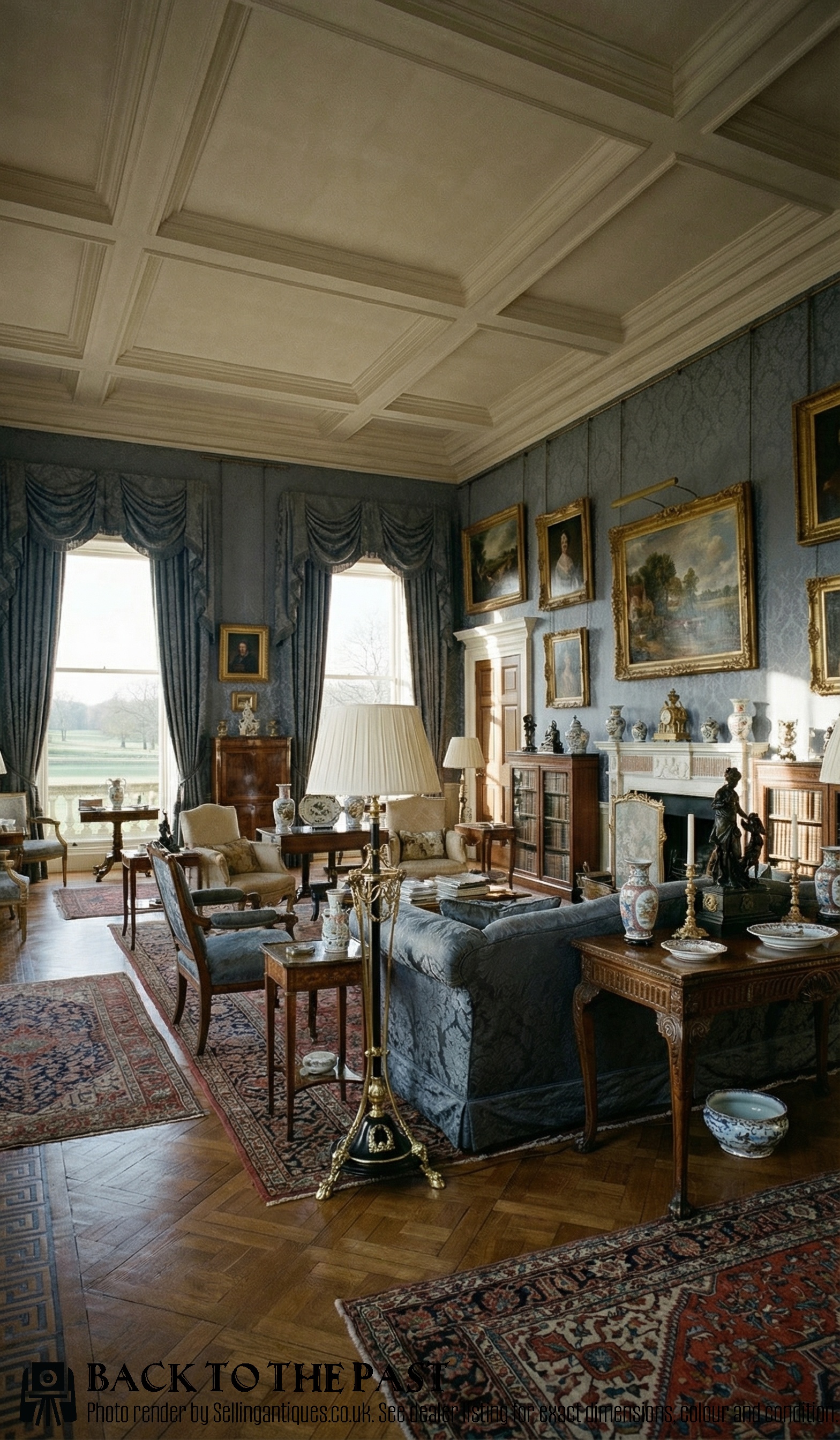
Tripod Brass Standard Lamp
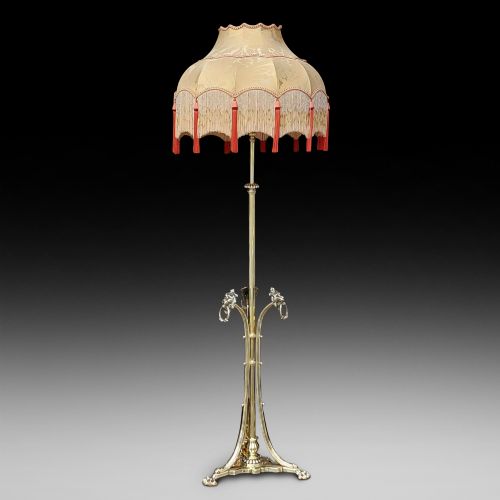
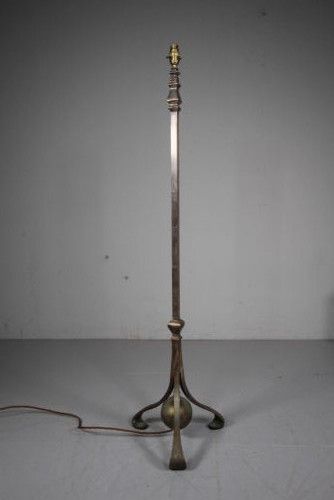
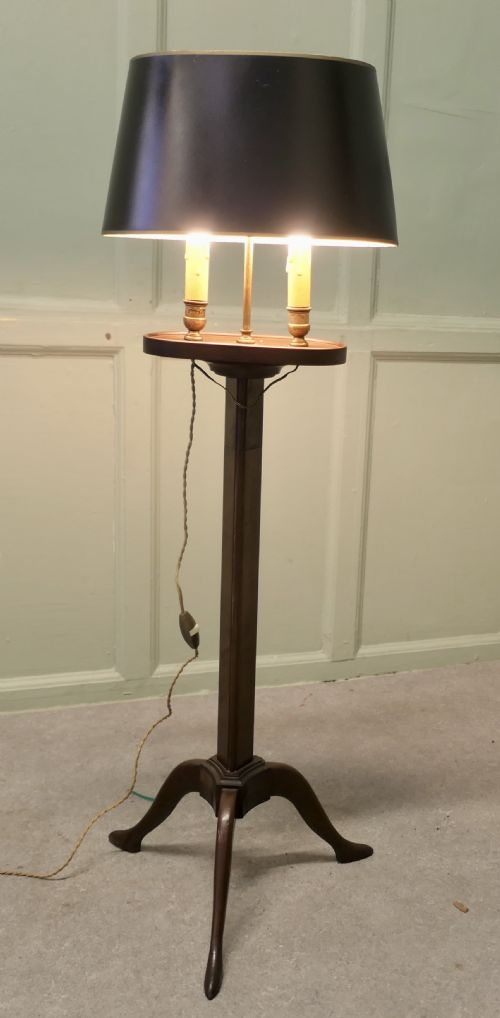
A tripod brass standard lamp stands upon three supporting legs, providing a steady base for upright illumination across various historic periods. When you examine a tripod brass standard lamp on this page, you encounter pieces spanning the Victorian, Edwardian, and Arts and Crafts eras.
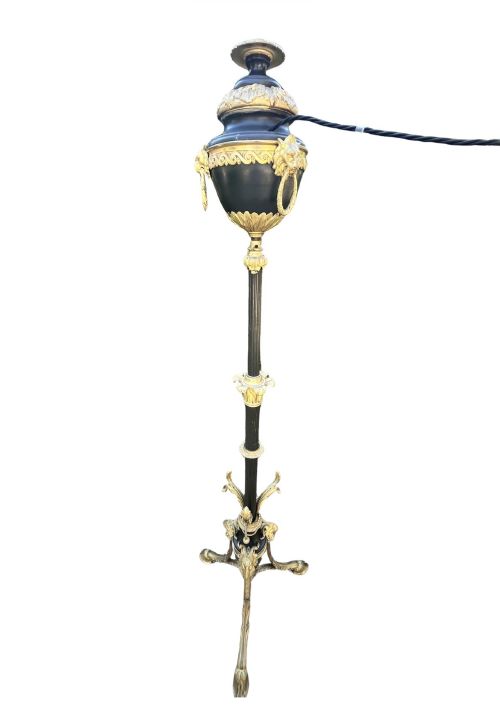
Makers designed these fixtures in forms ranging from telescopic columns to converted oil lamps and searchlights. The selections include occasional additions of copper, mahogany, and glass alongside the dominant brass structure.
Victorian and Edwardian examples predominate, often featuring adjustable heights and weighted tripod bases designed for stability. These tall floor lamps served to illuminate reading corners and large reception rooms in period homes.
Assessing quality and craftsmanship
The distinction between standard production and superior work lies in the weight of the brass casting and the engineering of the telescopic mechanism. Finer pieces display crisp ornamentation in the Art Nouveau or Neoclassical taste rather than mass-produced stamping.
Proportion and stability separate the best examples from simpler utility lighting. Original fittings, intact adjustability, and uncompromised tripod bases determine the enduring integrity of each standard lamp.
One towering Edwardian uplighter combines brass with opaline glass, ready to brighten the gloomiest corner of a Victorian parlour.
The Tripod Brass Standard Lamp Glossary
- Telescopic
- An adjustable mechanism allowing the central shaft of the standard lamp to extend upward. This feature was essential for altering the height of the light output.
- Tripod base
- A three-legged support structure designed to give stability to tall floor standing fixtures. It prevents the upright shaft from tipping.
- Standard lamp
- The British term for a tall floor lamp designed to stand independently in a room. They often accommodated oil burners before the advent of electric wiring.
- Conversion
- The adaptation of an older lighting medium, such as an oil lamp or candle holder, to run on electricity. This practice preserves the decorative base while updating its function.
Tripod Brass Standard Lamp: Frequently Asked Questions
How do I adjust the height?
Many period examples utilise a telescopic inner shaft secured by a thumb screw or a rise-and-fall mechanism. Loosening this collar allows the upper section to slide smoothly to the desired elevation.
Care should be taken when adjusting older brass tubing to avoid straining the internal wiring or historical metal threads.
Were these originally oil lamps?
A significant number of Victorian and Edwardian tall lamps were manufactured to burn oil before being converted to electricity later in life. You may spot old burners or font galleries retained near the top of the standard.
Such conversions are entirely normal for lighting of this vintage and represent the practical evolution of domestic interiors.
How do I clean the brass?
Maintenance depends entirely on whether you prefer a bright polished finish or the dark patina accumulated over a century. Gentle dusting with a soft cloth protects the surface without stripping historic character.
Avoid harsh chemical abrasives that can permanently damage thin lacquers or soft brass plating applied during manufacture.