





Tripod Base Tea Table
A tripod base tea table offers a sturdy central pillar and three legs, combining practical serving surfaces with refined historic charm.
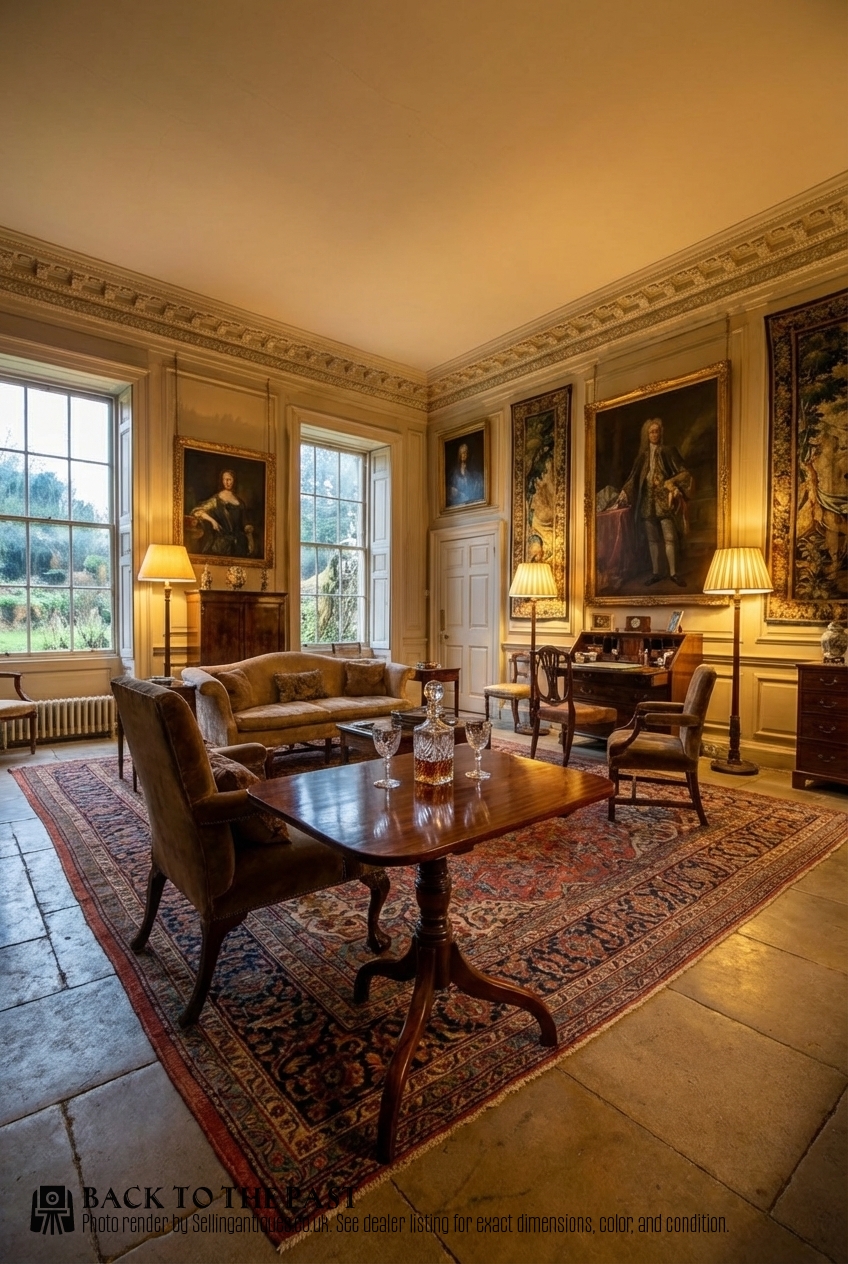
Tripod Base Tea Table
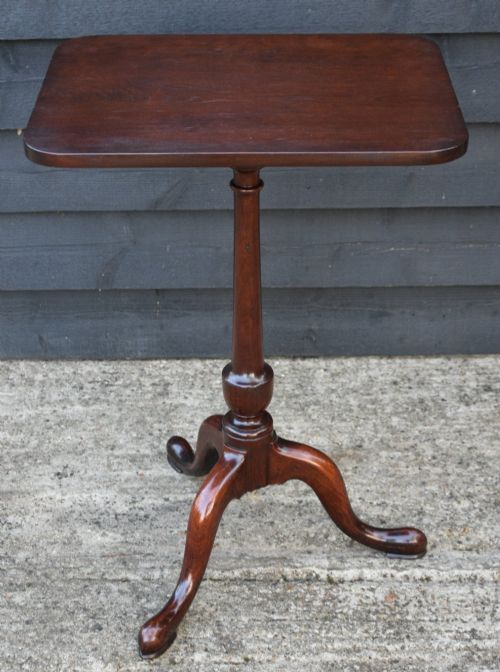
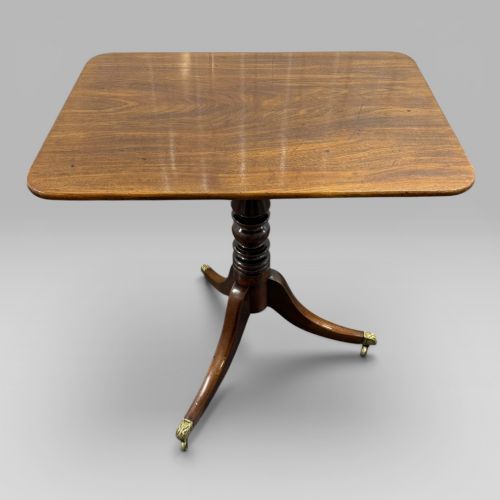
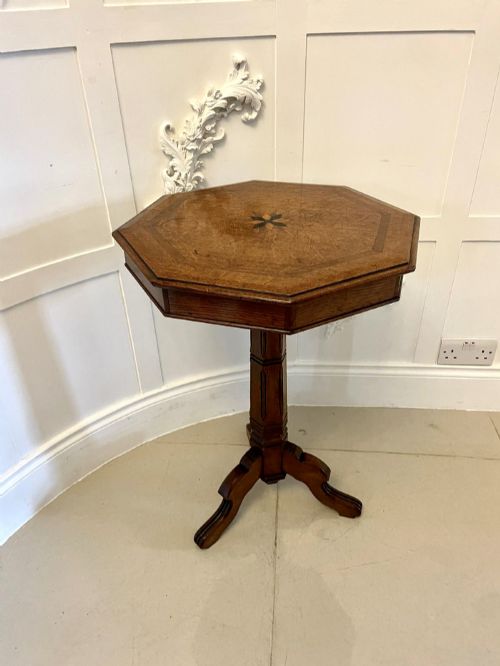
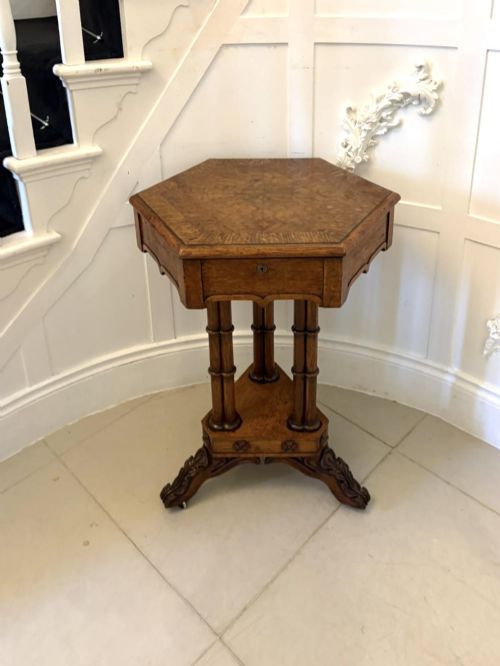
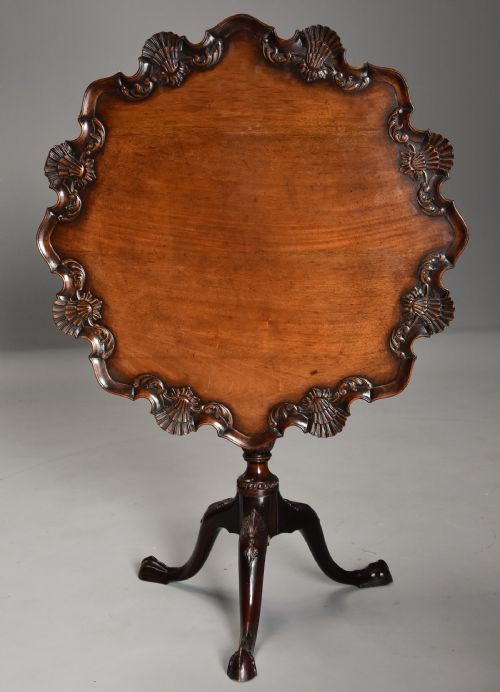
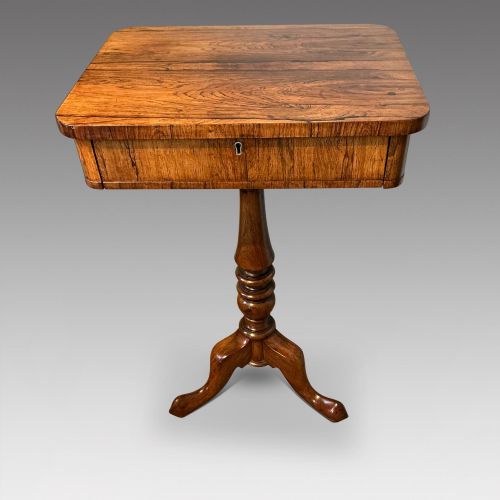
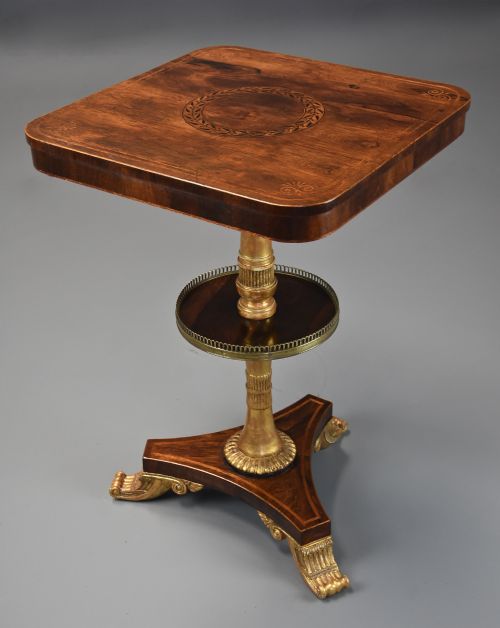
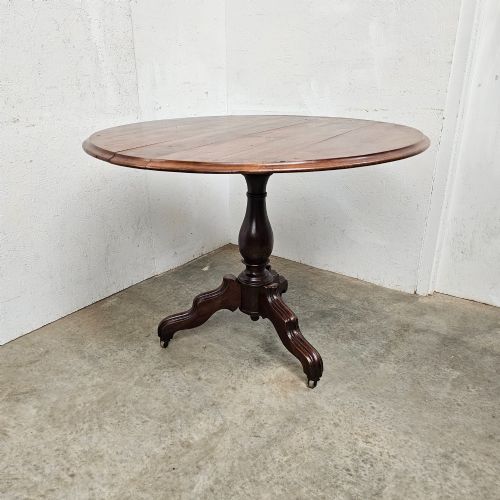
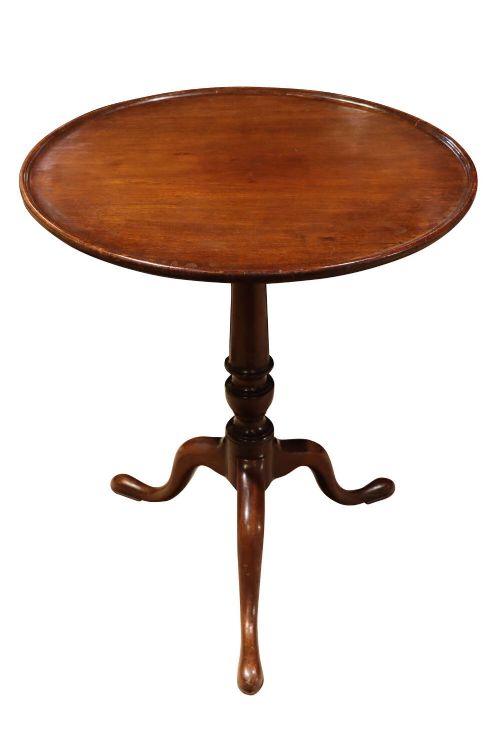
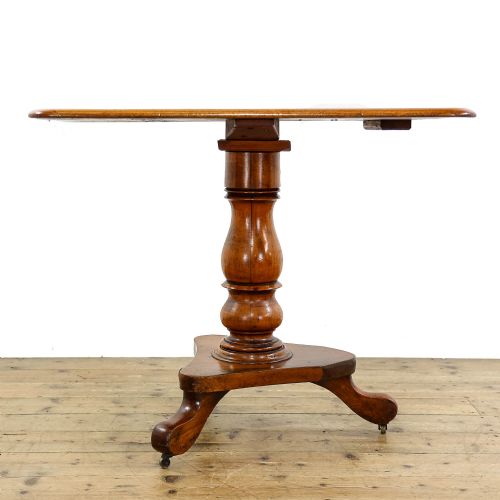
A tripod base tea table provides a compact surface raised on a central column supported by three legs, originating primarily in the eighteenth and nineteenth centuries. These pieces appear frequently across Georgian, Regency, and Victorian periods, often taking the form of occasional tables, wine tables, or snap-top designs.
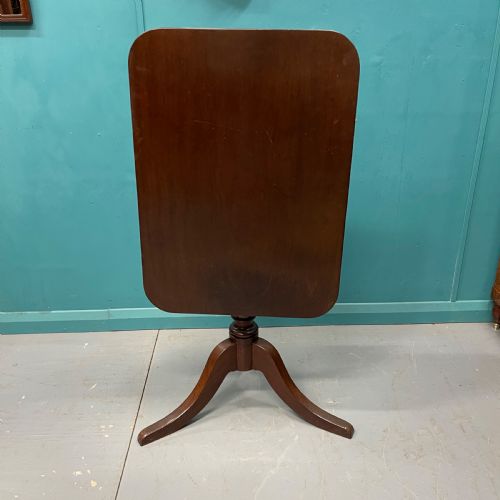
The form developed to serve tea and supper, allowing the top to tilt or snap vertical when not in use for convenient storage against a wall. Examples range from simple circular mahogany boards to ornate carved surfaces in rosewood, walnut, and pollard oak.
Materials and construction methods
Cabinetmakers constructed these tables using dense timbers such as mahogany, rosewood, and walnut, often selecting figured veneers for the circular tops. Turned and carved pillars connect the tabletop to three splayed legs, frequently terminating in brass castors or pad feet.
Many examples incorporate a birdcage mechanism beneath the top, allowing the surface to both rotate and tilt via a clever pivot and catch arrangement. Joinery relies on precise turning, mortise and tenon joints, and hand-carving to ensure stability across the three-legged base.
Tripod Base Tea Table Retail Price Guide 2026
Typical asking prices for tripod base tea table among the pieces listed under this phrase on Sellingantiques today, from the lower quarter to the upper quarter. They describe what is for sale here now, not the wider market.
Listings span the eighteenth, nineteenth, and early twentieth centuries, featuring mahogany, rosewood, walnut, pollard oak, and brass components.
Distinctions in craftsmanship
Quality rests in the selection of timber grain, the crispness of hand-carving on the pillar and knees, and the integrity of the tilting mechanism. Superior specimens exhibit finely figured mahogany or pollard oak with balanced proportions and robust joinery.
Lesser pieces may show stiffness in the turning, plain unfigured secondary woods, or looseness in the birdcage mechanism due to wear or replacement parts. The elegance of the leg splay and the integration of the catch dictate the overall refinement of the piece.
The Tripod Base Tea Table Glossary
- Snap-top
- A tabletop hinged to the central pillar so it can tilt vertically when not in use. This mechanism allowed eighteenth-century households to clear floor space quickly.
- Birdcage
- A wooden framework beneath the tabletop that enables the surface to revolve and tilt. It consists of small parallel plates connected by turned spindles.
- Piecrust
- A raised, scalloped edge carved directly into the solid timber top of the table. This decorative border resembles the crust of a traditional pie.
- Teapoy
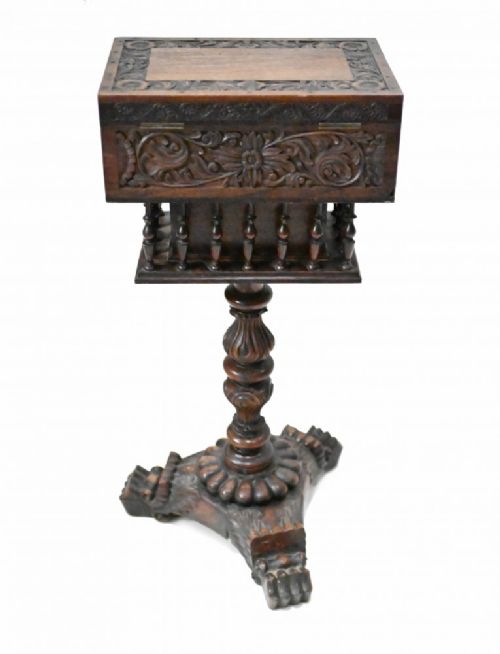
- A small box table or stand designed to hold tea caddies, sugar, and mixing bowls. Some variations incorporate a tripod base with internal compartments.
- Padouk
- An exotic dense hardwood with a reddish hue, often utilised in Anglo-Indian colonial furniture production. It accepts intricate hand-carved ornamentation with great clarity.
Tripod Base Tea Table: Frequently Asked Questions
What is a birdcage mechanism?
A birdcage is an ingenious assembly of small wooden turnings situated beneath the tabletop. It connects the surface to the central pillar, allowing the table to both rotate horizontally and tilt vertically.
This feature distinguishes finer Georgian and eighteenth-century examples from simpler fixed-top tables. It enabled owners to tuck the furniture neatly against a wall when tea service concluded.
How do I use a tilt-top table today?
These tables function well as occasional surfaces beside seating, or positioned in corners to display decorative objects. The tilting top also allows you to showcase the figured wood grain as a wall panel when stored.
Ensure the brass catch or wooden wedge remains secure if you keep the top locked in the horizontal position for daily use. Avoid placing excessively heavy items on older tilting mechanisms.
How do I tell a Georgian table from a Victorian one?
Georgian examples often display restrained lines, birdcage mechanisms, and rich mahogany grain with subtle carved details on the knees and feet. They tend to prioritize lightness and functional pivoting.
Victorian versions frequently present heavier proportions, darker finishes, and bolder carved ornamentation such as scrolling foliage or cast iron supports. Examining the secondary woods and the style of the turning helps clarify the period.