
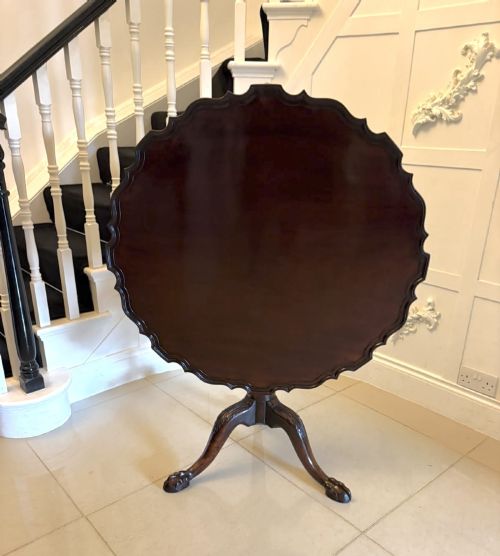
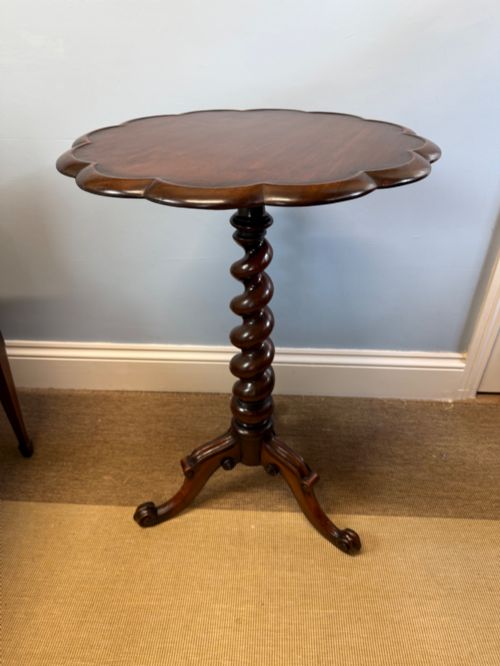
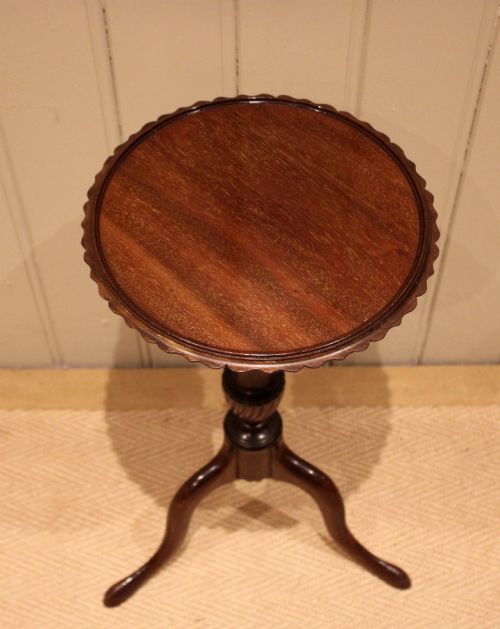
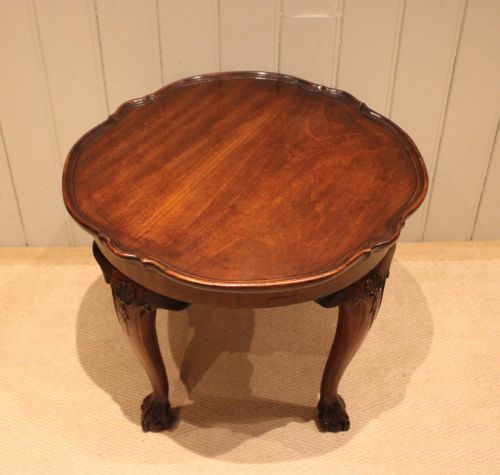

Mahogany Piecrust Wine Table
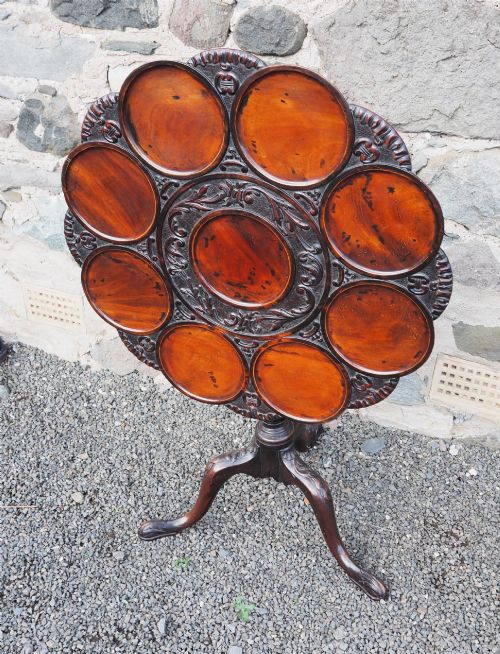
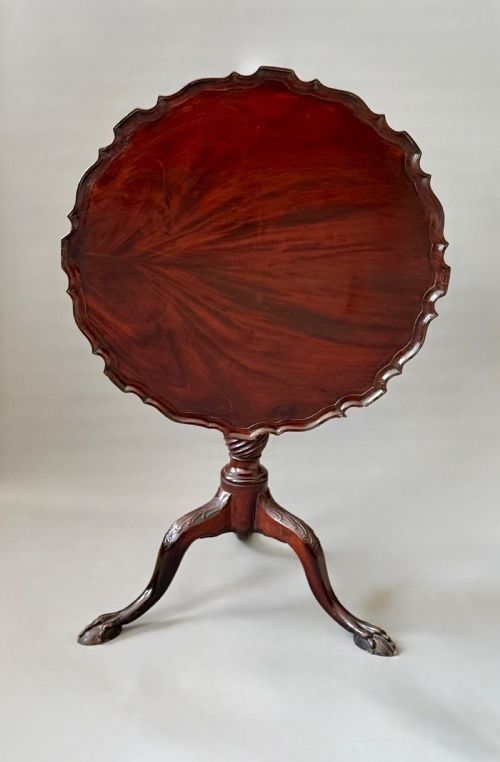
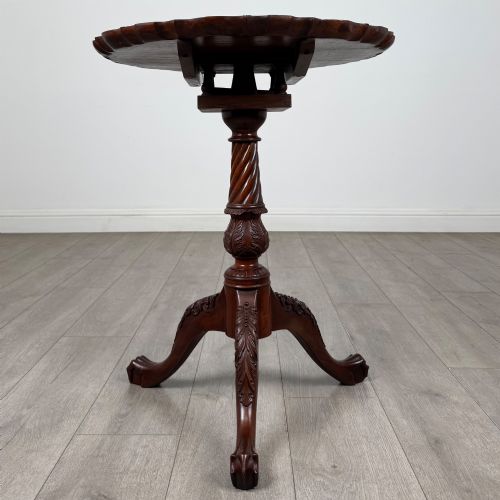
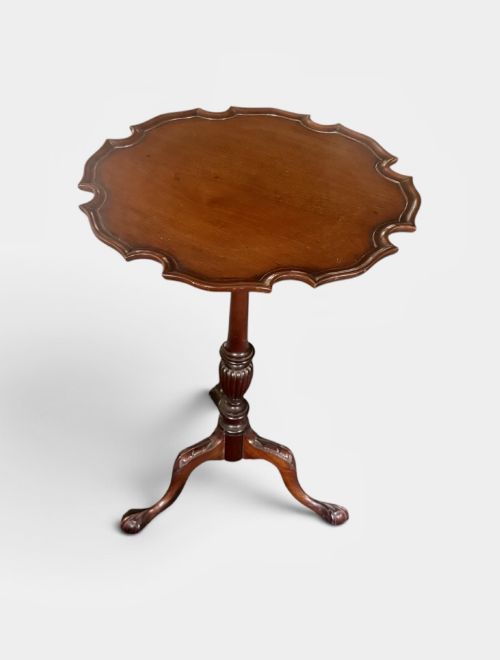
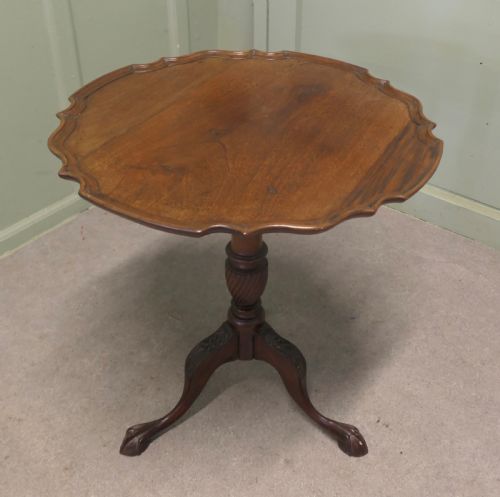
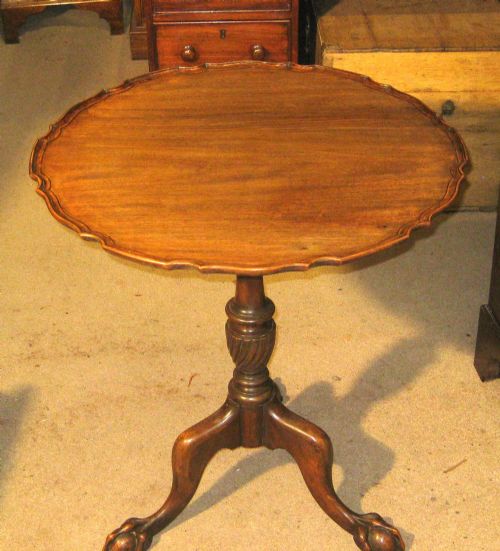
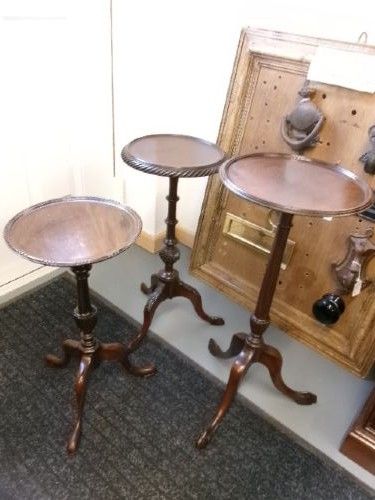
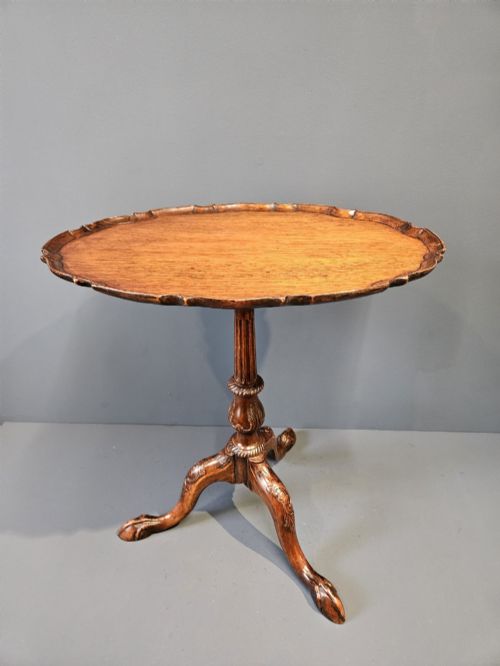
A mahogany piecrust wine table brings compact elegance to a room, offering a raised scalloped edge and a sturdy tripod base.
Mahogany Piecrust Wine Table
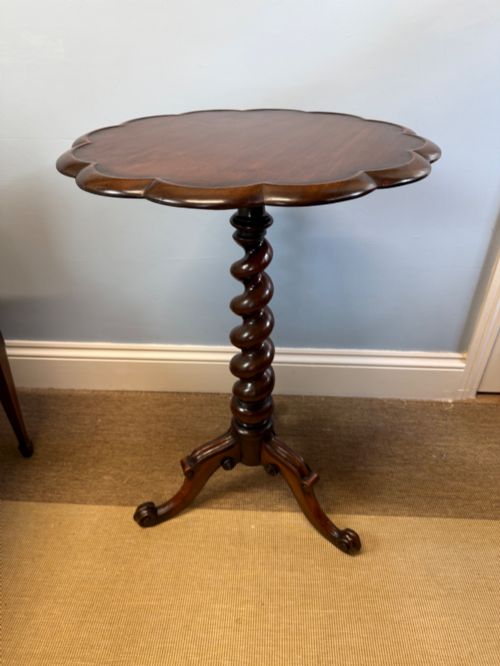
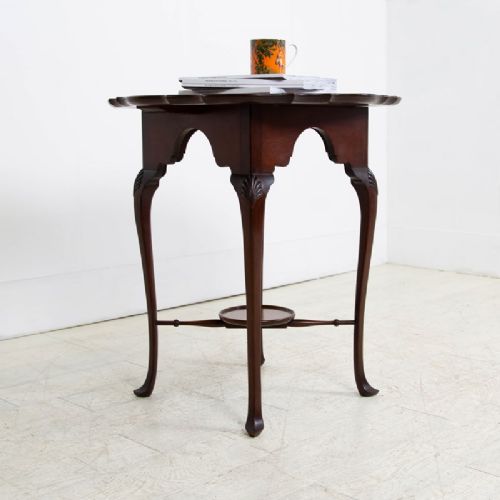
These pieces primarily function as occasional, side, or tripod tables designed to hold small items or drinks beside seating. The selection ranges from tilt-top variants featuring clever birdcage mechanisms to simpler fixed-top occasional forms.
How they were made
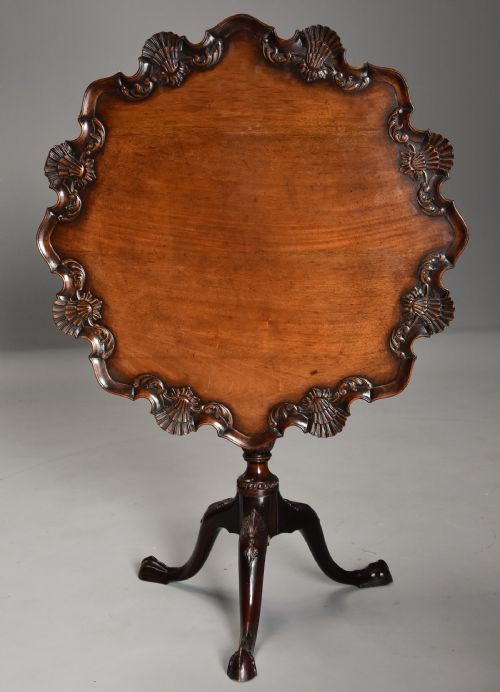
Cabinetmakers constructed these tables predominantly from solid mahogany or flame mahogany veneer, occasionally incorporating brass fittings and iron mechanisms for tilt-top actions. The distinctive raised rim was painstakingly carved directly from the solid timber edge of the tabletop rather than attached separately.
The base typically utilises a turned column set onto a tripod of three curved legs, often terminating in pad or claw-and-ball feet. Joinery relies on traditional methods, including pegged tenons and dovetails within the rotating birdcage assemblies.
Listings span the 18th, 19th, and 20th centuries, including Edwardian and Georgian revival periods alongside original George III examples.
What varies in quality
The refinement of the carved piecrust rim marks the primary distinction between ordinary and superior pieces, with crisp, deeply undercut mouldings demonstrating exceptional hand-carving skill. The proportions of the tripod base and the turning of the central column also dictate the overall visual balance.
Surface depth and the preservation of original timber patination separate untouched period pieces from later restorations or heavily refinished surfaces. Smooth operation of the tilt-top and birdcage mechanisms further reflects the initial precision of the maker's joinery.
Shapland and Petter
The Mahogany Piecrust Wine Table Glossary
- Piecrust rim
- A raised, scalloped edge carved around the perimeter of a tabletop in undulating curves. This decorative moulding emulates the crimped crust of a pastry pie.
- Birdcage
- A timber framework beneath the tabletop that allows the surface to both tilt and rotate. This mechanism connects the top to the central column through a series of small vertical spindles.
- Tripod table
- Any small table supported by a central pillar resting on three spreading legs. This design provides stability on uneven historic floors.
- Tilt-top
- A hinged tabletop mechanism that allows the surface to fold vertical when not in use. This clever space-saving design let tables stand flat against walls in smaller historic rooms.
- Patina
- The surface sheen and colour acquired by wood through age, handling, and exposure to light over many decades. A rich patina indicates natural ageing rather than modern chemical finishes.
Mahogany Piecrust Wine Table: Frequently Asked Questions
What is a birdcage mechanism?
A birdcage mechanism is a small wooden framing structure fitted beneath the tabletop that enables the surface to tilt flat and rotate 360 degrees.
This ingenious engineering allows the table to be stored flush against a wall when not in active use.
Were these tables used for wine?
These tables served various domestic purposes in Georgian drawing rooms, including holding small cups, glasses, or candles beside seated guests.
While often termed wine tables today, their compact surfaces suited general entertaining and needlework just as well.
How do I spot an 18th-century piece?
Eighteenth-century examples typically display hand-carved piecrust rims cut directly from solid timber planks, accompanied by rich natural patination on the mahogany.
Construction details like hand-cut joints and authentic wear patterns around the central pivot help distinguish early originals from later revivals.
How do I style a wine table?
A wine table fits easily beside an armchair, sofa, or in an empty corner where a larger piece of furniture would crowd the floor.
Its modest footprint makes it ideal for displaying a small lamp, a stack of books, or a decorative object.