
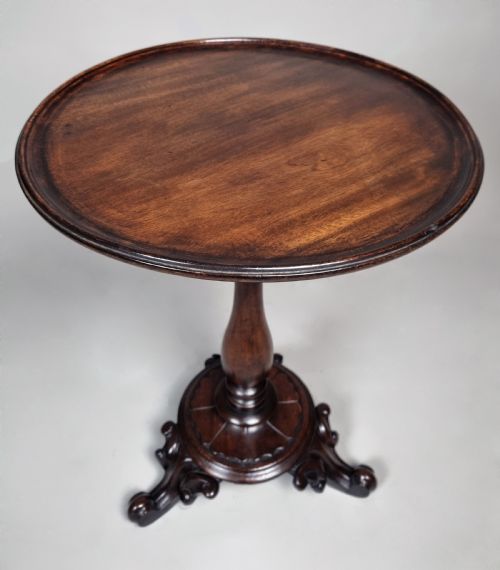
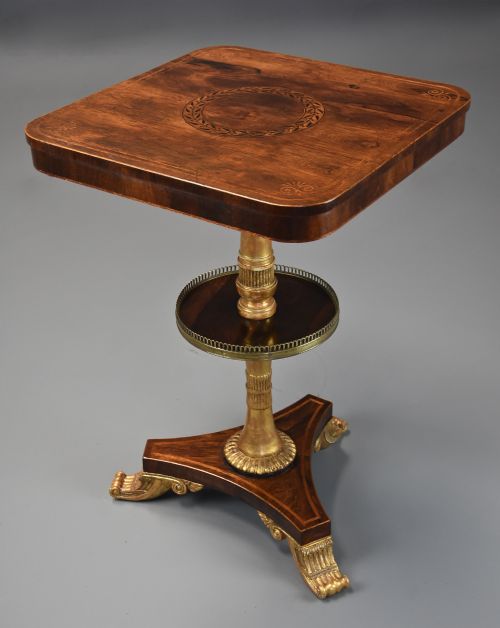
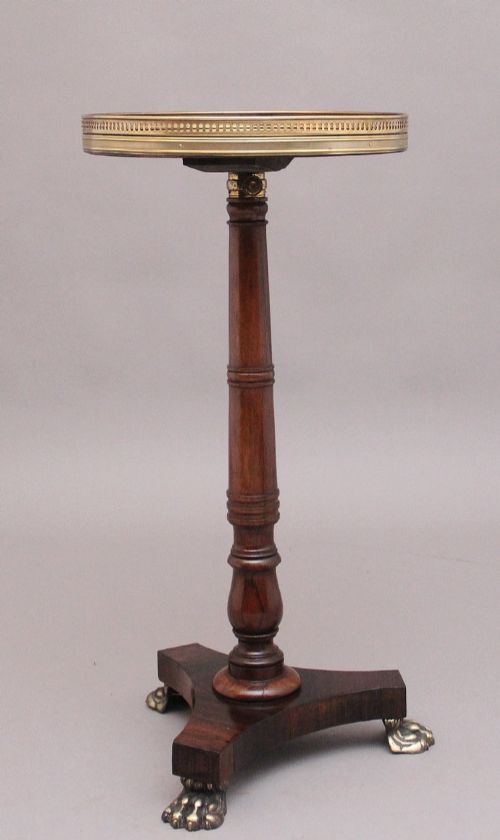
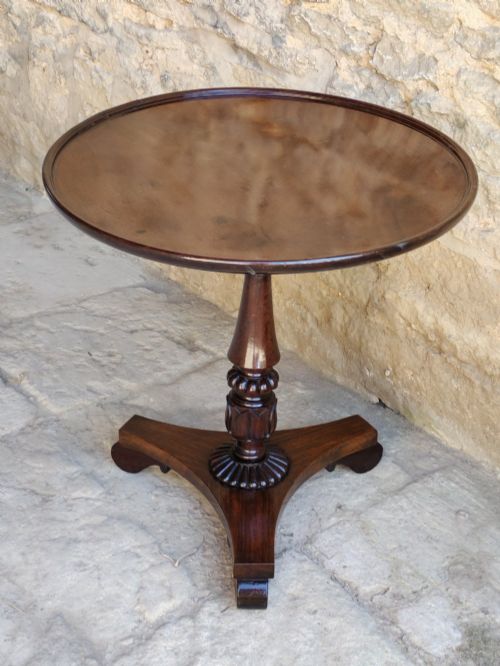


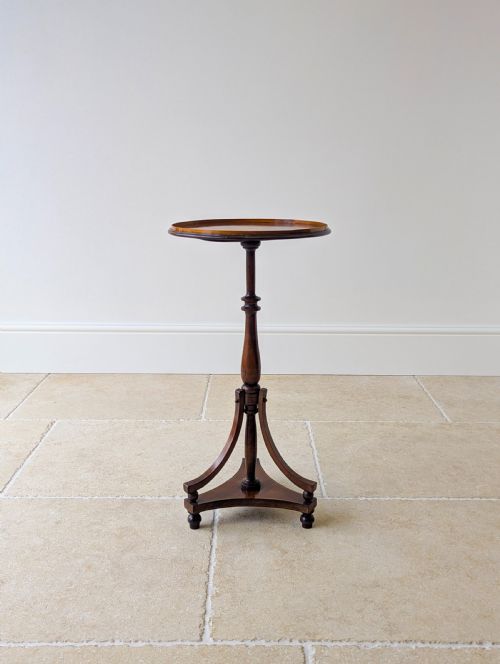


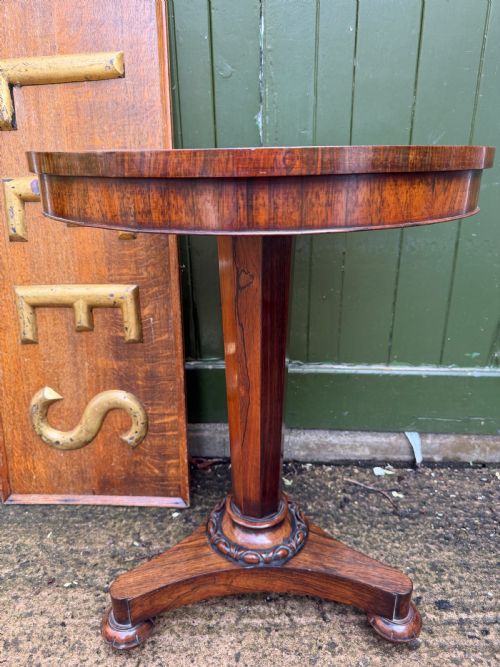


Triform Base Occasional Table
These are triform base occasional tables, raised on three-sided supports that anchor a compact surface for lamps, books or wine.
Triform Base Occasional Table
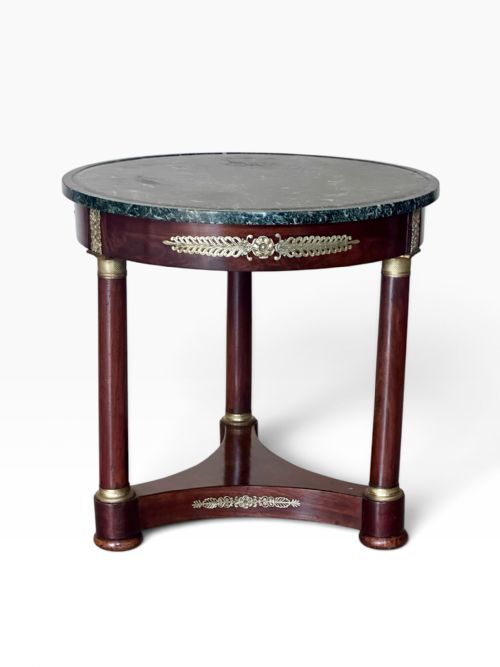
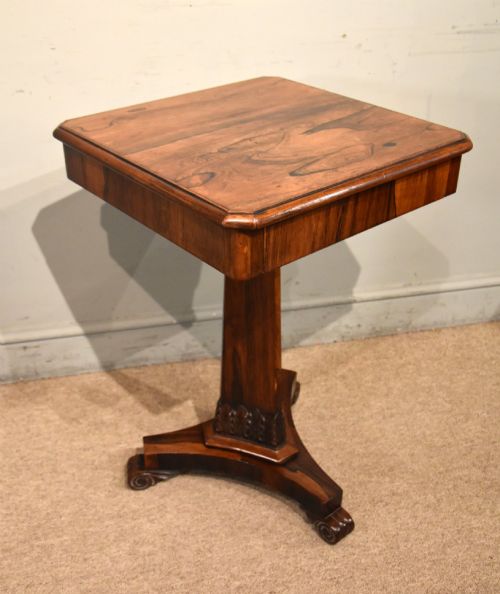
A triform base occasional table balances a circular or square top on a three-sided support structure, providing distinct stability and architectural presence. You will frequently encounter forms originating from the Regency and William IV periods, alongside French Empire guéridons.
The selection ranges from wine tables and tea poys to larger centre and games tables. Materials such as rosewood, mahogany and burr elm dominate the pieces listed here.
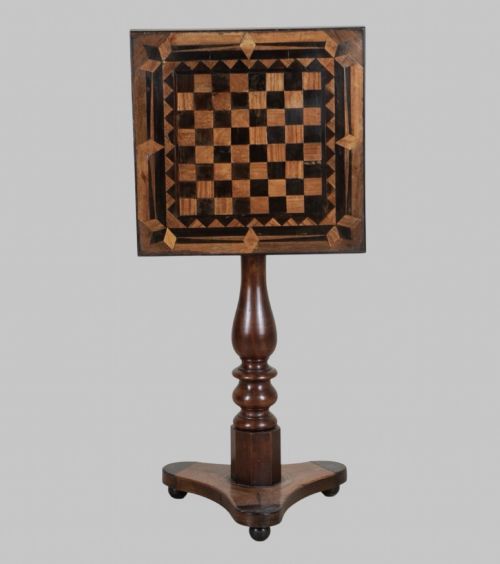
Many examples incorporate specialised tops, including specimen marble, inlaid chess boards or dished mahogany. These variations reflect the shifting domestic requirements of the nineteenth and early twentieth centuries.
Materials and construction methods
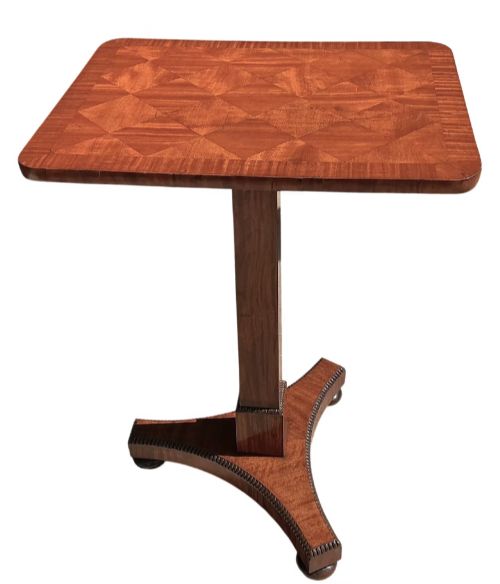
Cabinetmakers utilised dense timbers like rosewood and mahogany, often applying figured veneers to circular and octagonal tops. Burr elm and walnut appear for decorative grain patterns, supported by turned or pillar shafts.
Marble inserts feature prominently on French empire guéridons and Regency specimen tables, requiring precise stone-cutting and fitted wooden frames. Ormolu mounts and brass detailing provide structural accents and decorative contrast.
Joinery relies on solid pedestal construction where three-way scrolling or plinth bases distribute weight evenly. Penwork and inlay techniques decorate specific game and occasional tables from the early nineteenth century.
Some tables double as chess boards, proving that nineteenth-century evenings involved serious tactical deployment of small wooden pieces.
Judging the standard of execution
Quality rests on the selection of timber veneers and the crispness of carved wooden or gilt details on the pedestal. Superior pieces display seamless matching of grain across the table top and rigorous joint stability at the base.
The integration of inset marble or specialised chess boards demonstrates the maker's precision. Finer examples maintain proportional balance between the heavy triform support and the upper surface.
Strahan of Dublin·George Bullock
The Triform Base Occasional Table Glossary
- Guéridon
- A small French occasional table, frequently featuring a circular top on a central column and triform base. These often incorporate marble surfaces and ormolu mounts.
- Teapoy
- A small stand or table designed to hold tea caddies, often fitted with internal compartments. They appear in Regency and William IV formats.
- Triform
- Having a three-sided or three-pronged base design. This configuration provides a stable footprint for pedestal tables.
- Specimen marble
- A top composed of various coloured marbles arranged in geometric patterns. These are typical of Regency and Victorian decorative tables.
- Penwork
- An inked decorative technique using fine lines to simulate inlay or engraving. It appears on specialised games and occasional tables.
Triform Base Occasional Table: Frequently Asked Questions
What is a triform base occasional table?
It is a small freestanding table supported by a three-sided or three-pronged architectural base. The design allows for a sturdy footprint beneath a compact surface.
These pieces function effectively as lamp tables, wine stands or small centre tables in domestic spaces.
How do I identify a Regency period table?
Regency pieces often feature dark timbers like rosewood, classical architectural motifs, and sometimes brass inlay or ormolu mounts. The proportions tend to reflect classical revival designs.
Look for crisp turning on the central column and substantial triform plinths that ground the furniture.
Where were guéridons used?
Guéridons served as versatile French accent tables for holding candlesticks, small decorative items or drinks. Their marble tops provided durable surfaces for daily use.
They easily fit into sitting rooms as lamp stands or central display pieces.
What is a specimen marble top?
A specimen top uses multiple varieties of polished marble assembled to create geometric or pictorial designs. These tops showcase the varied mineral colours sourced during the nineteenth century.
They are commonly found on chess tables and high-status occasional furniture.