


Circular Marble Wine Table
A circular marble wine table brings a polished stone surface and a steady pedestal into a room for glasses and small lamps.
Circular Marble Wine Table
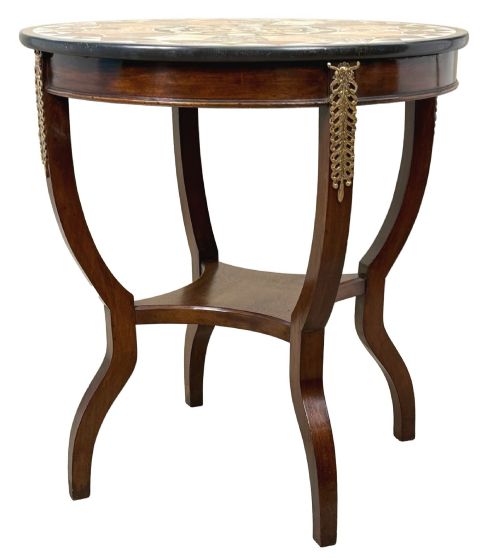
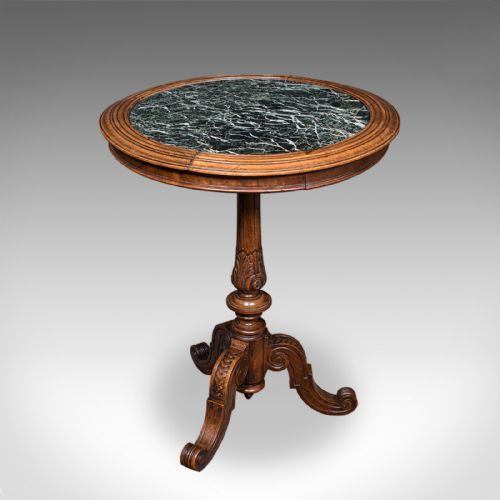
A circular marble wine table combines a smooth stone top with a timber base, functioning as a small pedestal or centre table. These pieces appear frequently as French gueridon tables, bouillotte tables, and occasional lamp tables from the nineteenth century.
The form crosses multiple periods, including the Regency, Victorian, and early twentieth century. Makers frequently utilised mahogany, walnut, and ormolu alongside white or specimen marble tops.
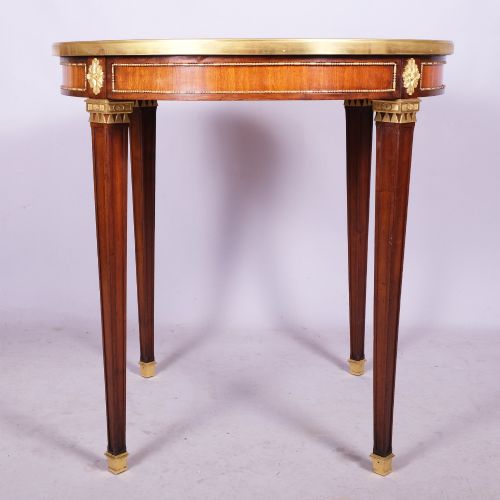
Buyers will encounter both English country house designs and continental styles such as French Empire and Louis XVI. The tables serve readily beside seating as compact resting places for drinks and lighting.
Construction and Materials
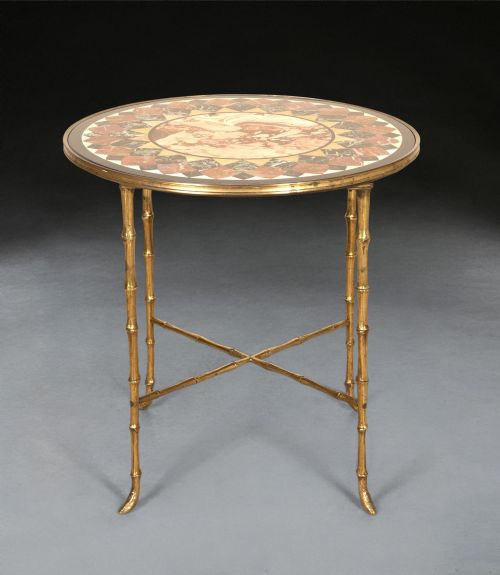
Cabinetmakers constructed the bases using timbers such as mahogany, walnut, satinwood, and coromandel, often shaped into slender tripod or column supports. Marble slabs, including specimen marble and pietra dura work, were selected for the inset circular tops.
Gilt bronze, gilt metal, and ormolu mounts frequently decorated the frames of French and English pieces. Woodworkers turned pedestals on lathes and joined timber using traditional cabinetmaking techniques suited to supporting heavy stone.
Card players once relied on raised gallery rims to stop their stakes from rolling onto the floor.
Evaluating Quality
The refinement of the marble top and the complexity of the wood frame set individual pieces apart. Finely cut specimen marble and detailed pietra dura work indicate superior craftsmanship compared to plain white stone.
The choice of timber grain, such as figured walnut or coromandel, alongside cast ormolu mounts, elevates a table's standing. Proportion and stability in the central pedestal further distinguish standard workshops from finer makers.
James Shoolbred
The Circular Marble Wine Table Glossary
- Gueridon
- A small French pedestal table, typically round, used for holding candles, lamps, or drinks. These tables feature prominently among nineteenth-century examples.
- Bouillotte table
- A small circular occasional table with a raised gallery rim, designed for card games. They frequently incorporate marble tops and brass galleries.
- Specimen marble
- A decorative surface composed of various coloured marbles fitted together in geometric or pictorial patterns. This technique appears on finer tables.
- Pietra dura
- An artistic technique using cut and fitted polished coloured stones to create mosaic designs. It distinguishes exceptional table tops.
- Ormolu
- Gilt bronze mounted on furniture as decorative embellishment. Makers utilised it extensively on French Empire and revival styles.
Circular Marble Wine Table: Frequently Asked Questions
What is a bouillotte table?
A bouillotte table is a small circular occasional table traditionally used for card games. They typically feature a raised brass gallery around the marble top to keep items from sliding off.
These pieces function well today as compact side tables or lamp stands in sitting rooms. Their distinctive raised rims separate them from standard gueridon designs.
How do I care for a marble top?
Marble requires gentle cleaning with a damp cloth and mild soap to protect the polished surface. Acidic liquids like wine or citrus can etch the stone if left unattended.
Using coasters helps preserve the finish against spills. Regular dusting keeps the timber base and stone top in good condition.
Where should I place these tables?
These tables fit easily beside armchairs, sofas, or in entryways as lamp and wine tables. Their compact circular shape allows them to occupy small corners without crowding a room.
The sturdy stone surface provides a practical spot for drinks and small decorative objects. They pair naturally with both period and modern interior schemes.
How do I identify French Empire style?
French Empire style tables display classical proportions, dark timbers like mahogany, and symmetrical brass or ormolu mounts. The designs reflect classical antiquity and early nineteenth-century aesthetics.
They often stand on three columnar legs or a central pedestal with metal claw feet. This distinct silhouette separates them from simpler Victorian models.