



Tribal Tent Hanging
When buying a tribal tent hanging, you acquire hand-woven Central Asian nomadic textiles created for daily camp life.
Tribal Tent Hanging
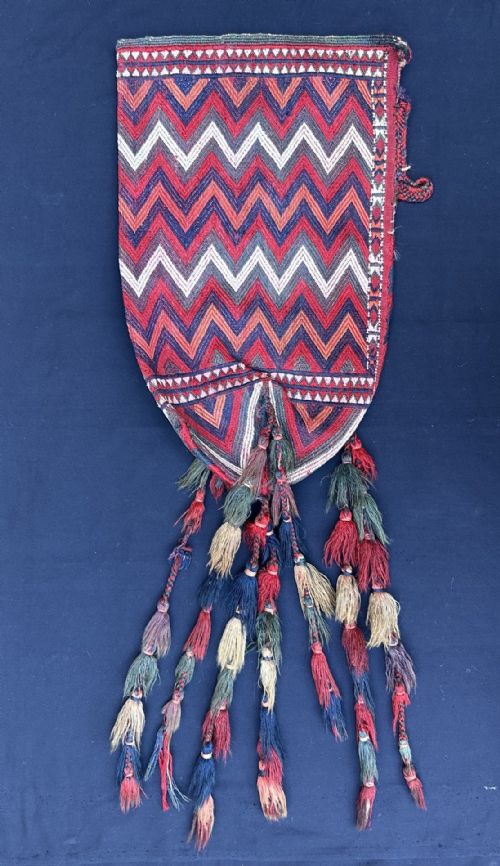
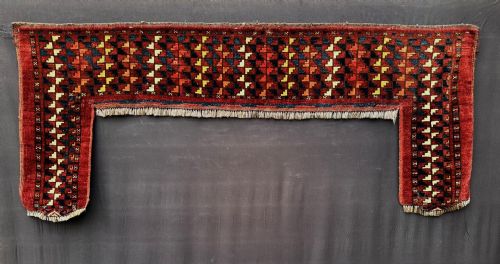
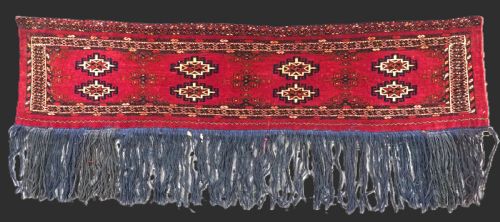
A tribal tent hanging encompasses functional nomadic weavings from Central Asian groups such as the Tekke, Yomut, Ersary, and Saryk Turkmen tribes, alongside Uzbek and Kyrgyz makers. These textiles served specific domestic purposes within the yurt or tent structure, including storage bags like torbas and chuvals, doorway portieres, and long structural bands.
Most items encountered on this page date from the nineteenth century through the early twentieth century. Pieces range from complete bag faces and animal trappings to tent pole bags and fragments of structural yurt bands.
Specific tribal sub-groups utilise distinct formats, such as the Lakai uut kap ilgich or Yomut kepse gul designs. Buyers examine these regional variations to determine origin and tribal attribution.
Quality factors in nomadic textiles
Quality rests upon the tightness of the knotting, the fineness of the weave, and the clarity of the primary and secondary guls. Superior examples exhibit exceptional handling of natural dyes and precise symmetry across complex geometric layouts.
The survival of original side cords, complete backs, and uncompromised structural integrity elevates a textile. Greater precision in the drawing of tribal motifs distinguishes finer workshop or dowry pieces from standard utility items.
Tribal Tent Hanging Retail Price Guide 2026
Typical asking prices for tribal tent hanging among the pieces listed under this phrase on Sellingantiques today, from the lower quarter to the upper quarter. They describe what is for sale here now, not the wider market.
The listings span from the mid-nineteenth century to the early twentieth century, utilising hand-spun wool, silk, and natural dyes.
The Tribal Tent Hanging Glossary
- Torba
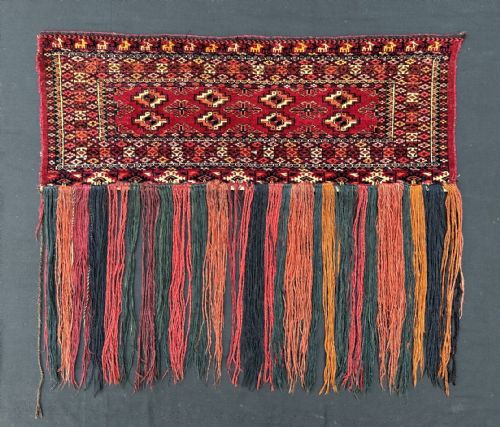
- A small Turkmen storage bag traditionally hung inside the tent. These pieces frequently display tribal gul motifs.
- Chuval
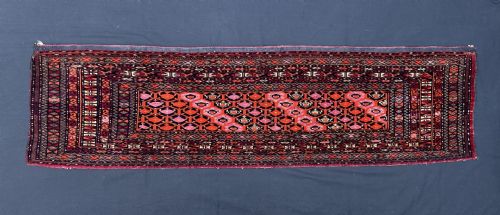
- A large tent storage bag used for bedding and household goods. They often feature multiple primary guls arranged in rows.
- Gul
- A repeated octagonal medallion motif associated with specific Central Asian tribes. Each pattern identifies the weaving group.
- Kapunuk
- A decorative doorway hanging placed around the tent entrance. These architectural trappings welcomed visitors to the nomadic dwelling.
- Uut Kap
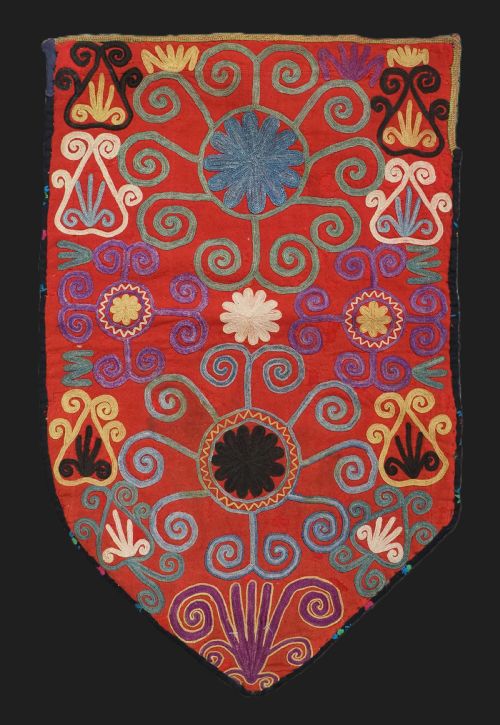
- An embroidered storage bag created by Uzbek Lakai tribes. They are known for lively needlework and silk highlights.
- Tegerich
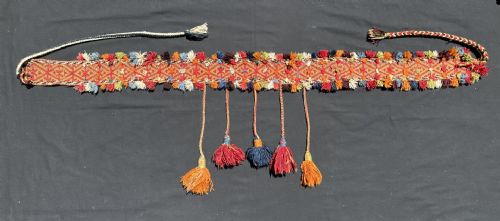
- A long pile-woven tent band used to secure the lattice walls of a yurt. Surviving portions typically appear as geometric fragments.
Tribal Tent Hanging: Frequently Asked Questions
What is a tribal tent hanging?
A tribal tent hanging is a nomadic textile created by Central Asian groups to furnish and organise portable dwellings. These works include storage bags, doorway surrounds, and structural bands.
Nomads produced these items using locally sourced wool and natural dyes, integrating traditional patterns that signified tribal identity and status within the community.
How were these textiles used?
Nomadic families utilised these woven and embroidered pieces for daily storage and interior decoration inside the yurt. Bags held clothing, utensils, and bedding, protecting possessions from damp ground.
Doorway hangings and animal trappings also served ceremonial functions during weddings and migrations, marking important milestones in family life.
How do I hang a textile safely?
Mounting a textile requires distributing the weight evenly across the entire upper edge to prevent distortion of the foundation threads. Professional conservators recommend using a fabric sleeve stitched to a cotton backing.
Keep pieces away from direct sunlight to protect natural dyes from fading, and maintain stable indoor humidity levels to preserve wool and silk fibres.
How do I identify different tribes?
Tribal attribution relies on examining specific structural layouts, colour palettes, and repeating medallion motifs known as guls. Different groups such as the Tekke, Yomut, and Ersary employed distinct geometric vocabularies.
Weaving techniques, side finishes, and wool qualities further help differentiate between regional workshops and nomadic confederations.