


Tribal Khorjin Face
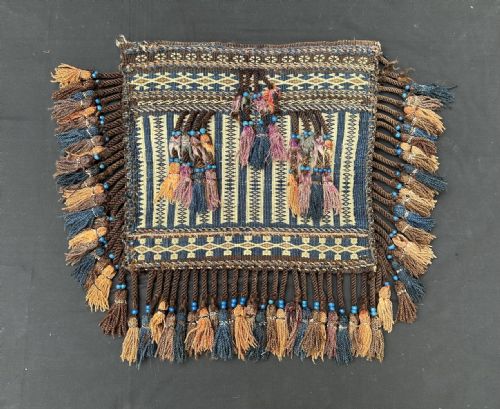
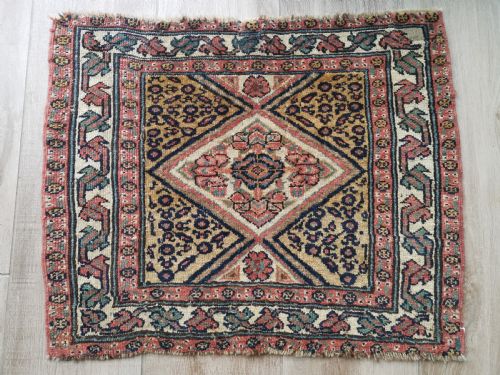
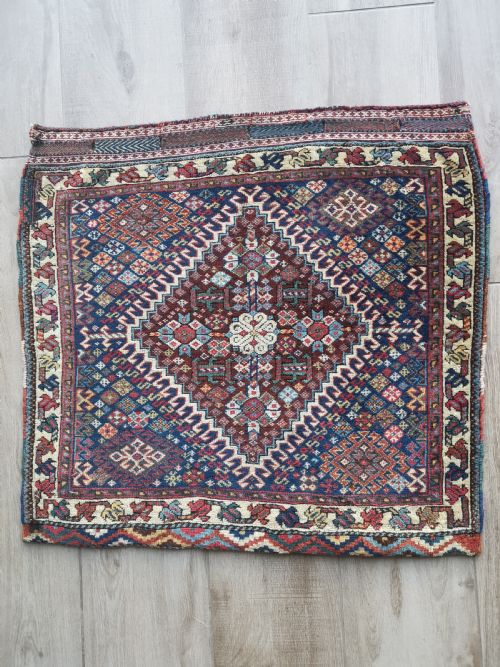
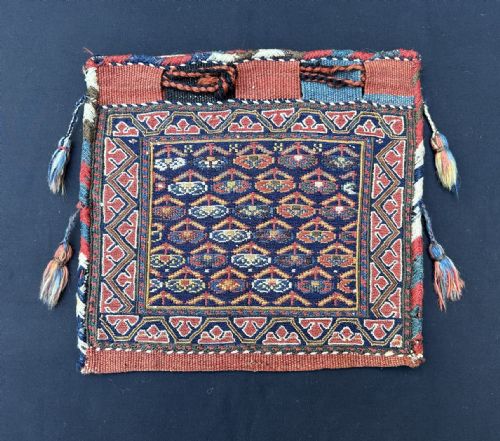
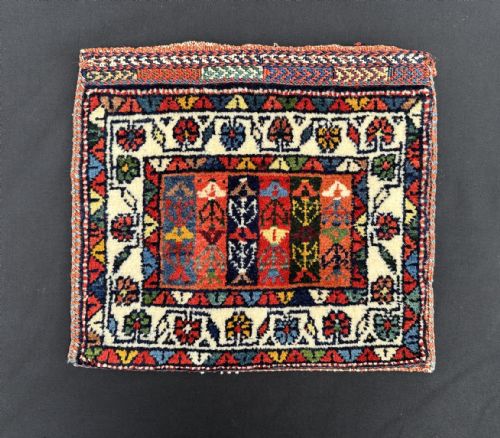
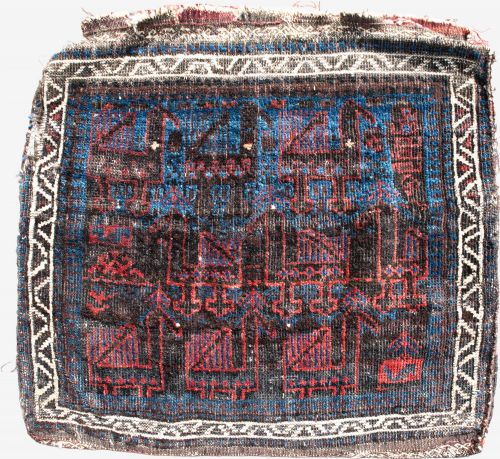
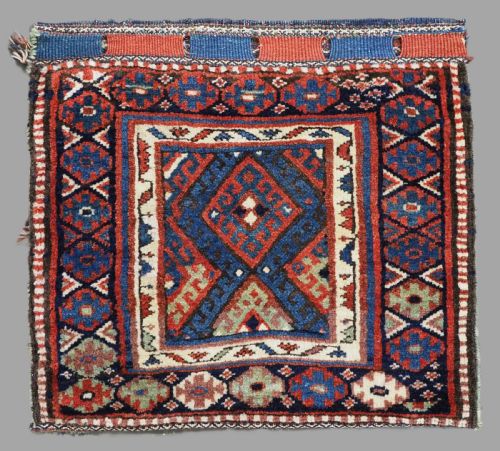
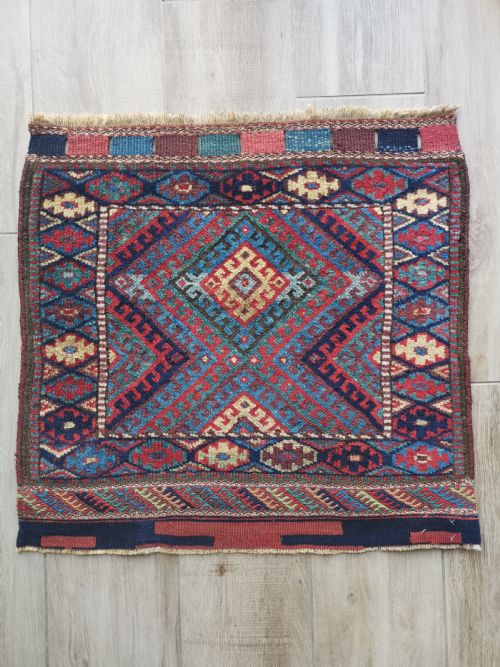
A tribal khorjin face is the front of a nomadic storage bag, woven to hold belongings while travelling across Persia.
Tribal Khorjin Face
When you examine a tribal khorjin face, you are looking at the surviving front panel of a double-sided horse or camel saddlebag made by nomadic and village weavers. These pieces span the nineteenth and early twentieth centuries, originating from tribal confederations such as the Qashqai, Afshar, Shahsavan, Baluch, and various Kurdish groups across Persia and the Caucasus.
You will most frequently meet single bag faces on this page, separated from their original paired counterparts over decades of use and trade. They survive as compact textile art, retaining the rich geometric patterns and village iconography intended for utilitarian storage on animal journeys.
The forms range from complete saddlebag faces with intact plain weave backs to half-khorjins, storage bags, and smaller personal chantehs. Their makers utilised traditional knotting and flatweaving techniques, recording tribal identity and regional colour palettes in durable wool.
How they were made
Weavers constructed these pieces using hand-spun wool for both the pile and the foundational warps and wefts, creating a dense, resilient fabric suited to nomadic life. Natural dyes provided the deep reds, blues, and yellows that define the visual depth of the wool over time.
Certain examples incorporate supplementary techniques like Soumac flatweaving or highlight specific motifs with small glass beads embedded in the textile structure. The combination of hand-spun materials and natural dyeing yields the characteristic tonal variations inherent in tribal weaving.
Listings feature bag faces from nineteenth-century Persian nomadic groups, utilising natural dyes and hand-spun wool.
What varies in quality
The distinction between ordinary and exceptional examples rests upon the crispness of the drawing, the saturation of the natural dyes, and the fineness of the knotting. Finer pieces demonstrate tighter structural density and more deliberate control over complex geometric or boteh layouts.
Condition and the retention of original structural elements, such as complete plain weave backs or side corded selvages, elevate the standing of an individual bag face. The harmony of the palette and the precision of tribal symbols distinguish the most accomplished nomadic work.
The Tribal Khorjin Face Glossary
- Khorjin
- A traditional double-sided saddlebag used by nomadic peoples for transporting possessions on animals. The face represents the decorative front half of this utilitarian container.
- Soumac
- A wrapping technique used in flatwoven rugs and bags that produces a durable structure resembling braids on the face and loose threads on the reverse. It creates sharp diagonal pattern lines without pile knots.
- Chanteh
- A small personal bag or vanity bag woven by nomads for carrying small daily items. These are typically smaller in scale than saddlebags.
- Boteh
- A stylised almond or paisley motif representing a floral shoot or cypress tree, frequently found in Persian and tribal textile designs. It appears in various forms across Afshar and Kurdish weaving.
- Medallion
- A central ornamental design element placed in the middle of the bag face field. It anchors the surrounding geometric composition.
Tribal Khorjin Face: Frequently Asked Questions
What is a khorjin face?
A khorjin face is the decorative front panel of a traditional nomadic saddlebag. These textiles were woven to endure the rigours of travel.
Over time, many of these bags were cut apart, leaving the durable pile-woven or flatwoven faces as standalone decorative items.
How were these bags used?
Nomadic tribes utilised these double bags strapped across pack animals to carry personal belongings, provisions, and household goods during seasonal migrations.
The sturdy construction protected contents from dust and rough handling while on the move.
How do I live with a bag face?
Bag faces adapt well to modern interiors as small decorative wall hangings, table mats, or small cushions. Their compact dimensions make them versatile accents for neutral spaces.
Keep them out of direct sunlight to protect the natural dyes from fading.
How do I tell tribal styles apart?
Tribal styles are distinguished by their specific colour palettes, knotting densities, and recurring motifs such as botehs, tiles, or central medallions. Afshar and Qashqai pieces often display distinct regional wool treatments and geometric vocabularies.
Examining the structure and back weave helps attribute the piece to groups like the Shahsavan or Baluch.