


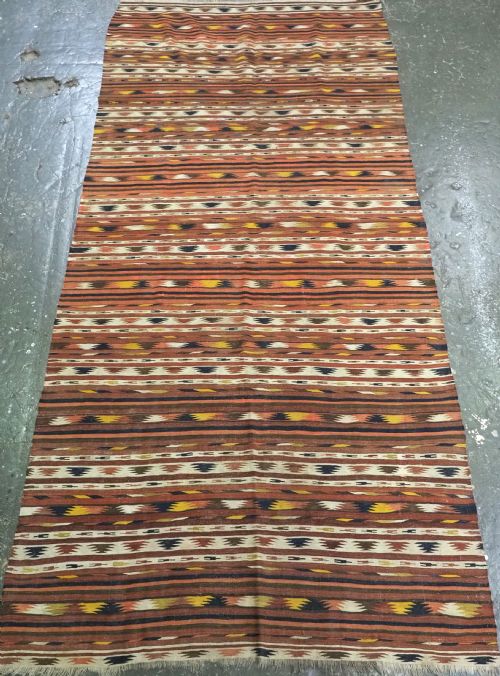


Tribal Floor Textile
These tribal floor textile examples bring grounded nomadic geometry and rich natural dyes directly into modern interiors.
Tribal Floor Textile
A tribal floor textile encompasses flat weaves, pile rugs, and bag faces produced by nomadic and village makers from Persia, Central Asia, and the Caucasus. These utilitarian objects served as essential furnishings within tents and permanent dwellings, functioning as floor coverings, blankets, and storage containers. The selection here spans the late nineteenth and early twentieth centuries, capturing traditional weaving patterns before synthetic dyes dominated production.
The assortment on this page includes runner rugs, kilim rugs, saddlebags, and cushions derived from specific regional traditions like Yomut Turkoman, Uzbek, and Bakhtiari tribes. Buyers encounter formats ranging from room-sized spreads to smaller bag faces repurposed as cushions, all sharing a distinct heritage of nomadic craftsmanship. Each piece reflects the specific aesthetic vocabulary of the group that wove it, utilising geometric motifs and symbolic designs.
Materials and construction
These textiles rely predominantly on wool and hand-spun wool, often paired with cotton for structural foundations or contrasting details. Artisans sourced local fleeces yielding resilient, lanolin-rich fibres capable of withstanding heavy daily use on earthen floors. The spinning process produced irregular yarn thicknesses that lend a characteristic tactile depth to the finished surface.
Colour comes from natural dyes derived from plants, roots, and insects, producing subdued, harmonious palettes that age gracefully over decades. Weaving techniques vary from pile knots in rugs to flat-woven kilim structures and slit-woven tapestry methods seen in jajim textiles and suzani kilims. These methods required immense skill, relying on memory and oral tradition rather than written charts.
Tribal Floor Textile Retail Price Guide 2026
Typical asking prices for tribal floor textile among the pieces listed under this phrase on Sellingantiques today, from the lower quarter to the upper quarter. They describe what is for sale here now, not the wider market.
Materials documented across the inventory include cotton, wool, and hand-spun wool dyed with natural substances.
What determines quality
Quality rests upon the fineness of the weave, the integrity of the natural dye palette, and the precision of the tribal design execution. Tighter knots or denser flat-weave structures indicate superior durability and greater artisan time investment, particularly in pieces like Turkmen Dali kilims. The complexity and clarity of motifs, such as calyx lattice patterns or repeat designs, distinguish standard utility items from exceptional examples.
Condition and structural originality also govern worth, particularly regarding surviving original borders, selvedges, and uncompromised wool pile. Pieces retaining deep, vibrant tones from natural dyes without excessive fading or crude modern repairs command greater appreciation among collectors. The balance between functional wear and structural preservation dictates how well a textile represents its specific regional school.
The Tribal Floor Textile Glossary
- Kilim
- A flat-woven textile produced without a pile, created by tightly interlocking warp and weft threads to form geometric patterns. These pieces function as floor coverings, wall hangings, and coverlets.
- Bag face
- The decorative front panel of a utilitarian nomadic storage bag, harvested from its backing and often preserved as a small rug or cushion. These panels concentrate the finest weaving and design work of the original piece.
- Natural dye
- Colourants sourced from organic materials such as plants and insects before the widespread adoption of synthetic alternatives in the late nineteenth century. These dyes interact with wool to produce complex, changing patinas over time.
- Jajim
- A sturdy flat-weave textile constructed in narrow strips and stitched together to form larger floor spreads or wall coverings. They frequently feature bold striped or banded visual arrangements.
- Warp
- The stationary lengthwise threads stretched tightly on a loom, forming the structural skeleton of the textile onto which the weft is woven. Visible warp fringes often terminate at either end of the rug.
Tribal Floor Textile: Frequently Asked Questions
How do I care for an antique woven rug?
Vacuum gently without using a rotating brush roll to prevent pulling the delicate wool fibres or damaging the historic foundation.
Professional cleaning should occur infrequently and be handled exclusively by specialists experienced in antique vegetable-dyed textiles.
Can these antique rugs handle heavy foot traffic?
Many sturdy wool pile rugs and tight flat-weaves were originally constructed for demanding daily use inside nomadic tents.
Pile height and structural integrity determine resilience, so delicate fragile fragments require placement in low-traffic areas.
What is a bag face cushion?
Nomadic tribes wove sturdy bags for transporting household goods, featuring heavily ornamented front panels that displayed their finest craftsmanship.
When the backing wore out, these decorative faces were salvaged and later padded to serve as decorative cushions.
How are regional styles identified?
Distinctive colour palettes, specific geometric symbol repertoires, and unique structural techniques point directly to particular tribal groups.
Comparing knot counts, wool characteristics, and edge finishes helps link a textile to areas like Khorasan or the Caucasus.