



Tribal Flat Weave
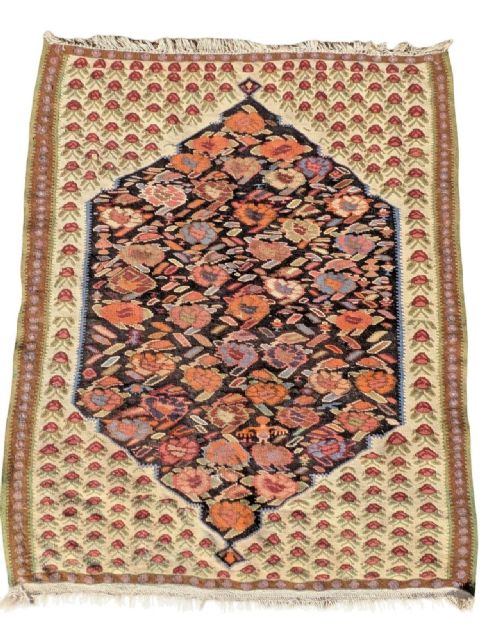
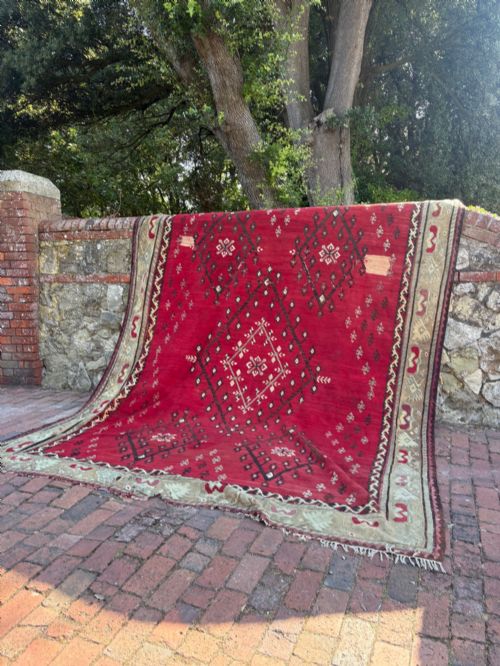
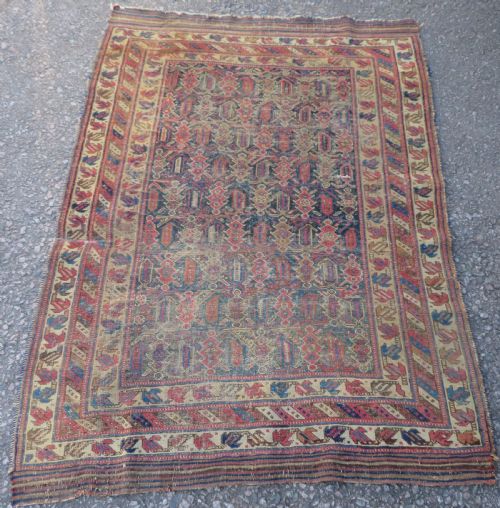
When you search for a tribal flat weave, you are looking at carpets, kilims, and nomadic textiles woven by hand across Anatolia, Persia, the Caucasus, and Central Asia.
Tribal Flat Weave
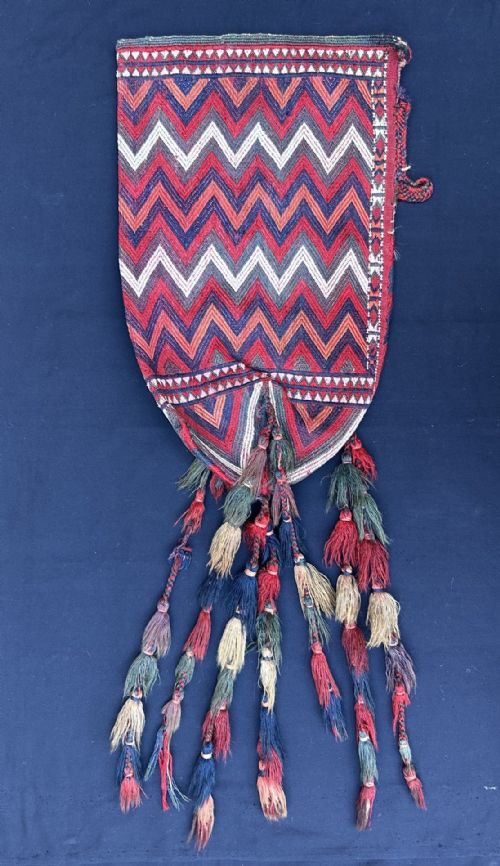
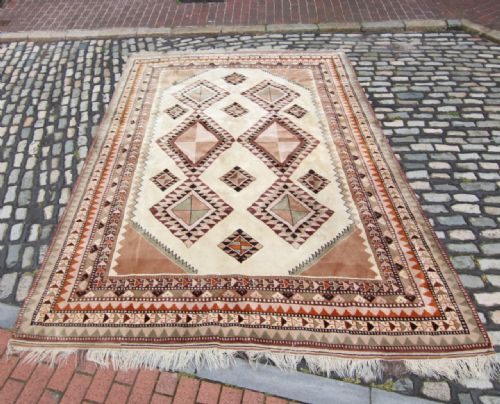
A tribal flat weave encompasses utilitarian floor coverings, storage sacks, grain bags, and saddlebags produced by nomadic and village weavers. These pieces carry traditional banded, geometric, or medallion designs specific to groups such as the Afshar, Shahsevan, Yomut, and Tekke Turkmen.
The objects on this page range from large room-sized carpets and runner rugs down to smaller utility items like cushions, salt bags, and bread sofrehs. Most examples date from the middle of the nineteenth century through to the early decades of the twentieth century, originating from regions spanning from Turkey to Central Asia.
Materials and construction methods
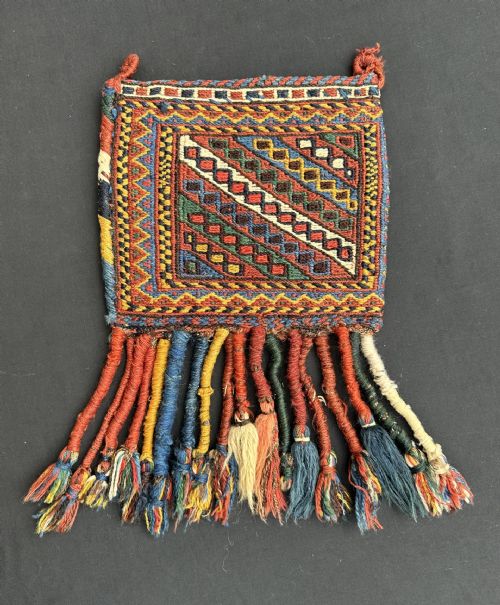
Weavers constructed these textiles primarily using hand-spun wool and cotton, relying on natural dyes to achieve rich colours. Specific techniques include traditional flat-weaving, slit-weave kilim construction, and soumak work, which involves wrapping supplementary weft threads around the warp.
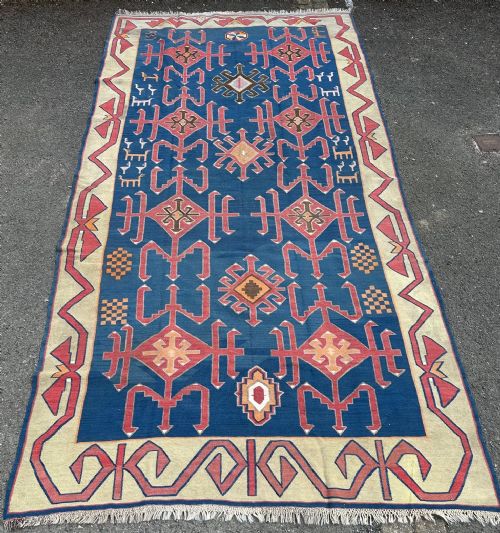
Many larger carpets and kilims were woven in two separate parts and joined together down the centre to create the required width. Smaller utilitarian items, such as Khorjin bag faces and mafrash storage pieces, frequently incorporate completed backs, tassels, and structural braids.
Some nineteenth-century salt bags arrived complete with their original closing braids, ready to season a camp that vanished generations ago.
The markers of distinction in flat weaves
Quality in a tribal flat weave rests upon the integrity of the wool, the precision of the flat-weave structure, and the vibrancy of the natural dyes. Tightly spun wool and complex, well-executed geometric layouts elevate certain bags and carpets above standard utility pieces.
Condition also shapes the standing of an example, distinguishing items retaining their original long kilim ends, backs, and tassels from those showing timeworn repairs or heavy distress.
Afshar Nomads·Shahsevan Nomads·Yomut Tribes·Tekke Turkmen·Luri Tribes
The Tribal Flat Weave Glossary
- Kilim
- A flat-woven carpet or rug produced without a pile by tightly interweaving warp and weft strands. This technique creates a lightweight textile with identical patterns visible on both sides.
- Soumak
- A brocade-like flat-weaving technique where coloured weft threads are wrapped over and under warp threads to produce a textured surface. It adds considerable durability and weight to bags and rugs.
- Khorjin
- A traditional pair of saddlebags used by nomadic tribes for transport and storage. Surviving examples are often found as single bag faces used today as small rugs or cushions.
- Sofreh
- A cloth or spread used primarily for kneading bread, serving meals, or handling flour. These flat weaves typically feature strong geometric field designs.
- Mafrash
- A large rectangular storage chest or bedding bag constructed from four woven sides and a base. Complete pieces were assembled to transport household goods during seasonal nomadic migrations.
Tribal Flat Weave: Frequently Asked Questions
How were tribal flat weaves used originally?
Nomadic groups utilised these flat-woven textiles for daily survival, laying them as floor coverings inside tents or hanging them as partitions. Smaller pieces served functional roles as grain sacks, bread spreads, and saddlebags for transport.
Over time, these utility items became central to domestic life, functioning as dowry components and durable storage containers. Their construction reflected the specific regional needs of tribes moving across Anatolia, Persia, and Central Asia.
What is the difference between a kilim and a soumak?
A kilim is produced by tightly interweaving the weft threads across the warp to create a smooth, flat surface with no raised pile. This method results in sharp, geometric pattern edges where colours meet.
Soumak work involves wrapping supplementary weft threads over the warp to form a textured, ribbed surface on the face of the textile. This technique provides extra reinforcement and a heavier handle compared to standard flat weaving.
How do I care for an antique flat weave?
Protect these textiles by placing a suitable underlay beneath them to prevent slipping and reduce friction on hard floors. Gentle, regular vacuuming without a rotating brush roll helps remove embedded dust without pulling the hand-spun wool.
Keep them out of direct, harsh sunlight to protect the natural dyes from fading over time. For thorough cleaning, consult a specialist experienced in handling antique nomadic textiles rather than attempting wet washing at home.
Can I use bag faces and cushions on the floor?
Bag faces and smaller fragments were originally constructed for heavy daily use as transport sacks and storage containers by nomadic communities. Their sturdy wool construction and tight flat weave make them robust enough for light floor placement.
Many collectors prefer to mount bag faces on walls or utilise them as decorative cushions to minimise direct foot traffic. Evaluating the structural integrity of the individual wool and foundation will guide the most appropriate placement in a home.