


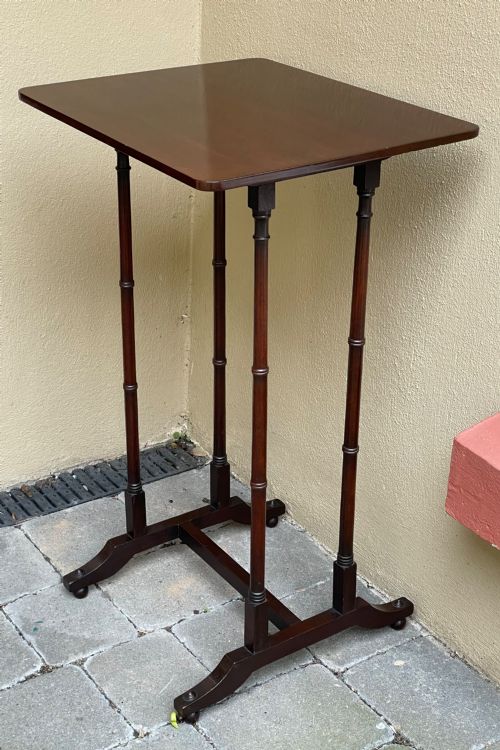


Trestle Wine Table
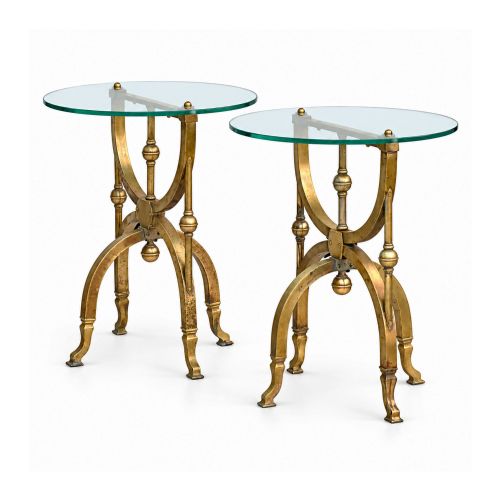
A trestle wine table brings purposeful French and English utility into a room, offering a compact surface built to fold or stand firm for daily use.
Trestle Wine Table
When you search for a trestle wine table, you encounter practical surfaces originating from nineteenth-century contexts, spanning French provincial wine-making regions and English rooms. The inventory on this page relies heavily on French cherry, oak, and folding vendange or vigneron tables alongside Regency and Victorian English mahogany and pine occasional pieces.
The form varies from diminutive end tables and miniature wine tables to large tavern and dining tables designed for utility. Folding variants designed for vineyards sit alongside sturdy static stands intended for morning rooms, lounges, and reading spaces.
How they were made
Cabinetmakers constructed these pieces using solid timbers including oak, mahogany, cherry, rosewood, fruitwood, and pine. Iron and brass hardware provided mechanical support for folding mechanisms on vineyard tables.
Joinery techniques matched the functional purpose of each piece, joining folding trestle legs to thick timber tops. Turning and framing methods varied between provincial workshop traditions and Regency cabinet shops.
Current listings feature nineteenth-century oak, mahogany, cherry, and pine pieces spanning French provincial and English Regency styles.
What varies in quality
The distinction between ordinary utility items and superior examples lies in the selection of timber and the integration of folding mechanisms. Denser woods such as rosewood and well-figured mahogany or cherry indicate a higher grade of production than standard pine or basic fruitwood.
Proportion and stability separate the finer tables from basic workshop output. Cleanly articulated trestle joints and balanced scaling distinguish the better examples across both English country styles and French provincial designs.
The Trestle Wine Table Glossary
- Vendange table
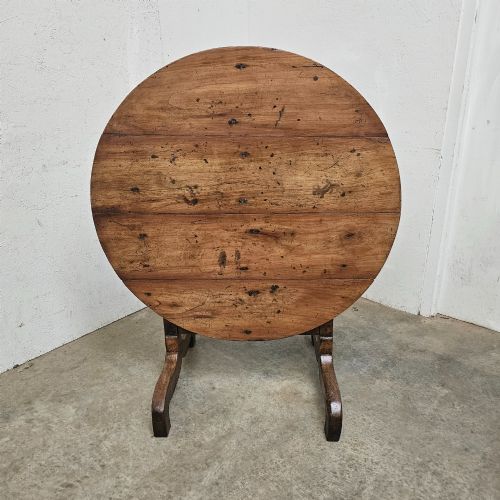
- A traditional French wine-harvest table featuring a folding trestle base designed for easy storage during the off-season. These tables typically pair an oak or fruitwood frame with a thick cherry top.
- Trestle table
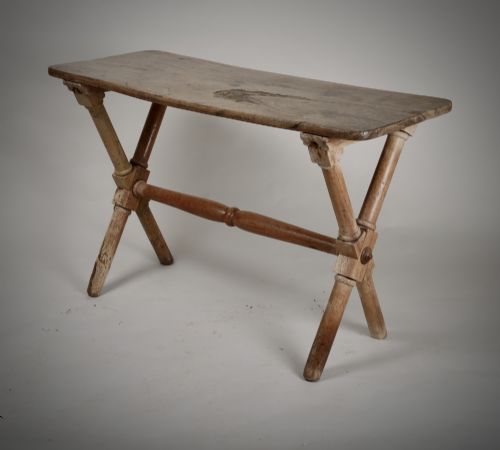
- A table consisting of two or more support frames connected by a beam, holding a horizontal top. This design allows for maximum legroom and efficient folding.
- Regency
- An English design period spanning the early nineteenth century characterised by classical restraint and refined proportions. Pieces from this era often utilise mahogany and brass details.
- Tilt top table
- A table featuring a mechanism that allows the surface to pivot to a vertical position when not in use. This saves floor space in smaller rooms.
- Vigneron table
- A regional working table associated with vineyard owners and wine-tasting activities. They share common traits with vendange tables through their folding timber construction.
Trestle Wine Table: Frequently Asked Questions
What is a vendange table?
A vendange table is a traditional French harvest table built with a folding trestle base to clear space after the grape harvest. These pieces typically feature fruitwood or oak frames beneath solid cherry tops.
Their practical design makes them adaptable for modern dining or side placement, reflecting their original purpose as portable agricultural furniture.
How do I date a nineteenth-century table?
Dating relies on examining the timber species, construction joinery, and hardware conventions of the period. Regency and Victorian examples show distinct turnings and finish methods compared to provincial French items.
Tool marks and the type of fasteners used offer further evidence of whether a piece dates to the early or late nineteenth century.
Are folding wine tables stable?
Folding wine tables utilise wooden trestle struts and iron or brass hinges designed to lock the top securely in place. When properly adjusted, the folding mechanism provides a firm surface for daily use.
Over time, wear on the pivot joints can introduce slight movement, which requires careful alignment of the wooden supports.
Where should I place an end wine table?
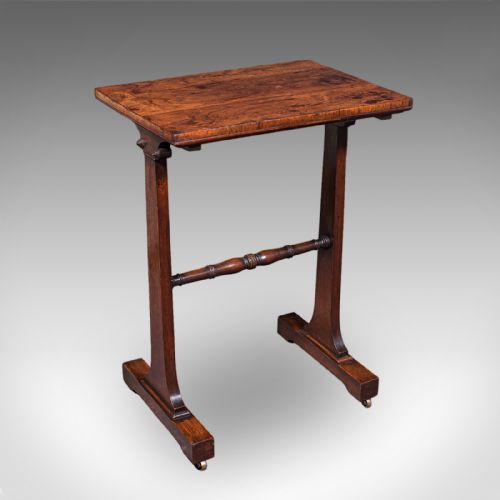
End wine tables suit reading rooms, lounges, and morning rooms where a compact surface is needed next to seating. Their modest proportions prevent them from dominating smaller interior spaces.
They also function effectively as lamp tables or serving surfaces due to their height and narrow footprint.