
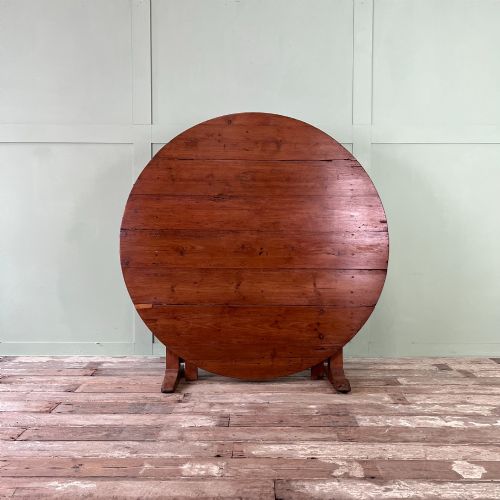
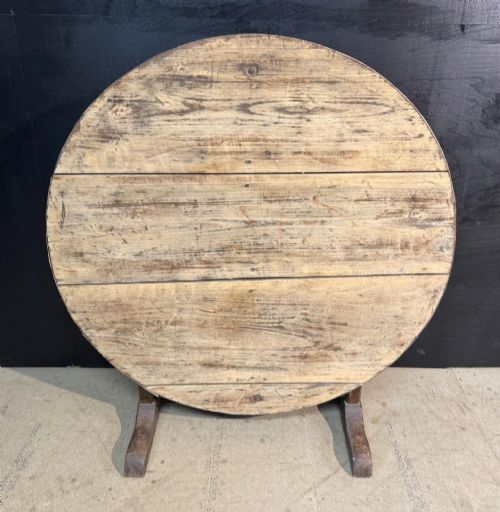
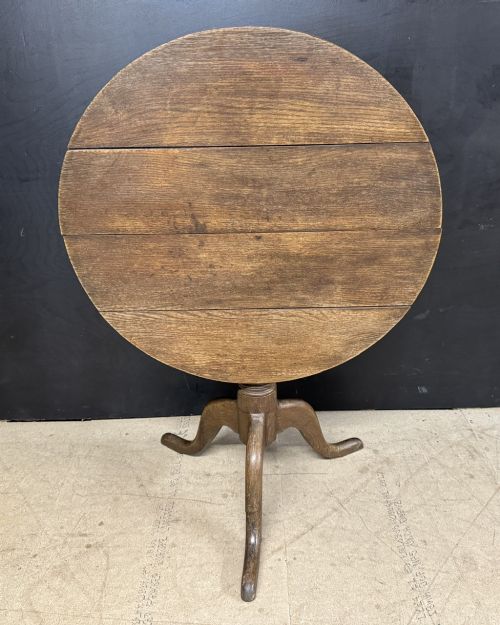
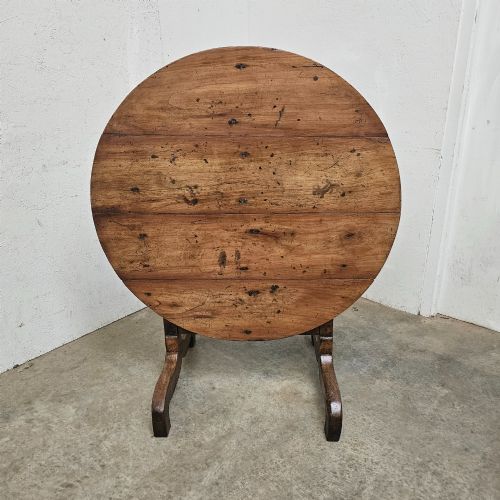
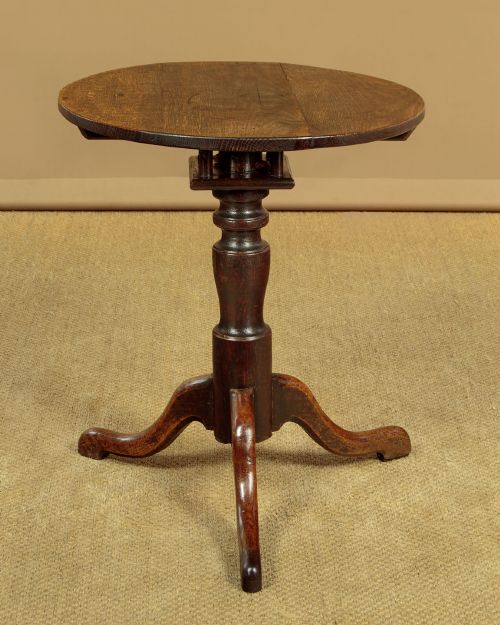


Rustic Oak Tilt Table
These rustic oak tilt tables offer practical folding tops and sturdy timber construction for everyday rooms.
Rustic Oak Tilt Table
A rustic oak tilt table combines traditional English and French farmhouse utility with a clever pivoting mechanism designed to save floor space when not in use. These functional pieces appear in various forms on this page, including tripod tables, folding vendange tables, and occasional tables.
Buyers will encounter examples ranging from the eighteenth century to the Victorian era, spanning Georgian vernacular styles and French country designs. The timber selection often includes oak paired with cherry, fruitwood, or yew to create durable surfaces.
How they were made
Cabinet makers utilised solid oak and fruitwoods such as cherry and yew, shaping timber using traditional hand tools for turned pedestals and pegged joints. Iron components frequently appear in the folding mechanisms of vineyard and vendange tables to support the pivoting action.
Surfaces were constructed to withstand heavy domestic or agricultural use, relying on natural grain patterns rather than heavy veneer work. The tripod bases provide stable support on uneven floors through balanced three-legged designs.
Listings feature oak, cherry, fruitwood, iron, and yew across eighteenth-century and nineteenth-century periods.
What varies in quality
The sophistication of the timber turning on the central column and the smoothness of the tilt mechanism distinguish standard utility items from finer examples. Proportion and balance in the tripod base dictate how well the table stands when loaded.
Patina and timber selection also drive distinction, where mature oak surfaces display deeper character than younger replacements. The integrity of the original folding hinges and iron fittings remains central to the construction quality.
The Rustic Oak Tilt Table Glossary
- Tilt-top table
- A small table with a hinged top that pivots vertically to allow compact storage against a wall. This mechanism typically locks with a brass catch or wooden peg.
- Tripod table
- A freestanding small table supported by a central pillar resting on three legs. This design prevents rocking on uneven stone or wooden floors.
- Vendange table
- A French wine harvest table featuring a folding mechanism designed for seasonal storage. These round tops often combine oak and cherry.
- Vernacular furniture
- Items made by local tradespeople for everyday domestic or agricultural use rather than high-style urban workshops. These pieces prioritise utility and local timber availability.
Rustic Oak Tilt Table: Frequently Asked Questions
What is a rustic oak tilt table?
A rustic oak tilt table is a functional antique featuring a top that pivots vertically for storage when not in use. These pieces often stand on three-legged tripod bases or folding frames.
Originating from domestic and agricultural settings, they combine robust timber construction with convenient space-saving designs suited for smaller rooms.
How do you use a tilt top table?
You use a tilt top table as a standard surface for drinks, books, or lamps during daily activities. When floor space is needed, release the catch beneath the top to fold it flat against the base.
This pivoting feature allows the furniture to be tucked away compactly against a wall when the room requires open space.
How do I identify an 18th century table?
Identifying an eighteenth-century table involves examining the hand-cut joinery, timber shrinkage, and tool marks left by period cabinet makers. Georgian vernacular pieces often show pegged joints and older patination on the oak.
Compare the turned details on the central pillar and the wear patterns around the pivot mechanism with known examples from the same era.
Are these tables suitable for modern rooms?
These tables fit well into contemporary interiors due to their compact footprints and versatile folding mechanisms. They serve effectively as side tables or occasional surfaces in sitting rooms.
The natural timber tones and simple lines complement both traditional and modern decor schemes without dominating the space.