
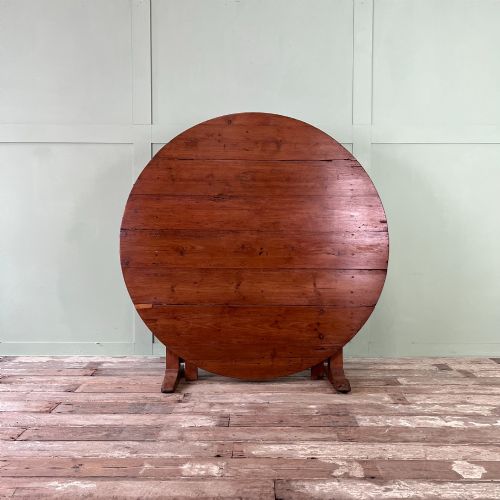
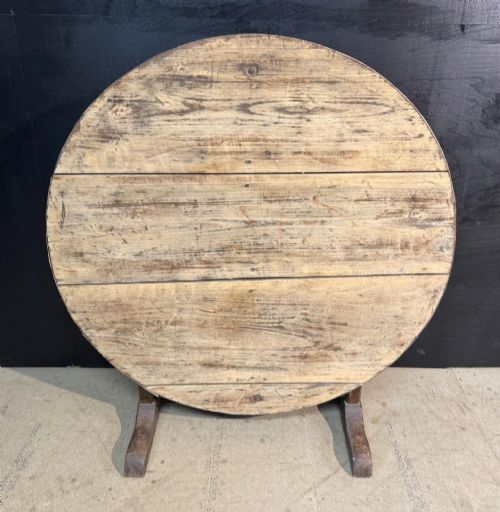
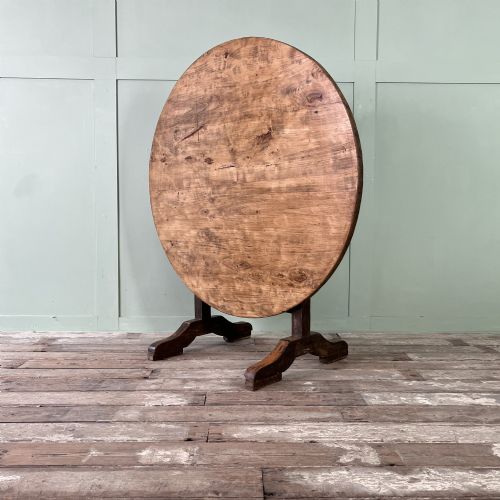
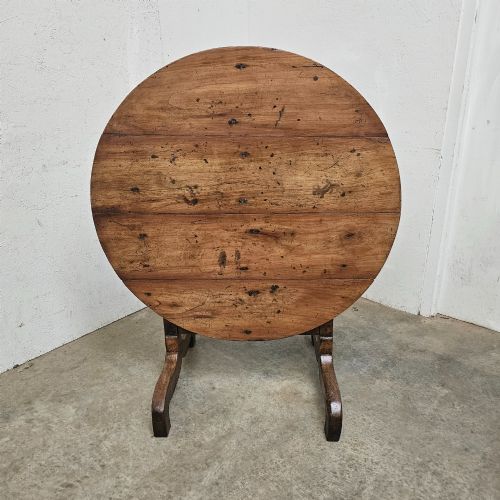


French Wine Tasting Table
A french wine tasting table is a sturdy, practical surface designed for vineyard use, offering rustic character and compact charm to any interior.
French Wine Tasting Table
When buyers search for a french wine tasting table, they encounter utilitarian timber furniture originating from French provinces and vineyards. These pieces reflect regional rural craftsmanship intended for practical agricultural settings rather than formal parlours.
The version most commonly met on this page is the nineteenth-century folding table or tilt top table, often known as a vendange or vigneron table. These examples typically appear in oak, cherry, fruitwood, and walnut, frequently showing the heavy grain and honest wear of working timber.
Object forms span round and oval folding tops, alongside occasional larger dining versions and home bar sets. Their defining characteristic remains the ability to collapse or tilt for easy storage when grape harvests concluded.
How They Were Made
Makers utilised solid regional hardwoods including oak, cherry, fruitwood, and walnut, selecting timber for strength and local availability. These woods were shaped into substantial table tops supported by folding timber bases or sturdy trestle frames.
Construction techniques focused on utility and portability, employing functional hinges, pegs, and folding mechanisms that allowed workers to clear vineyard floors quickly. Metal elements such as iron brackets or braces occasionally reinforced the folding structures.
Listings feature pieces predominantly from the nineteenth century, constructed from oak, cherry, fruitwood, and walnut.
What Varies in Quality
The distinction between ordinary and superior examples lies primarily in the selection of cabinet timber and the integrity of the folding mechanism. Tables constructed from dense, well-figured walnut or richly patinated cherry display deeper warmth than simpler fruitwood variants.
Proportion and scale also separate standard working tables from exceptional pieces, particularly in larger dining formats or unusual oval configurations. The smoothness of the folding action and the survival of original iron or timber hardware further elevate an individual piece.
The French Wine Tasting Table Glossary
- Vendange
- The French term for the grape harvest. It designates tables specifically utilised during the wine-making season.
- Vigneron
- A French winegrower or vineyard owner. Pieces associated with this word reflect the domestic or working furniture of those who tended the vines.
- Tilt top
- A table construction allowing the surface to pivot vertically on its base. This feature saved valuable floor space in cramped rural dwellings and wine cellars.
- Fruitwood
- A collective term for timbers derived from fruit-bearing trees such as cherry, pear, or apple. These woods developed warm patinas and smooth textures over decades of use.
- French Provincial
- A style category describing furniture made in the French regions rather than Paris. It prioritises honest construction, local materials, and unpretentious utility.
French Wine Tasting Table: Frequently Asked Questions
What is a vendange table?
A vendange table is a traditional French agricultural table used during the grape harvest. They are typically characterised by timber construction and folding or tilt top mechanisms.
These surfaces were designed to be portable and easily stored in tight spaces when not in active use in the vineyard or cellar.
How were these tables used?
Vineyard workers and proprietors utilised these tables for sorting grapes, tasting wines, and taking meals during the harvest season. Their practical design made them easily transportable around rural properties.
Today, buyers use them as compact dining surfaces, side tables, or decorative focal points in kitchens and living rooms.
Are these tables sturdy?
Yes, these pieces were built from solid regional hardwoods like oak, walnut, and cherry to withstand daily agricultural work. Their folding mechanisms and sturdy frames were engineered for physical resilience.
Over decades of use, the timber settles and strengthens, though the folding joints should still be handled with reasonable care.
How do I identify a nineteenth-century example?
Nineteenth-century pieces show authentic hand-planed surfaces, traditional joinery without modern fasteners, and aged patinas on woods like fruitwood and oak. The presence of period hinges and wear patterns consistent with manual use helps confirm the era.
Comparing the grain structure and construction methods to documented regional pieces provides further indication of age.