
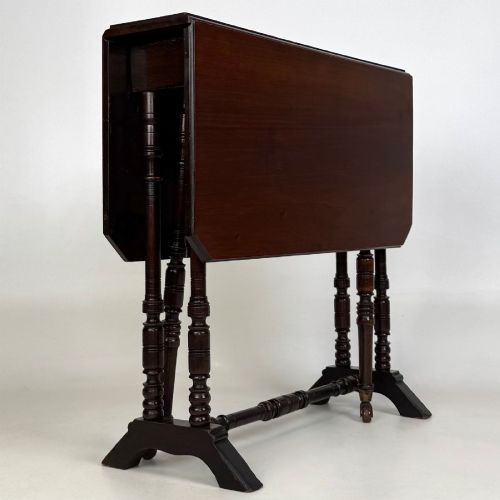


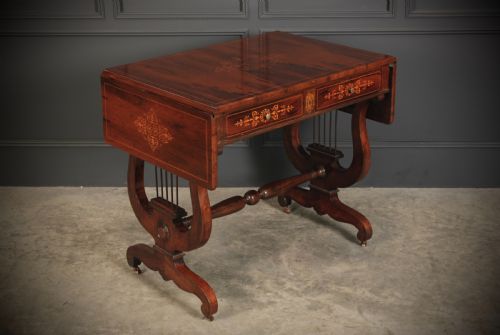


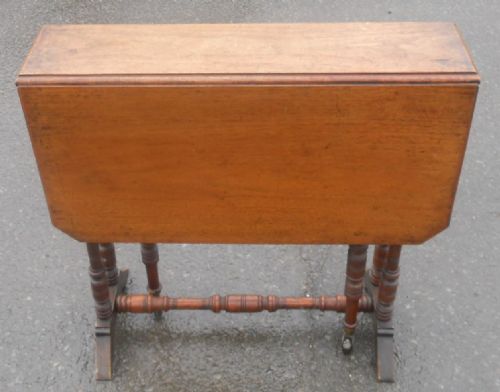

Trestle Base Drop Leaf
These trestle base drop leaf tables are practical folding furniture pieces crafted in timber, designed to expand surface space when needed.
Trestle Base Drop Leaf
When you search for trestle base drop leaf pieces, you encounter a selection of tables designed with hinged flaps that drop down at the sides. These tables serve multiple functions across domestic spaces.
The inventory on this page consists predominantly of sofa tables, occasional tables, coffee tables, and dining tables. These forms date from periods including the eighteenth century, the nineteenth century, the Regency era, the Edwardian period, and the nineteen-thirties.
Examples appear in woods such as mahogany, rosewood, oak, walnut, pine, and flame mahogany. Distinctive variations include gateleg constructions, marquetry inlay, and brass details.
Materials and construction
Cabinetmakers utilised dense timbers such as mahogany, rosewood, and oak for stability and durability. Flame mahogany and walnut veneers often provided decorative exterior surfaces on sofa and occasional tables.
Makers incorporated brass inlays and metal fittings to accent the woodwork on Regency and period pieces. Gateleg frames and hinged drop leaves required precise joinery to support the folding flaps reliably.
Listings feature woods such as mahogany, rosewood, oak, walnut, pine, and flame mahogany alongside brass and metal details.
Assessing quality
Quality rests upon the selection of timber figures, such as flame mahogany or rich rosewood, alongside the precision of marquetry inlay. Superior examples display careful grain matching across the drop leaves and the central top.
The integrity of the hinged joints and the stability of the trestle or gateleg base determine the structural standard of each table. Refined brass detailing and clean joinery separate the finer workshop productions from simpler utilitarian forms.
The Trestle Base Drop Leaf Glossary
- Drop leaf
- A table with hinged flaps that fold down to save space or lift up to extend the surface. These leaves rest on pivoting wooden supports or swing legs.
- Sofa table
- A narrow, long table traditionally placed in front of a sofa, typically featuring drop leaves on either side and small drawers. These tables originated in the late eighteenth century.
- Gateleg table
- A table featuring legs that swing outward on hinges like a gate to support the raised drop leaves. This construction provides robust support for dining and occasional tables.
- Marquetry
- Decorative patterns formed by fitting pieces of veneer into a wood foundation. Craftsmen utilise varied timber tones to create intricate pictorial or geometric designs.
- Regency
- An English design period spanning the early nineteenth century, characterised by classical restraint, rosewood or mahogany timbers, and brass inlay. Pieces from this era often feature distinctive trestle bases.
Trestle Base Drop Leaf: Frequently Asked Questions
How were sofa tables used?
Sofa tables were traditionally placed directly in front of or behind a sofa, functioning as writing desks or occasional surfaces. Their narrow proportions and drop leaves made them adaptable for multiple domestic tasks.
Over time, these pieces transitioned into general living spaces as decorative and practical tables for lamps and books.
What woods are common in these tables?
Cabinetmakers relied primarily on hardwoods such as mahogany, rosewood, and oak for durability and finish. Walnut, pine, and flame mahogany also appear across different eras and styles.
Finer examples frequently incorporate contrasting veneers and marquetry inlay to enhance the visual appeal of the timber surfaces.
How do I identify a Regency table?
Regency tables typically display classical proportions, dark timbers like rosewood or mahogany, and precise brass inlays. These pieces often feature specific trestle or pillar bases associated with early nineteenth-century workshops.
Examining the joinery and timber quality helps distinguish genuine period production from later revival styles.