



Trestle Base Desk
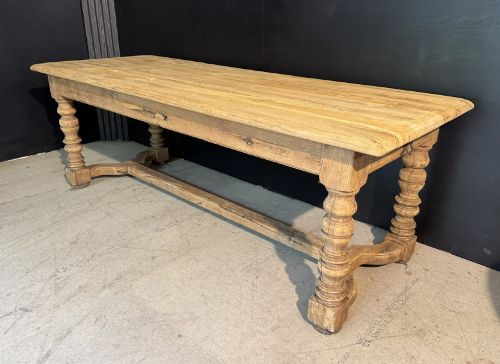
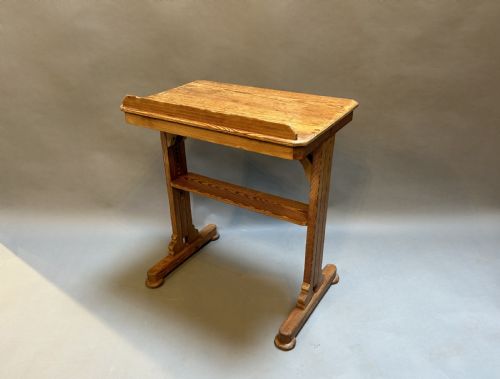
A trestle base desk provides a sturdy working surface supported by braced uprights, offering both practical stability and architectural character.
Trestle Base Desk
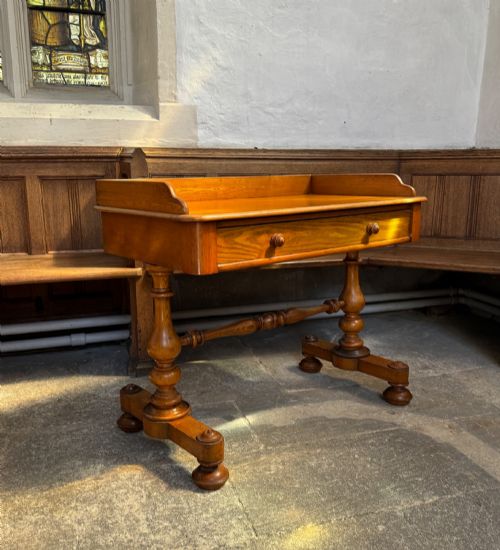
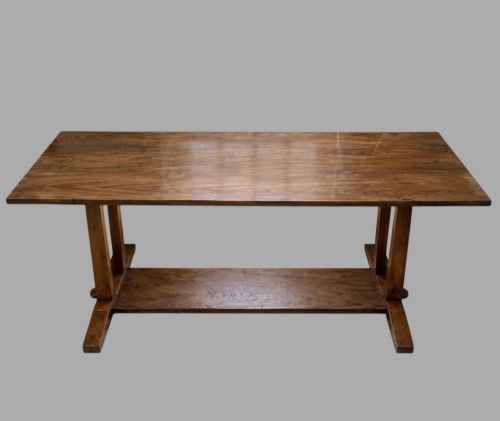
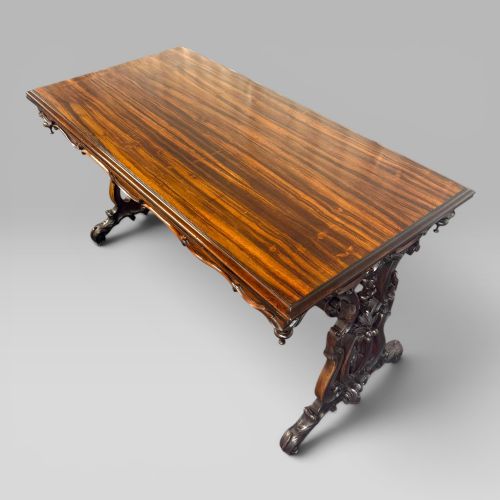
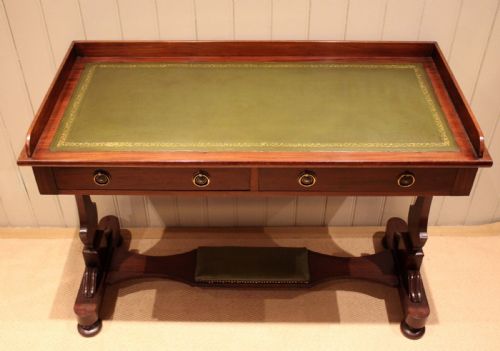
When you search for a trestle base desk, you enter a category defined by structural end supports connected by a central stretcher, rather than standard vertical legs at each corner. These pieces frequently overlap with library tables, writing tables, and sofa tables across the selection.
The materials span mahogany, rosewood, walnut, and pine, reflecting centuries of practical workspace design. You encounter periods ranging from the eighteenth century through the Victorian era and into early twentieth-century industrial iterations.
Makers utilised these rigid supports to allow maximum legroom while maintaining high load-bearing capacity for heavy books and writing equipment. The arrangement of the base remains the unifying feature across diverse regional styles.
Construction and Materials
Joinery on these tables relies on traditional pegged mortise and tenon joints to secure the upright trestles to the longitudinal stretchers. Hardwoods such as mahogany and rosewood provide the density required for stable frames, while pine serves structural and secondary roles.
Metal components appear in cast iron and brass, particularly in industrial and nineteenth-century examples where iron bracing adds modern rigidity. Surface treatments range from polished timber veneers to retained original paint finishes.
Trestle Base Desk Retail Price Guide 2026
Typical asking prices for trestle base desk among the pieces listed under this phrase on Sellingantiques today, from the lower quarter to the upper quarter. They describe what is for sale here now, not the wider market.
One unexpected survivor retains its original bright red tavern paint from the mid-nineteenth century.
Judging Quality and Execution
The distinction between ordinary and exceptional examples rests in the proportion of the timber and the crispness of the turning or carving on the trestle ends. Finer pieces demonstrate careful timber selection, such as figured mahogany or burr walnut veneers matched symmetrically across the top.
Structural integrity depends on the rigidity of the central stretcher and the snugness of the joints connecting the feet to the uprights. Secondary woods and hidden framing elements show the same level of hand-tool finishing as the primary surfaces.

Gillingtons Dublin·Pairs MFG Co
The Trestle Base Desk Glossary
- Trestle
- A structural support consisting of a horizontal beam fixed to two splayed legs at each end. This configuration provides lateral stability without requiring corner legs.
- Stretcher
- A horizontal bar connecting the vertical legs or trestles of a table to increase rigidity. It often sits closer to the floor in traditional designs.
- Library table
- A large freestanding table designed for heavy reading and writing use, frequently featuring drawers beneath the top. They often double as spacious desks.
- Sofa table
- A small rectangular table traditionally placed against the back of a sofa, typically featuring drop leaves and double trestle or pillar supports.
Trestle Base Desk: Frequently Asked Questions
What defines a trestle base?
A trestle base relies on two or more upright supports connected by a stretcher beam rather than four distinct corner legs. This construction leaves the sides open while keeping the top exceptionally steady.
Cabinetmakers utilised this layout for large library and dining tables to distribute weight evenly and permit comfortable seating along the entire length.
Were these used as writing desks?
Many examples function primarily as writing tables or library tables equipped with one or more drawers beneath the top. The sturdy base prevents the surface from wobbling during heavy use.
Earlier periods placed these in libraries and studies where writing materials needed a reliable, large-scale platform.
How do I date a mahogany table?
Dating relies on inspecting the timber grain, secondary woods used in drawer linings, and the style of the joints. Earlier pieces exhibit hand-cut dovetails and solid timber construction.
Nineteenth-century versions often introduce veneered surfaces over pine or oak substrates, accompanied by machine-sawn components as the industrial era progressed.
How do I care for antique timber?
Maintain antique wood by keeping it away from direct heat sources and sudden humidity changes that cause timber to split. Regular dusting with a dry cloth prevents abrasive particle buildup.
Apply a conservative coat of traditional beeswax periodically to nourish the grain and preserve the surface sheen without sealing the wood permanently.