

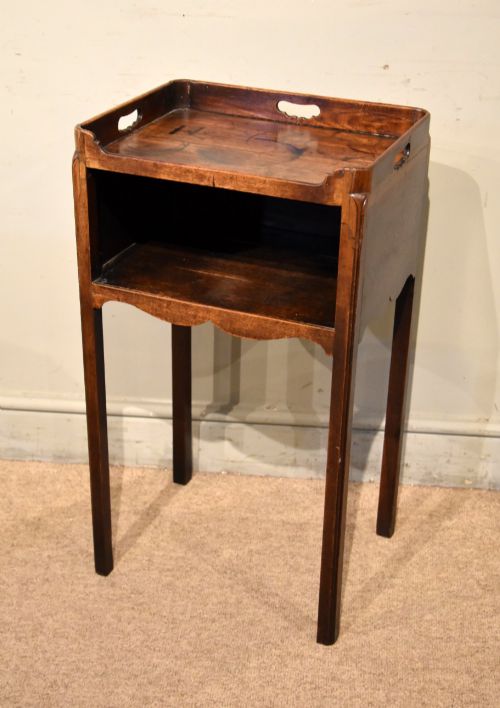
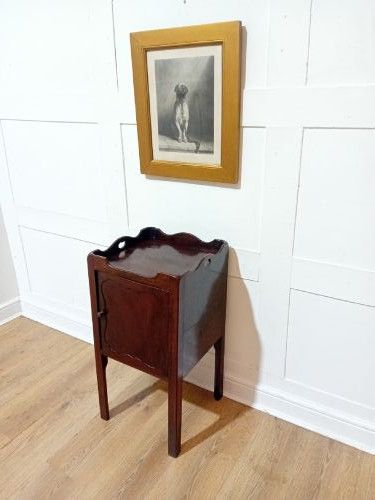
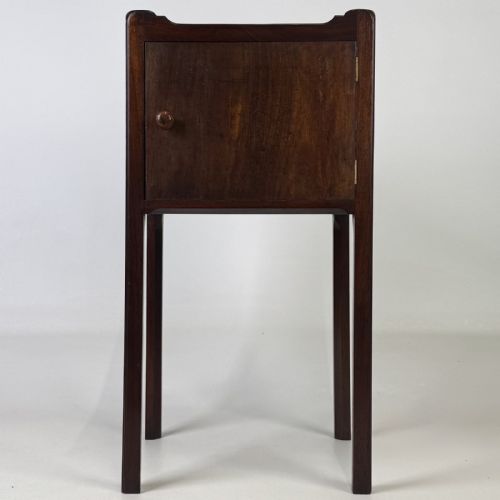
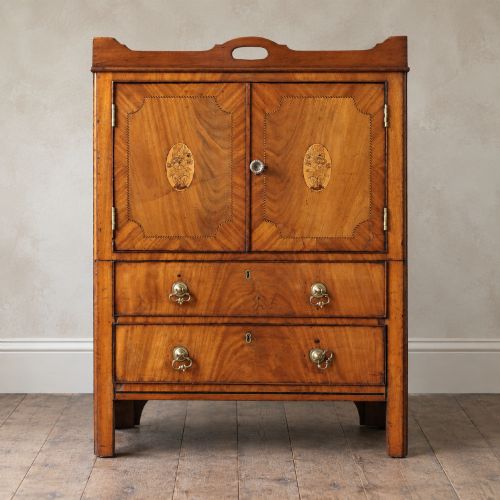




Tray Top Night Cupboard
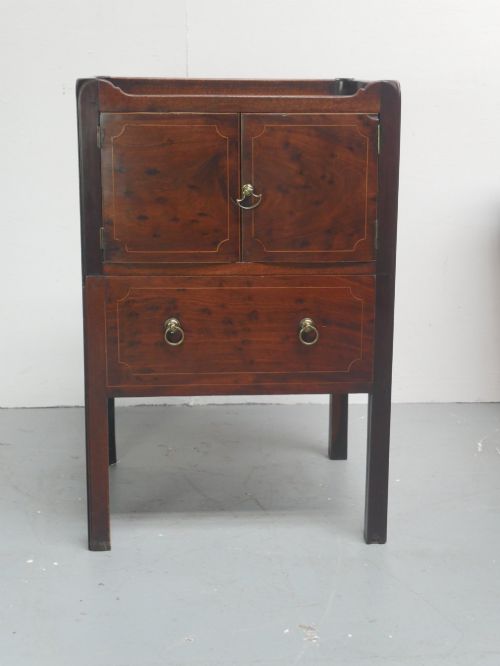
Tray top night cupboard designs combine practical raised edges with enclosed bedside storage, offering authentic Georgian and Regency proportions for daily use.
Tray Top Night Cupboard
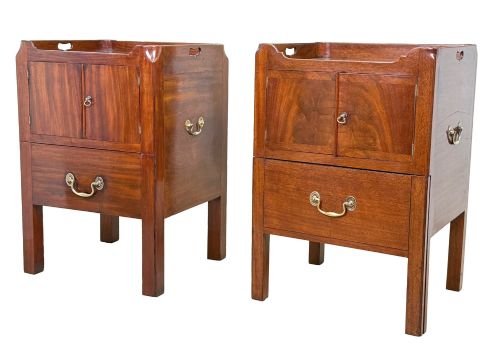
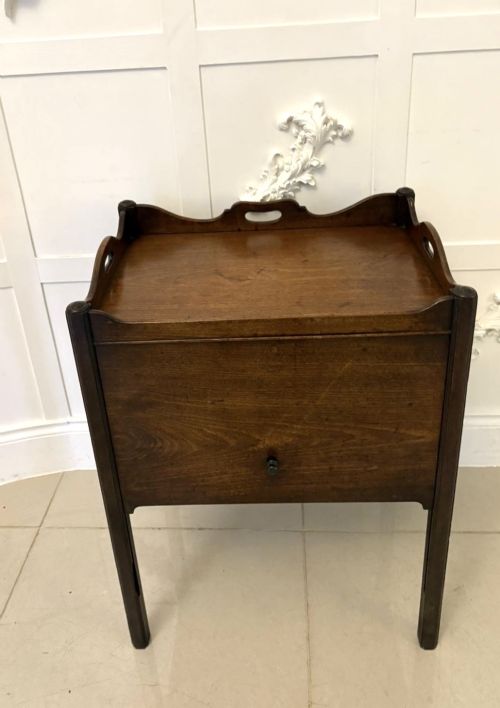
A tray top night cupboard serves as a dedicated bedside table featuring a characteristic raised gallery rim designed to secure items placed on the surface. These pieces appear primarily in Georgian and Regency iterations, alongside later 20th-century revivals.
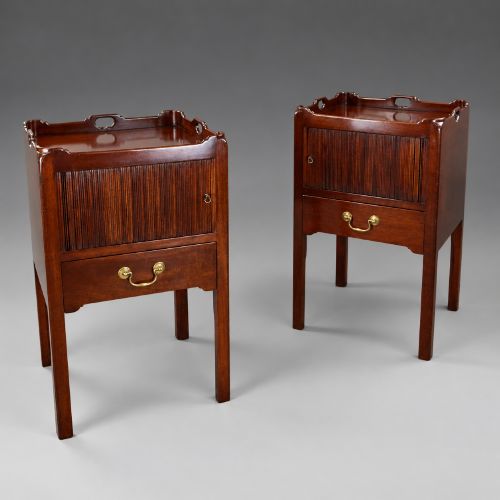
Buyers seeking a tray top night cupboard encounter various forms, including commodes, pot cupboards, and tambour-fronted cabinets. Mahogany remains the dominant timber across these examples, occasionally paired with satinwood or boxwood inlay.
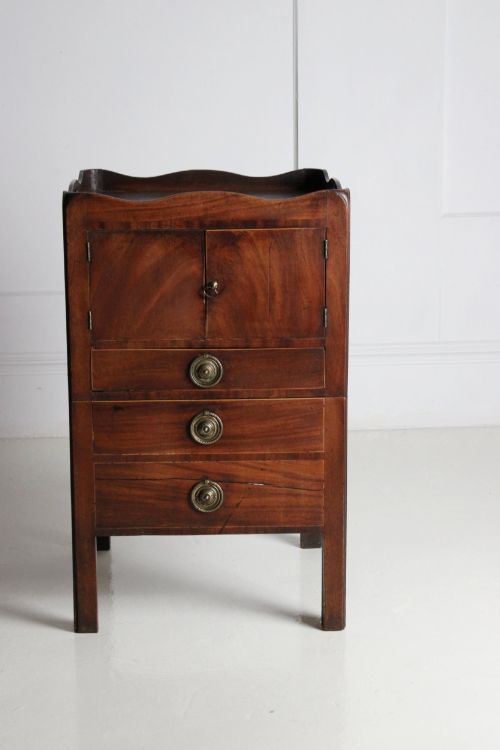
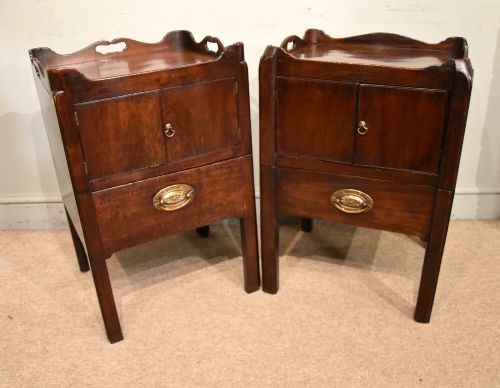
The layout typically combines a closed lower cupboard with the distinctive shaped or pierced tray top above. Examples range from simple rectangular bodies to serpentine fronts and matched pairs.
Materials and construction methods
Cabinetmakers constructed these pieces primarily using solid and veneered mahogany, supported by secondary timbers like oak. Joinery relied on traditional hand-cut dovetails for drawer boxes and frame construction.
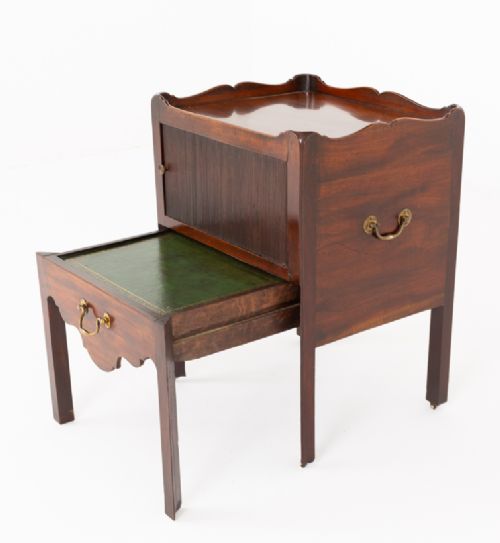
Decorative detailing incorporates boxwood and satinwood inlay or marquetry, alongside brass handles and hinges. Tambour shutters utilise narrow slats glued to a canvas backing to slide smoothly within curved tracks.
Tray Top Night Cupboard Retail Price Guide 2026
Typical asking prices for tray top night cupboard among the pieces listed under this phrase on Sellingantiques today, from the lower quarter to the upper quarter. They describe what is for sale here now, not the wider market.
Materials documented across the inventory include solid mahogany, oak, satinwood, leather, and boxwood inlay.
Factors influencing quality and craftsmanship
Quality reveals itself in the selection of timber grain, particularly figured mahogany and the precision of contrasting boxwood stringing. Superior pieces display crisp moulding along the raised tray edges and tight, clean joinery.
Refinement of form separates standard cabinets from exceptional examples, such as those with serpentine fronts or integrated steps. The integrity of the original hardware and the smooth operation of doors or tambour panels also indicate higher workmanship.
The Tray Top Night Cupboard Glossary
- Tray top
- A tabletop finished with a raised wooden gallery or rim designed to prevent items from rolling off. This feature defines the primary category.
- Tambour
- A flexible shutter constructed from narrow vertical strips of wood glued to a fabric backing. It slides in a track to enclose the cabinet space without swinging doors.
- Commode
- A term historically used for a decorative bedside cabinet or chest with enclosed storage. These often incorporate a cupboard section below the tray top.
- Marquetry
- Decorative patterns formed by fitting together thin veneers of various woods. It appears on select surfaces alongside simpler string inlay.
- Serpentine
- A curved line that undulates outward in the centre and inward at the sides. This contour elevates the profile of select commodes.
Tray Top Night Cupboard: Frequently Asked Questions
What is a tray top night cupboard?
A tray top night cupboard is a small bedside cabinet featuring a raised gallery edge around the top surface to keep objects secure.
These pieces typically provide enclosed storage behind a door beneath the main surface, dating predominantly from the Georgian and Regency periods.
How were these cabinets used originally?
They functioned as bedside furniture to hold chamber pots, lighting, and night-time necessities within Georgian bedchambers.
The enclosed lower section kept items out of sight, while the raised tray prevented water jugs or glasses from sliding off.
Are pairs difficult to find?
Matched pairs do occur among surviving pieces, though single cabinets appear more frequently in collections.
Period workshops often manufactured bedside tables individually or in matched sets for larger bedrooms.
What wood was used most often?
Mahogany served as the primary timber for the vast majority of these cabinets due to its strength and rich grain.
Cabinetmakers also incorporated secondary woods like oak for internal framing and added boxwood or satinwood for decorative inlay.
How do I identify a Georgian piece?
Georgian examples display characteristic proportions, hand-cut joinery, and period timber patination developed over centuries of age.
Stylistic markers include bracket feet, cockbeaded drawer edges, and traditional brass hardware consistent with eighteenth-century design.