
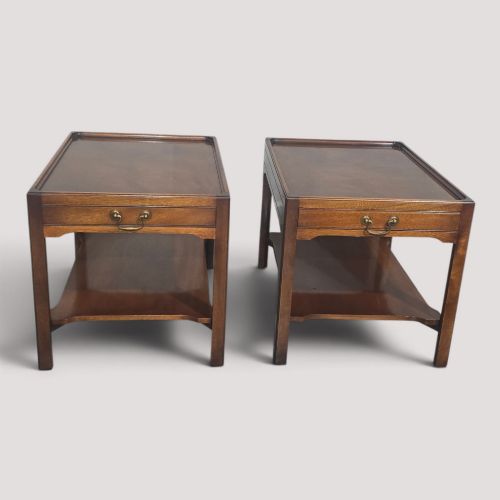

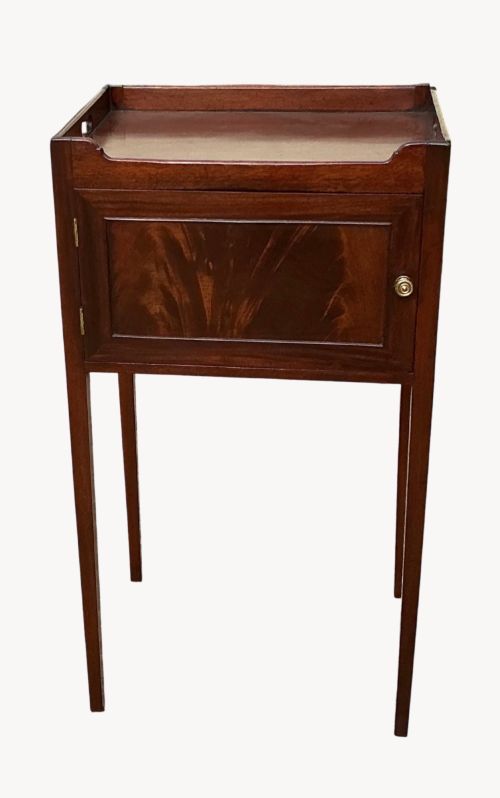
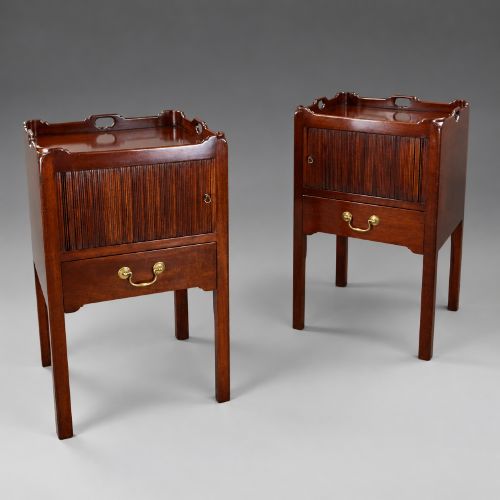
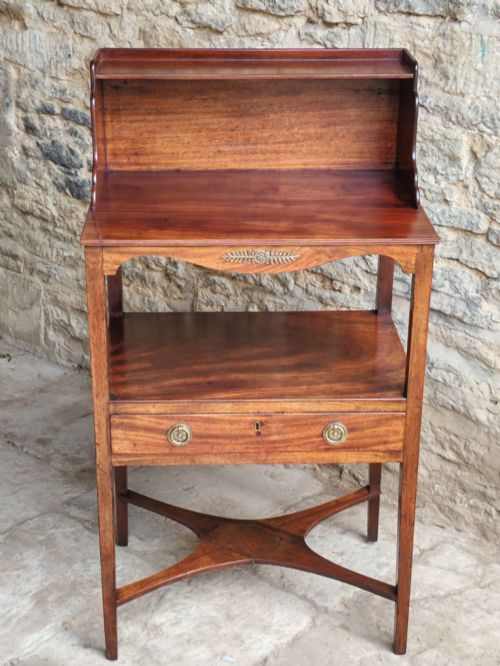

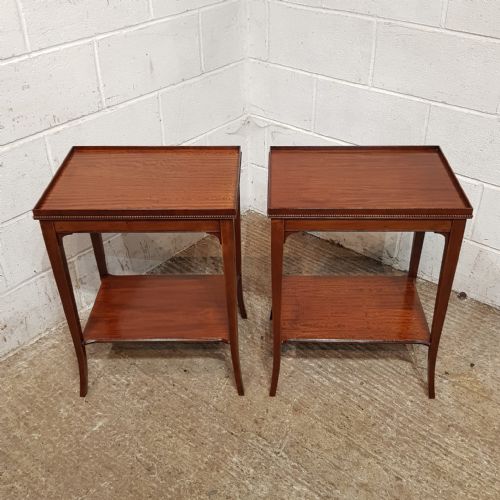
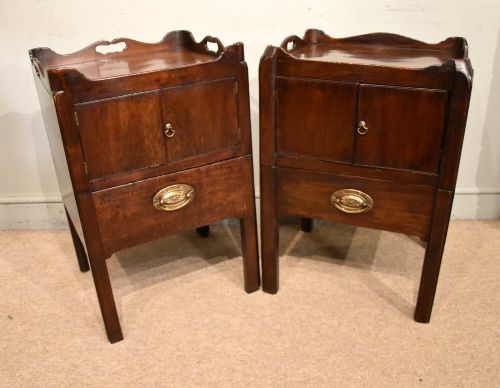
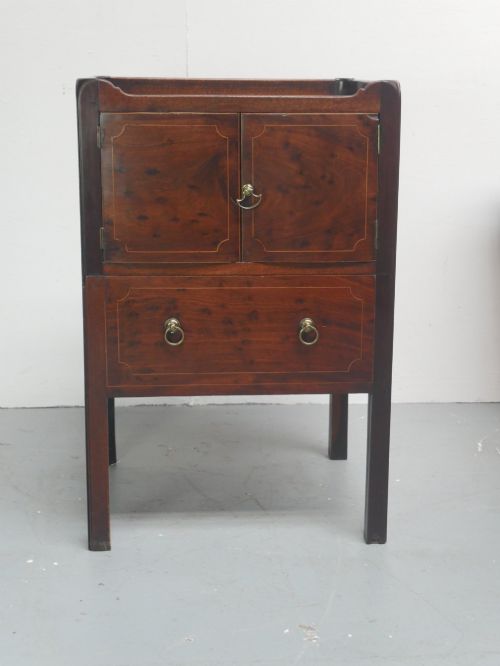
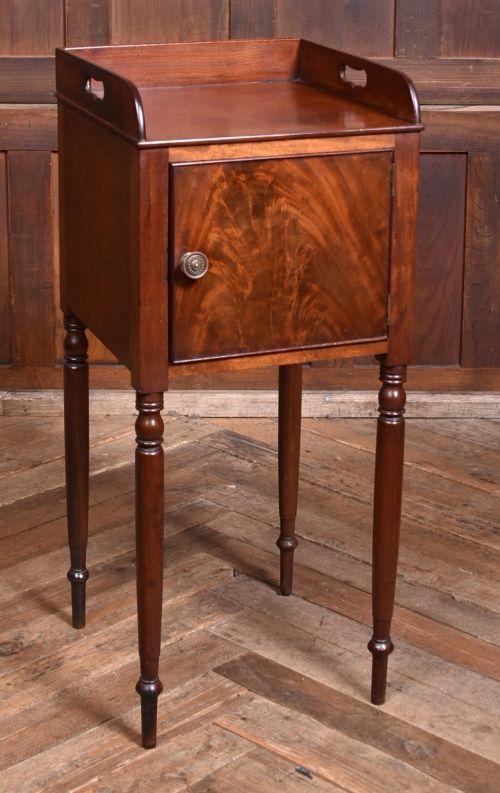
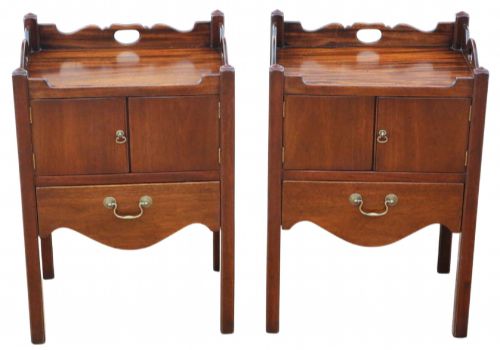
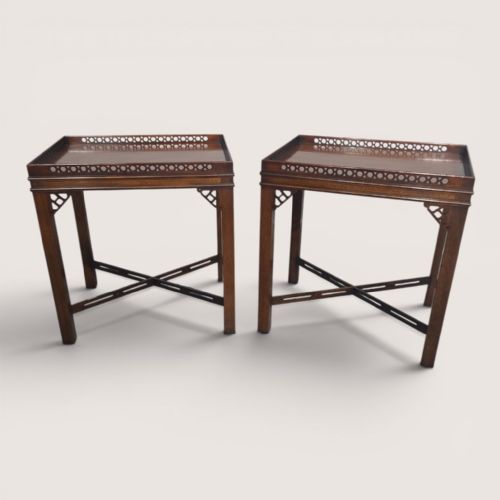
Tray Top Bedside
Tray top bedside pieces combine functional raised galleries with classical cabinetwork, offering practical surfaces alongside period character for the bedroom.
Tray Top Bedside
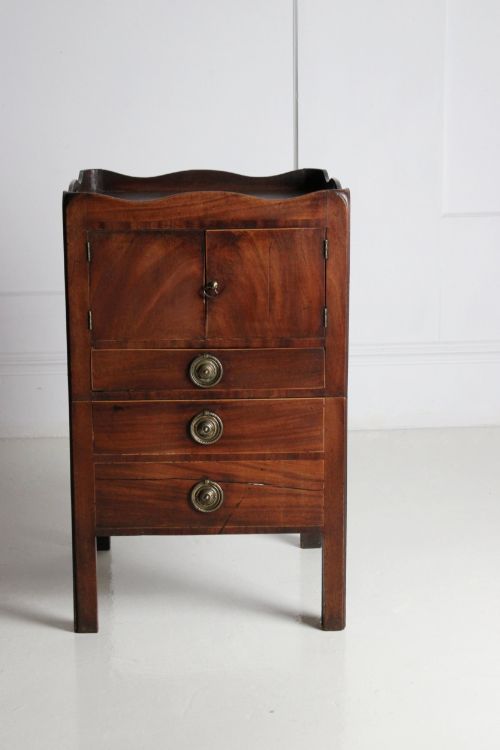
A tray top bedside is a specialised small table or cabinet featuring a raised rim or gallery designed to prevent items from rolling off the surface. When searching for a tray top bedside, collectors encounter forms ranging from 18th-century George III cupboards to later revival pieces from the early twentieth century.
The primary forms appearing here include bedside cabinets, pot cupboards, commodes and nightstands. These pieces serve the same fundamental purpose of bedside storage while displaying the distinct proportions and stylistic traits of their respective periods.
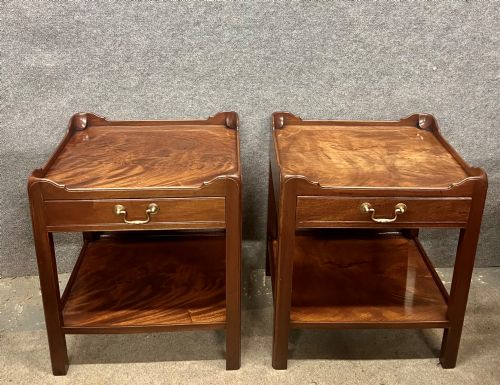
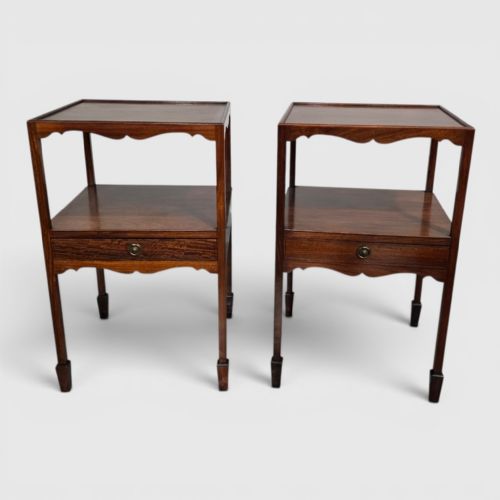
Examples span Georgian, Regency, Victorian and Edwardian eras, with George III formats appearing frequently alongside later interpretations. Buyers meet both single pieces and matched or unified pairs suited for placement beside a bed.
How they were made
Construction relies heavily on mahogany, often selected for its dense grain and structural stability, sometimes enhanced by flame grain figure. Cabinetmakers incorporated secondary woods and utilised traditional joinery methods to build sturdy frames for daily domestic use.
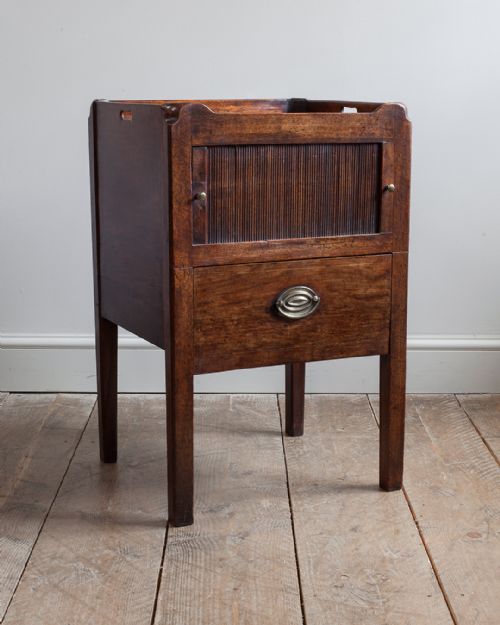
Surface enrichment includes satinwood, boxwood, and ebony inlay, alongside hand-painted detailing and marquetry work. Certain examples feature specialised mechanisms such as tambour doors or enclosed compartments designed to conceal chamber pots or personal items.
Early cabinetmakers thoughtfully ensured your midnight candle stayed put.
What varies in quality
Quality separates through the crispness of the cabinetmaker's moulding work around the raised tray gallery and the alignment of drawer or door panels. Superior examples display careful timber selection, particularly where matched veneers or flame mahogany are arranged symmetrically across the facade.
The sophistication of decorative additions, such as intricate stringing, delicate boxwood inlay, or well-executed tambour fronts, distinguishes standard utility items from finer chamber furnishings produced in the Georgian and Regency periods.
The Tray Top Bedside Glossary
- Tray top
- A tabletop finished with a raised rim or gallery on three or four sides to contain small objects. This feature defines the primary sub-category of bedside furniture listed here.
- Pot cupboard
- A small enclosed bedside cabinet historically designed to house a chamber pot. They frequently feature a single door above a cupboard space or enclosed base.
- Commode
- In this context, a small bedside cabinet featuring a cabinet door or drawers, often sharing forms with pot cupboards. They originate primarily from the Georgian period.
- Tambour
- A flexible shutter constructed from narrow vertical strips of wood glued to a canvas backing. This mechanism slides smoothly within grooves to enclose the front of a bedside cabinet.
- Marquetry
- The art of applying decorative veneer pieces in wood to form intricate pictorial or geometric patterns. It appears on the top surfaces and doors of select tables.
Tray Top Bedside: Frequently Asked Questions
How were these cabinets used originally?
Originally designed for the bedroom, these cabinets served practical functions including housing chamber pots and holding lighting or nighttime necessities. Their enclosed doors kept bedroom essentials neatly out of sight.
Over time, their convenient proportions allowed them to transition easily into general lamp tables and side tables in modern interiors.
Are pairs common for these tables?
Matched pairs appear frequently alongside individual pieces, having been produced or subsequently paired together to flank a bed symmetrically. Finding a true pair often involves matching timber grain and dimensions.
Single pieces function well as individual lamp tables or occasional pieces in smaller spaces.
How do I distinguish Georgian from later revival styles?
Original Georgian pieces display the timber ageing, construction techniques, and hand-cut joinery characteristic of the eighteenth century. Cabinetwork from this era relies on solid mahogany construction and period-specific proportions.
Revival pieces from the early twentieth century often utilise similar classical motifs and mahogany veneers while exhibiting later interior framing methods and consistent timber seasoning.