
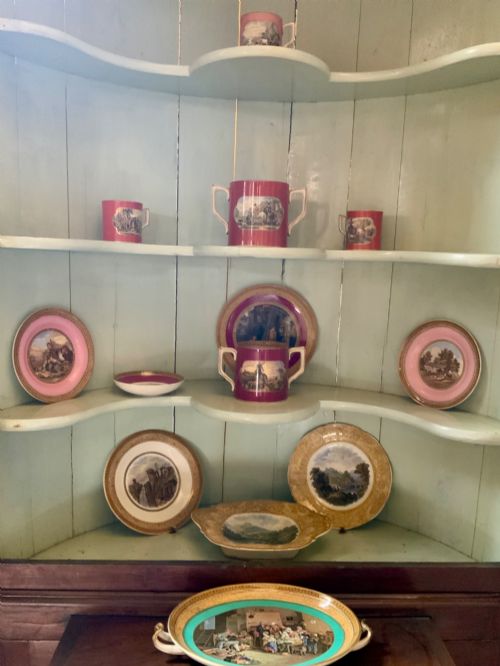
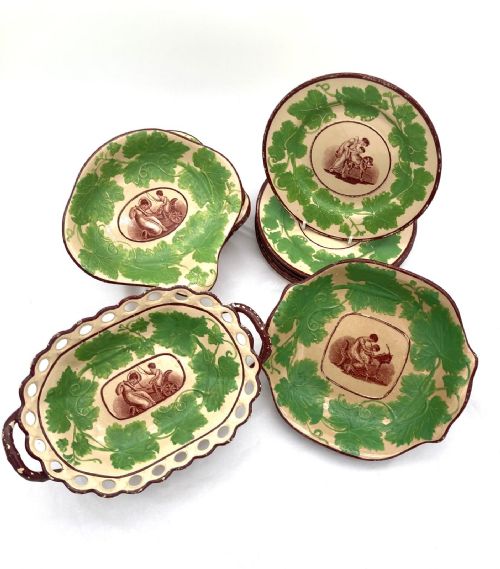
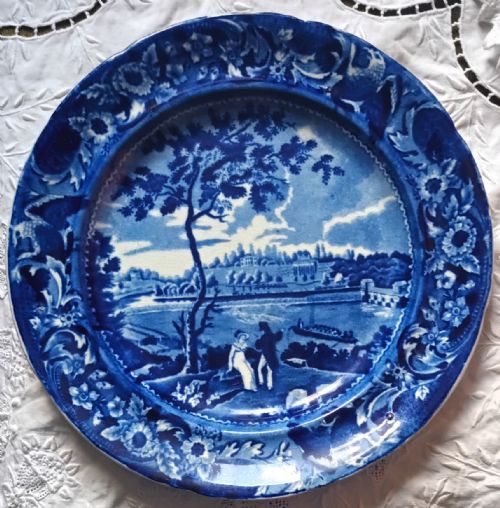


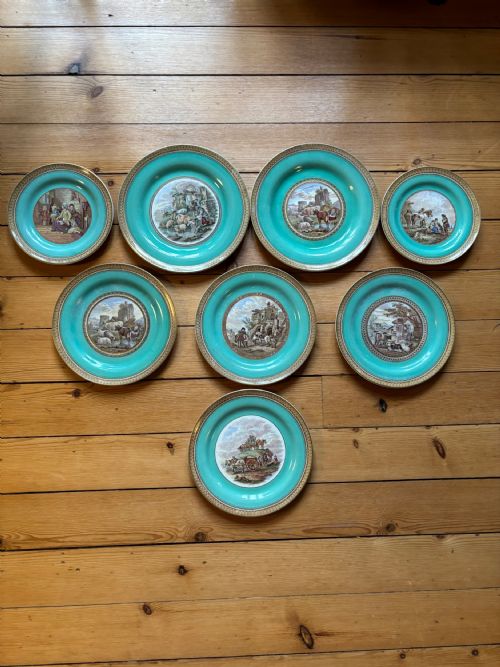
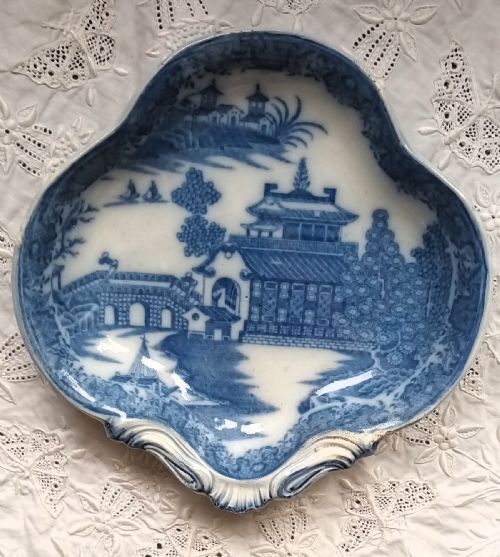


Transfer Printed Pottery Plates
Transfer printed pottery plates bring intricate cobalt pigment imagery to the table, offering durable ceramic surfaces that collectors prize for their narrative scenes.
Transfer Printed Pottery Plates
Transfer printed pottery plates comprise earthenware and pearlware ceramics decorated with blue and white designs. Buyers seeking these transfer printed pottery plates encounter 19th century Staffordshire production alongside Georgian and Victorian examples.
The forms span standard dessert service pieces, meat plates, and serving dishes. Most examples on this page date from the Georgian and Victorian eras, carrying named patterns like Fair Mount near Philadelphia and The Cowman.
Design motifs range from classical ruins and Chinese garden scenes to topographical views. These variations reflect the diverse aesthetic tastes of nineteenth-century British households.
Materials and Manufacture
Potters shaped earthenware and pearlware into plates, platters, and serving dishes before applying a ceramic glaze. Lead glaze provided a smooth, protective coating over the ceramic body.
Makers applied cobalt pigment to the pottery surface through a transfer printing technique. This process allowed detailed pictorial patterns to transfer from an engraved copper plate onto the ceramic.
Dinners in the 1820s gained unexpected travel companions when plates depicted distant views of Allahabad and Philadelphia.
Factors That Determine Quality
Clarity of the transfer print distinguishes finer items from simpler production. Crisp lines in complex patterns like Chinoiserie or architectural views indicate skilled execution by the potter.
The base ceramic body also matters, with refined pearlware bodies offering a smoother canvas than standard earthenware. Additionally, well-preserved lead glaze enhances the depth of the cobalt pigment beneath.
Stubbs·Thomas Lakin·Brameld & Co·John Rogers & Son·Spode
The Transfer Printed Pottery Plates Glossary
- Pearlware
- A refined type of earthenware featuring a slight bluish tint in the glaze. Potters used this ceramic body extensively during the Georgian and Regency periods.
- Cobalt Pigment
- A metallic colorant applied to pottery to achieve deep blue transfer printed designs. This material withstands high kiln temperatures without losing intensity.
- Lead Glaze
- A vitreous coating containing lead oxide applied to ceramics to create a glossy finish. It seals the porous earthenware body beneath.
- Chinoiserie
- A European artistic style reflecting Chinese motifs and landscapes. This aesthetic appears frequently on blue and white transfer printed dishes.
Transfer Printed Pottery Plates: Frequently Asked Questions
How do I date these plates?
Dating relies on ceramic body composition, stylistic markers, and recorded pottery marks where present. Pearlware bodies generally point to earlier nineteenth-century production.
Changes in pattern transfer styles from Georgian topographical views to Victorian motifs help narrow the decade. Comparing known kiln patterns provides further chronological context.
Are these plates safe for daily use?
Most antique transfer printed pottery plates remain structurally stable for display rather than heavy modern dining. Historic lead glazes suggest caution with acidic foods.
Gentle hand washing preserves both the ceramic body and the delicate glaze surface. Collectors typically reserve these pieces for decorative display or light service.
Why are some patterns named?
Named patterns reference specific topographical locations, literary themes, or exotic landscapes popular in the nineteenth century. Makers titled these designs to market their tableware to an educated public.
Titles like Fair Mount near Philadelphia or Classical Ruins connected domestic dining with global exploration and taste. These inscriptions assist in identifying specific Staffordshire potteries.