
Traditional Woven Seat Chair
A traditional woven seat chair brings tactile warmth and historic craft into a room through organic cordage.
Traditional Woven Seat Chair
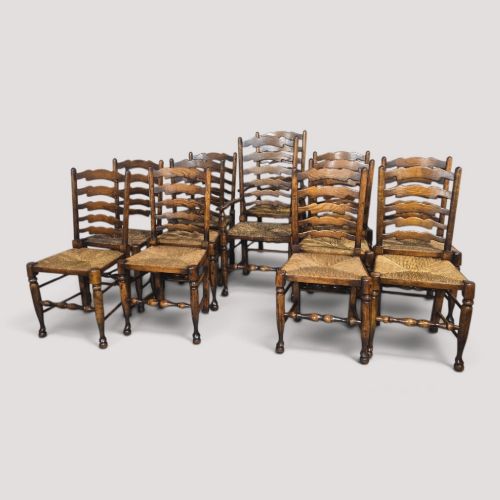
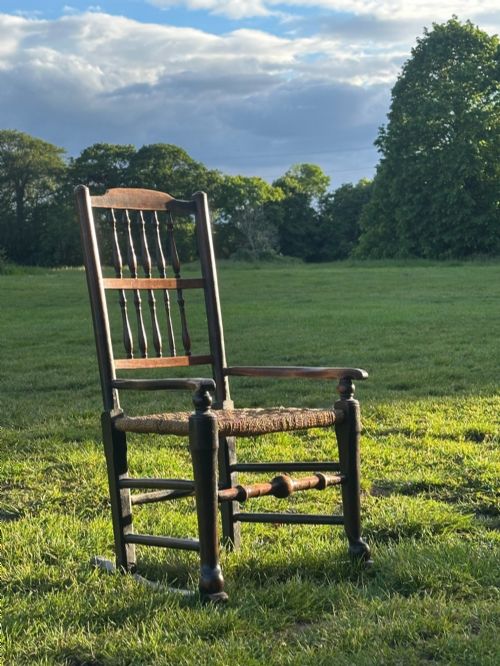
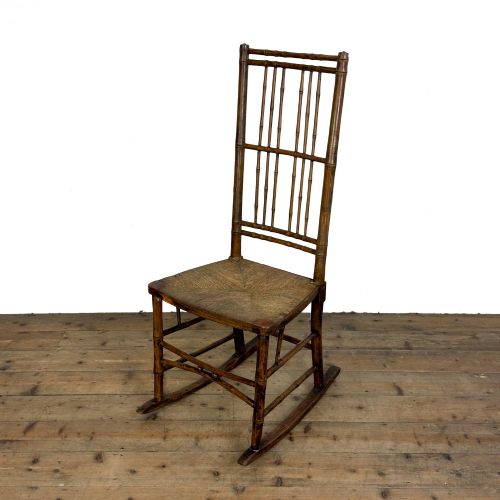
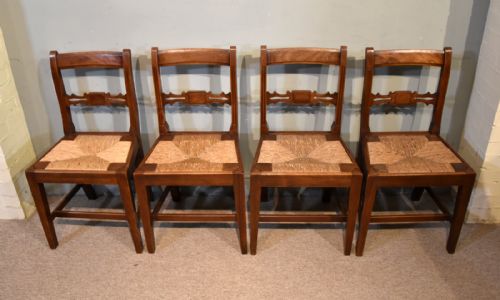
When you search for a traditional woven seat chair, you are looking at practical domestic seating built across centuries with plant-based or split-cane webbing. The examples you meet on this page span the eighteenth, nineteenth, and early twentieth centuries, encompassing English, Scottish, Irish, and French vernacular styles.
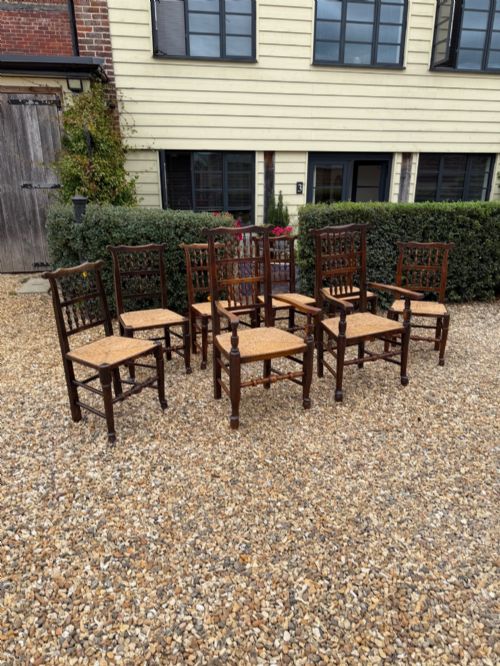
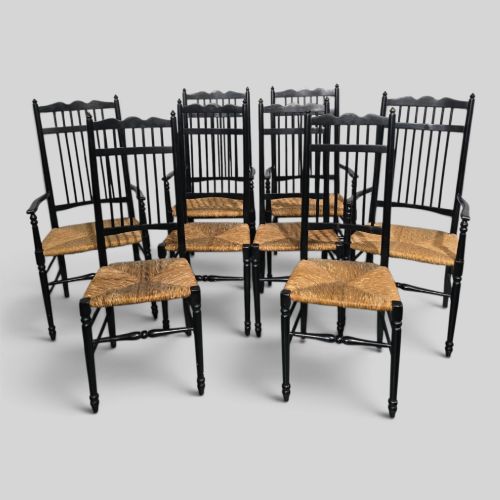
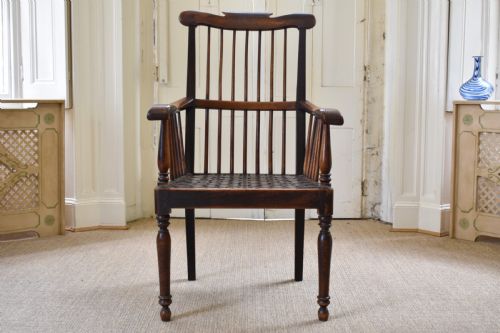
Forms range from sturdy elm and ash ladderback dining chairs to spindlebacks, rocking chairs, and substantial armchairs. You will also encounter specialised pieces such as Orkney chairs and children's high chairs.
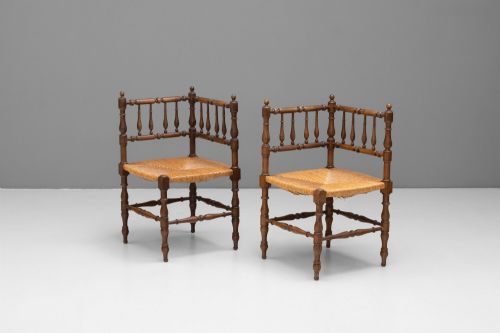
The materials used for the frames include oak, fruitwood, mahogany, and beech, paired with seats woven from rush, cane, or plaited straw.
How they were made
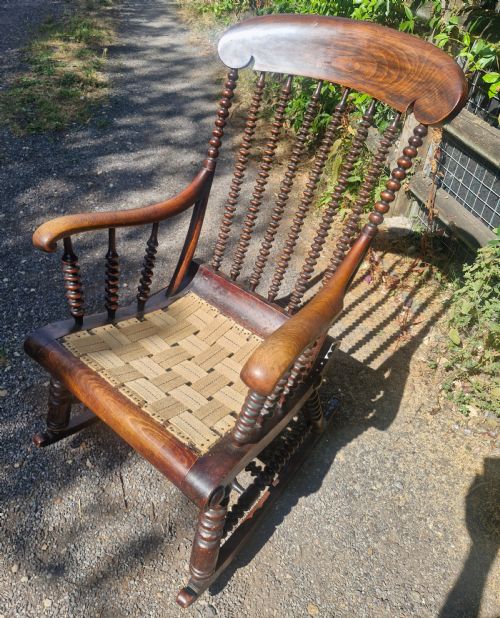
Cabinetmakers and country joiners built the frames using native hardwoods like elm, ash, and oak, often employing turned spindles and ladderbacks. Joints were typically pegged or dowelled to withstand the rigours of daily farmhouse use.
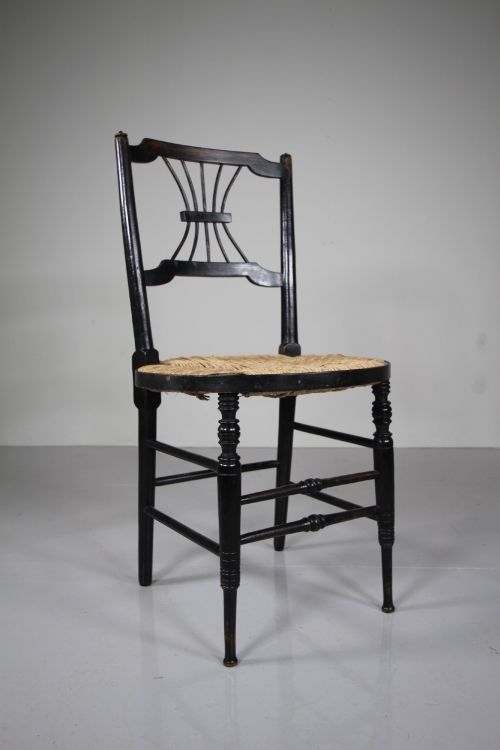
Seats were hand-woven directly onto the wooden framework using natural materials. Rush, split cane, and plaited straw súgán were tightly wound around the rails to create a supportive, flexible surface.
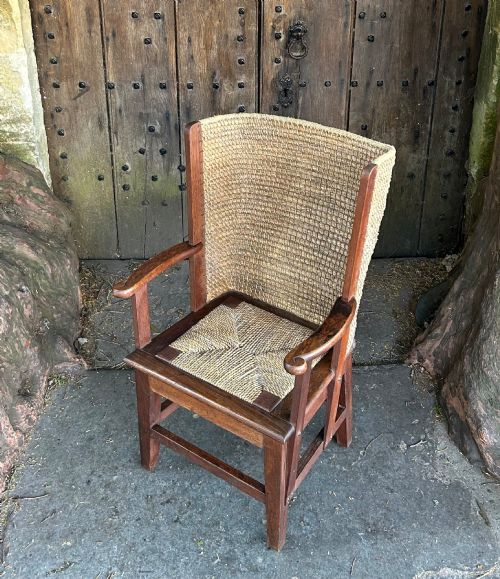
Early Orkney chairs were stuffed with oat straw because the local farmers had plenty of grain husks and a bitter North Atlantic wind to keep out.
What varies in quality
Quality rests in the harmony between the timber frame and the precision of the weaving. Superior pieces display crisp woodturning, tight joinery, and evenly tensioned rush or cane that holds its shape under weight.
The integrity of the woven seating surface and the matching character of timber determine the standing of an individual chair or set. Original frames retaining their early or primary woven surfaces command greater appreciation among collectors.
William Morris·Morris and Co·Dicon Nance
The Traditional Woven Seat Chair Glossary
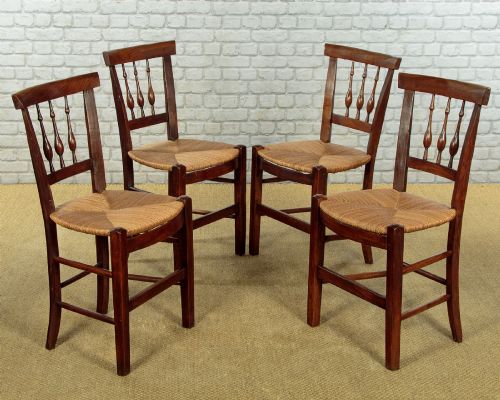
- Rush
- Marsh grass twisted into a continuous cord and hand-woven to form a durable, textured seat. It tightens and contracts as it ages in dry domestic environments.
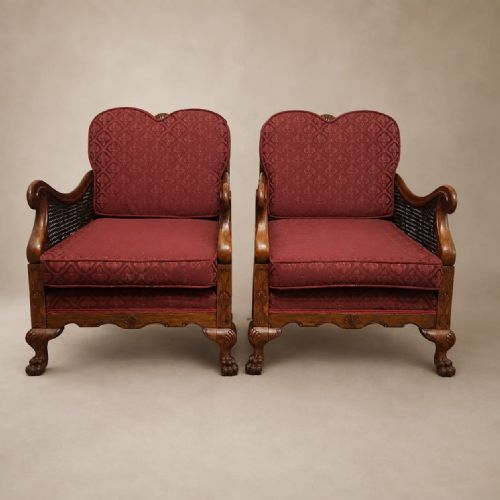
- Bergere
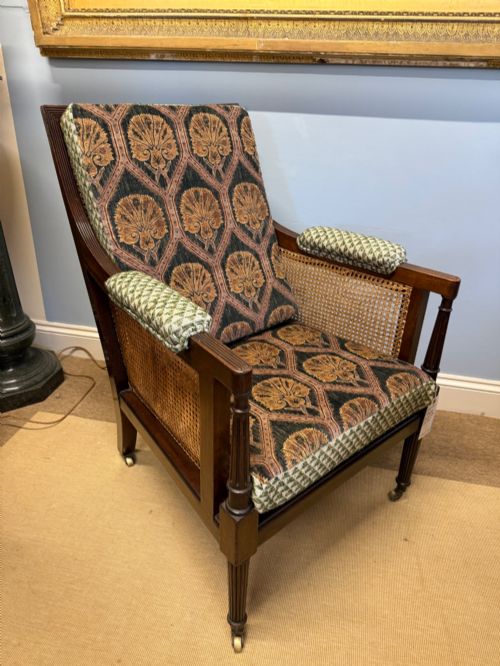
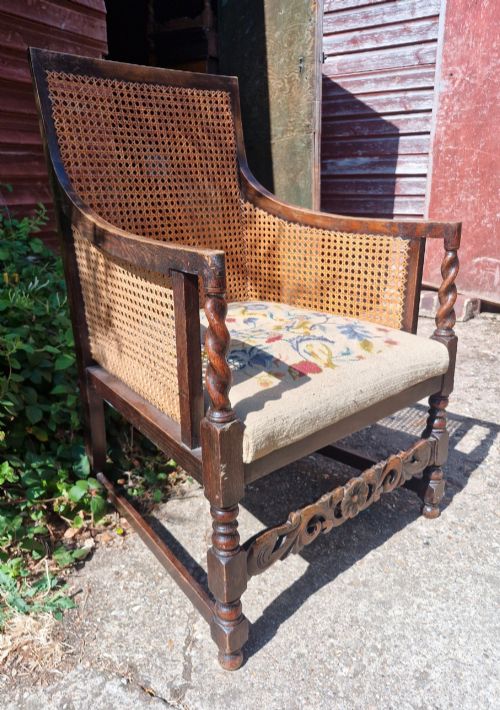
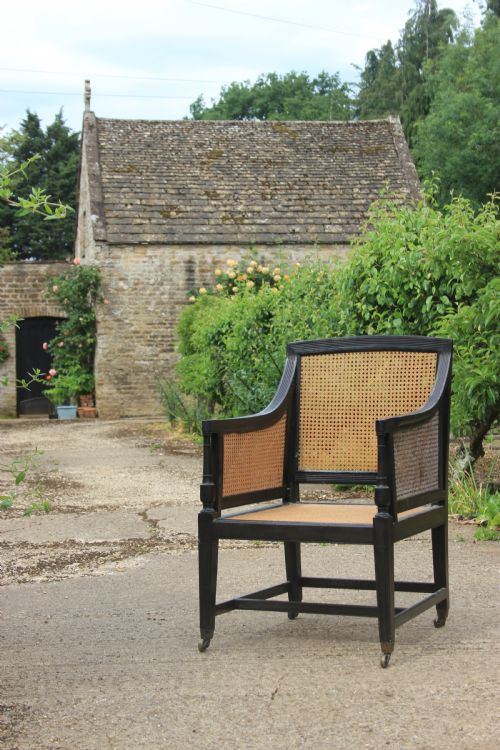
- An upholstered-style armchair featuring an exposed wooden frame with woven cane panels forming the back and sides. This technique lightened the visual weight of heavy nineteenth-century seating.
- Ladderback
- A chair style characterised by horizontal wooden slats or rails curved to fit the back of the sitter. It is a defining feature of seventeenth and eighteenth-century vernacular seating.
- Súgán
- An Irish term for a rope made from twisted straw or hay, commonly utilised for plaited rustic chair seats. It provides a resilient and distinctively textured surface.
- Orkney chair
- A traditional Scottish armchair distinguished by a high, rounded back woven from oat straw over a wooden frame. They were originally designed to shield inhabitants from coastal draughts.
Traditional Woven Seat Chair: Frequently Asked Questions
How do I clean a rush seat?
Dust the woven surface gently with a soft brush or vacuum using a low-suction attachment.
Avoid using liquid cleaners or soaking the material, as moisture causes natural rush to rot and snap.
Are these chairs suitable for daily dining?
Many sturdy ladderback and oak versions were built for heavy kitchen and dining use. Solid frames handle regular sitting well if the joinery remains tight.
Delicate bergere or antique cane examples require more mindful placement to protect the woven panels from direct strain.
How do I tell an 18th century chair apart?
Eighteenth-century examples display hand-cut timber tool marks, pegged joinery, and deeper patination accumulated through generations of use. The turned components often show subtle irregularities absent in later mass-produced items.
Later Victorian and twentieth-century revivals imitate these vernacular shapes but rely on cleaner machine-sawn timber and standardised lathe work.
Can a woven seat be repaired?
Skilled craftspeople can completely re-weave damaged rush, cane, or straw seats using traditional methods and materials. This restoration work preserves the historic frame while returning the chair to full utility.