


Georgian Ladder Back Chairs
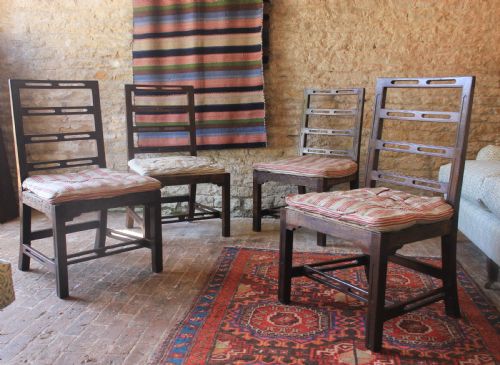
Georgian ladder back chairs combine practical country seating with formal cabinet timber, offering sturdy construction and distinct horizontal rails.
Georgian Ladder Back Chairs
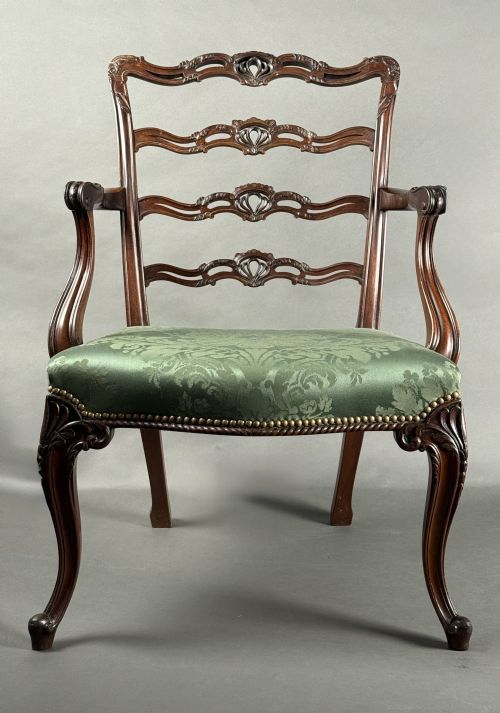
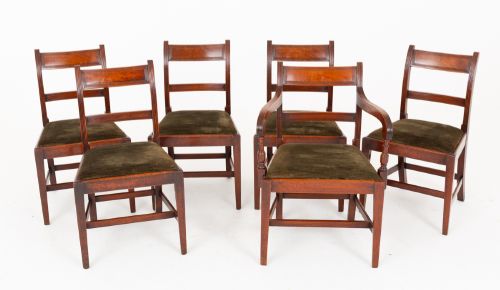
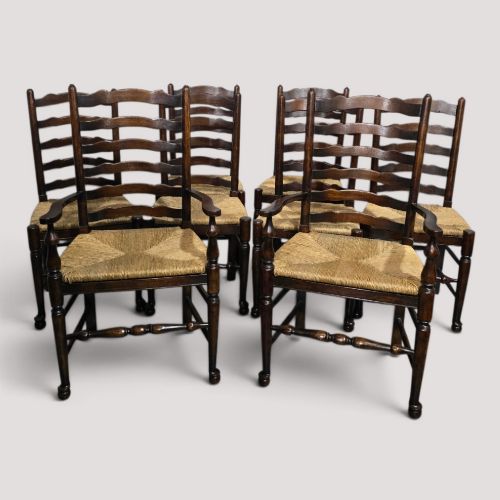
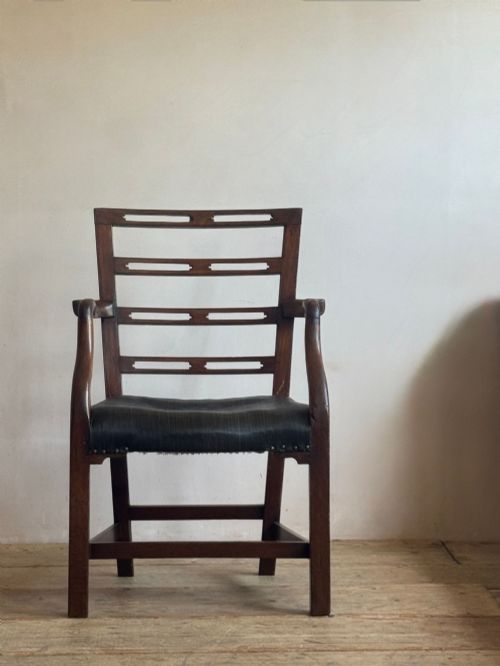
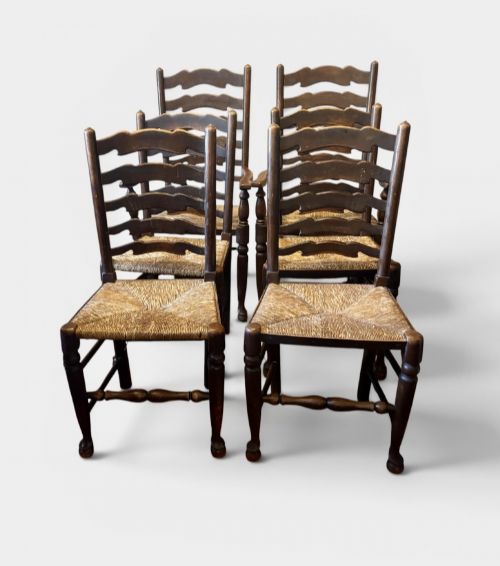
When searching for Georgian ladder back chairs, buyers encounter dining sets, armchairs, and country vernacular seating originating primarily from the eighteenth and nineteenth centuries. The selection ranges from formal mahogany parlour models to provincial ash, elm, and oak kitchen chairs with rush or fabric seats.
Sets of chairs appear alongside single armchairs, rocking chairs, and settees, reflecting the diverse domestic uses of the period. Provincial examples often display regional characteristics, while urban pieces align more closely with prevailing cabinet-making fashions.
How they were made
Cabinet makers utilised dense hardwoods such as mahogany for formal dining seats, whilst provincial makers turned to native timbers like oak, ash, elm, and beech for country chairs. These woods provided the necessary strength for slender uprights and horizontal back rails.
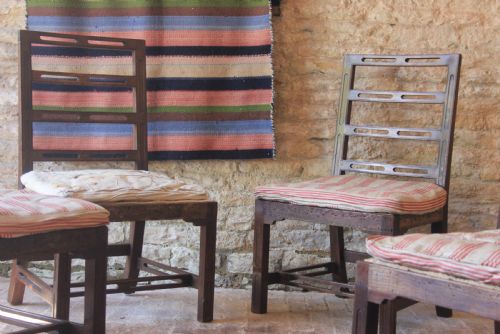
Seats incorporated woven rush, leather, or upholstered pads covered in fabric and velvet, supported by traditional joinery without modern adhesives. Turned legs and shaped rungs added structural rigidity while maintaining the distinctive silhouette.
Georgian Ladder Back Chairs Retail Price Guide 2026
Typical asking prices for georgian ladder back chairs among the pieces listed under this phrase on Sellingantiques today, from the lower quarter to the upper quarter. They describe what is for sale here now, not the wider market.
Listings span the eighteenth and nineteenth centuries, featuring mahogany, oak, elm, ash, and rush across diverse forms including rocking chairs, high chairs, and settees.
What varies in quality
The degree of refinement in the shaping of the horizontal back rails and the precision of the turnings distinguish finer urban seating from robust country vernacular work. Timber selection also dictates grade, with figured mahogany occupying a different tier from utilitarian elm and ash.
The integrity of the frame and the retention of original rush or early upholstery surfaces influence the standing of an individual chair or set. Matching sets maintain higher cohesion when components show uniform wear and consistent timber characteristics.
The Georgian Ladder Back Chairs Glossary
- Ladder back
- A chair back constructed with multiple horizontal slats or rails positioned between the upright posts. This design provides ergonomic support while allowing lighter framing.
- Rush seat
- A seating surface woven from dried marsh grasses twisted into cords. It offers a resilient, flexible platform common in vernacular chairs.
- Vernacular
- Objects made by local tradesmen for everyday regional use rather than following strict metropolitan design books. These pieces often utilise native timbers.
- Carver
- An armchair, typically larger than the dining side chairs in a set. It was traditionally designated for the head of the household.
- Harlequin set
- A collection of dining chairs that match in general style and period but vary slightly in detail, often assembled over time.
Georgian Ladder Back Chairs: Frequently Asked Questions
How do I identify a true Georgian ladder back chair?
Examine the timber species, construction joints, and the profile of the horizontal slats. Eighteenth-century examples show hand-shaped components and period-appropriate tool marks rather than modern machine finishing.
Compare the proportions and leg turnings to documented regional styles. Provincial oak and ash pieces often differ substantially from urban mahogany dining chairs.
Were these chairs used only for dining?
While many survive as dining sets, the form served multiple domestic purposes including desk work, library use, and relaxation. Armchairs and rocking chairs provided seating in chambers and parlours.
Lower child seats and high chairs also occur within the tradition. Their scale adapted the standard ladder back format for different household members.
What is the difference between rush and upholstered seats?
Rush seating utilises woven marsh grass on a wooden frame, characteristic of country vernacular and provincial chairs. Upholstered seats feature dropped-in pads covered in fabric, leather, or velvet, typically found on formal mahogany seating.
Both methods were period-appropriate depending on the maker's workshop and the intended room for the furniture. Replacement seats often accompany antique pieces due to natural wear over centuries.
How do I care for antique wooden chairs?
Maintain stable humidity levels in the room to prevent timber shrinkage and cracking. Avoid placing chairs near direct heat sources or strong sunlight that could fade the wood.
Clean surfaces with a dry cloth and apply occasional appropriate wax polish to nourish the timber. Protect rush or fabric seats from moisture and heavy abrasive wear.