
Traditional Wooden Study Desk
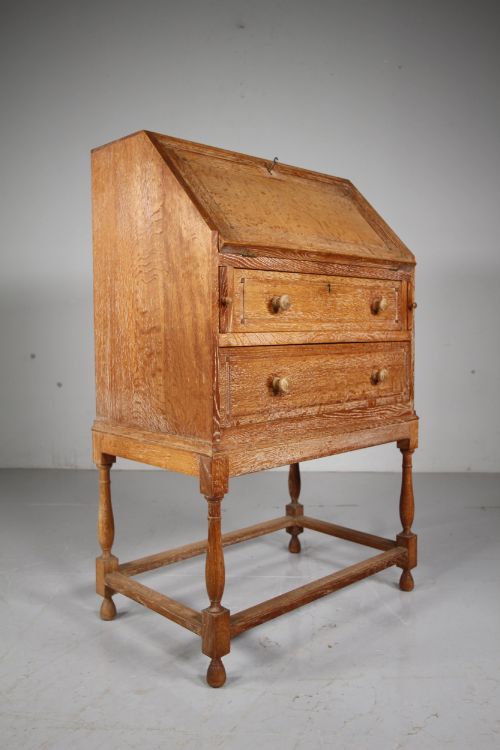
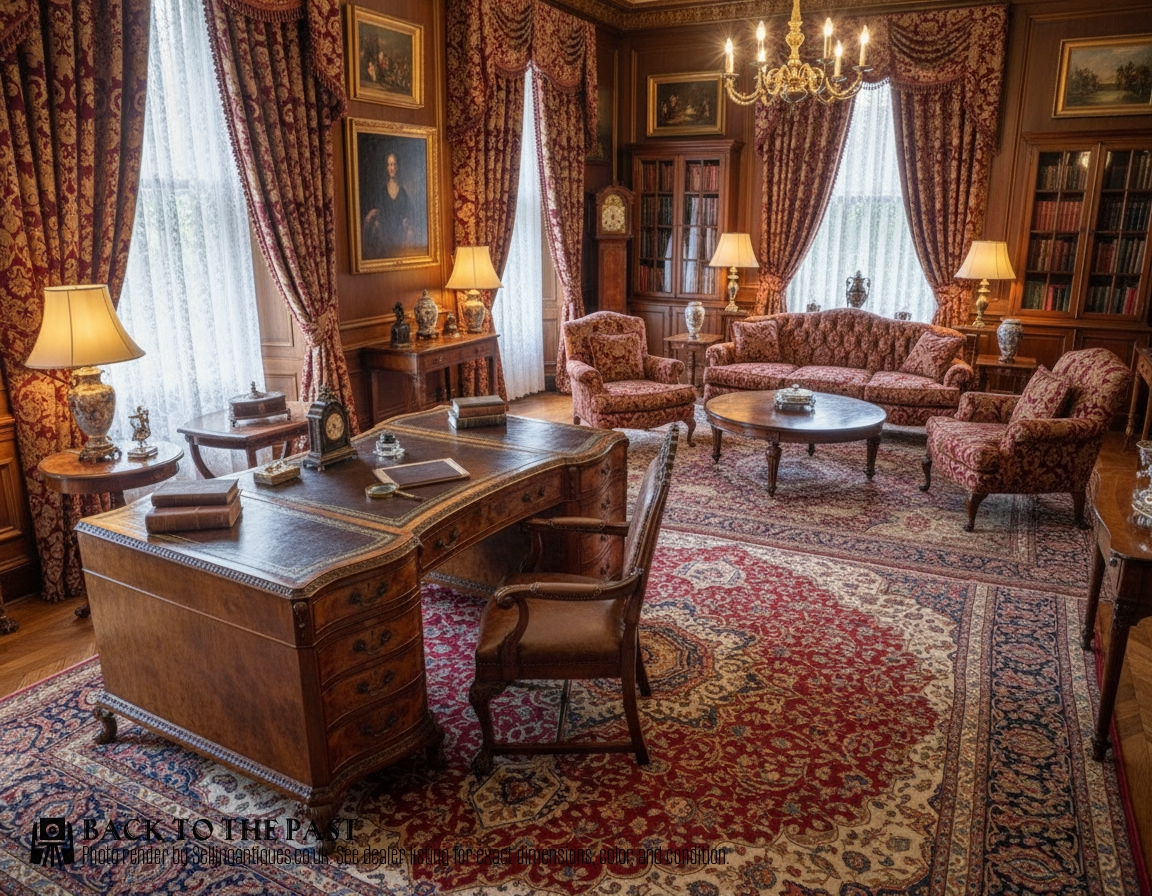
A traditional wooden study desk anchors a room with solid presence, offering ample workspace and hidden drawers for writing or daily administration.
Traditional Wooden Study Desk
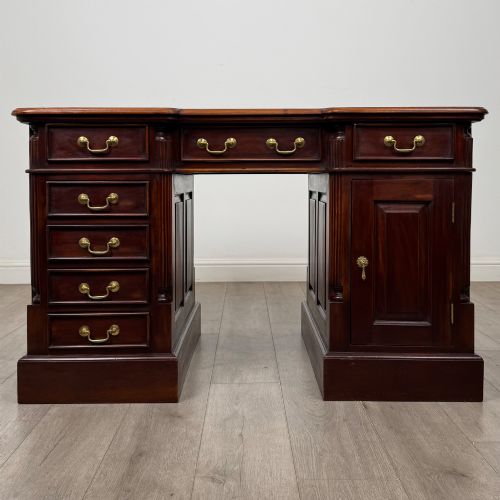
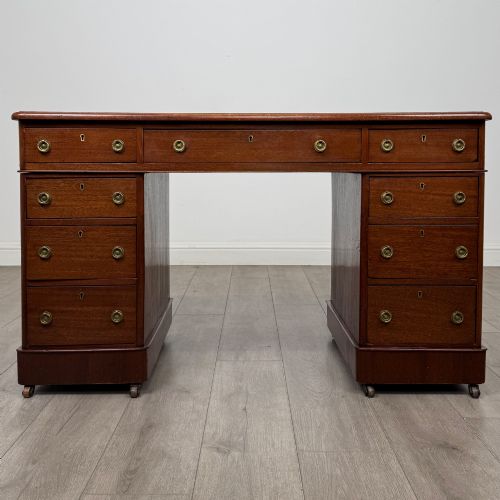
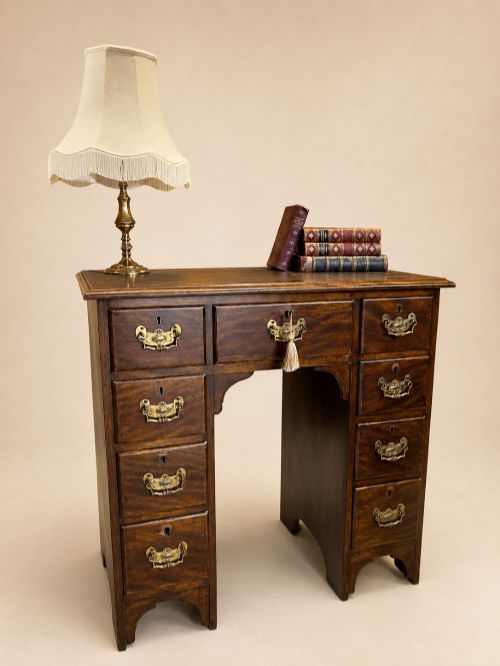
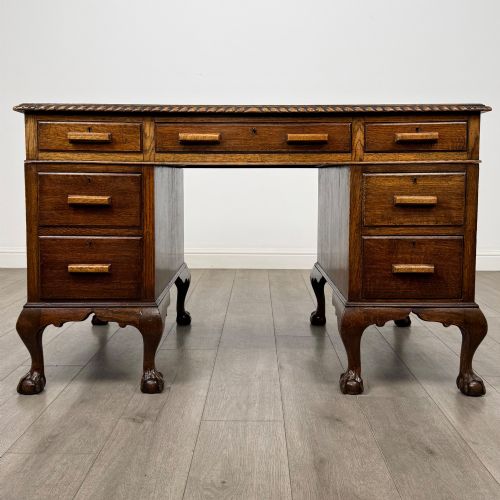
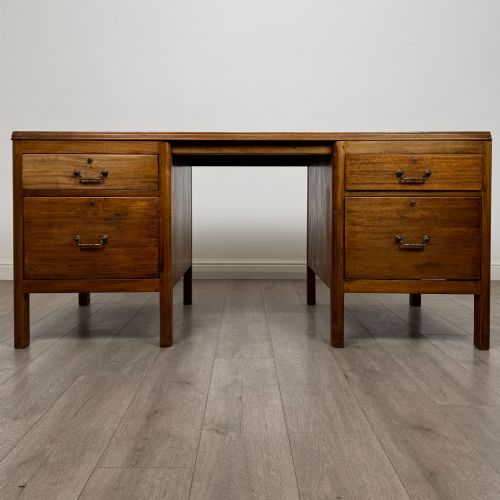
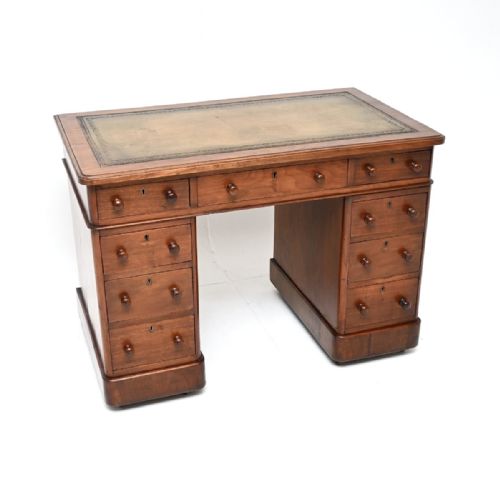
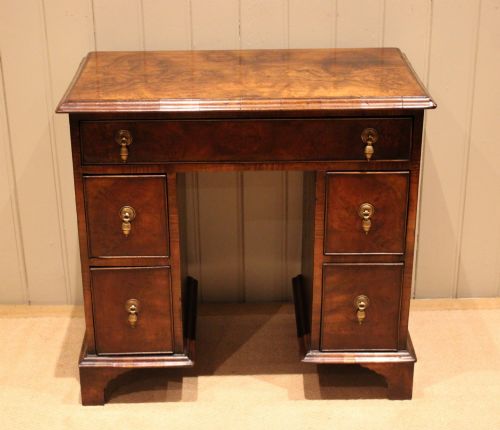
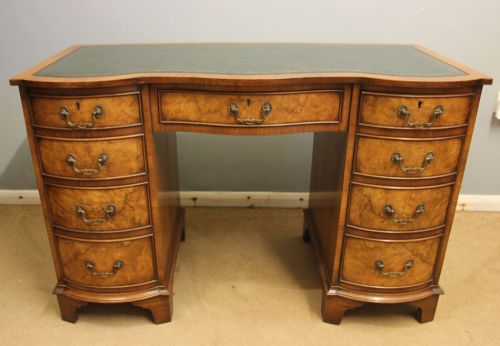
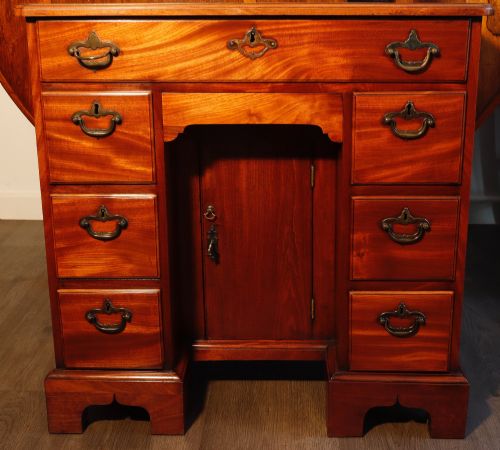
A traditional wooden study desk serves as the practical centrepiece of a home office or library, designed specifically for sustained reading, writing and administrative tasks. When searching for a traditional wooden study desk, buyers encounter forms ranging from heavy pedestal desks with multiple drawers to lighter writing tables and compact kneehole configurations.
The selection on this page draws heavily from the Victorian and Edwardian eras, alongside pieces dating across the nineteenth and early twentieth centuries. Surviving examples reflect the solid domestic and institutional requirements of their original owners, offering deep writing surfaces and functional storage.
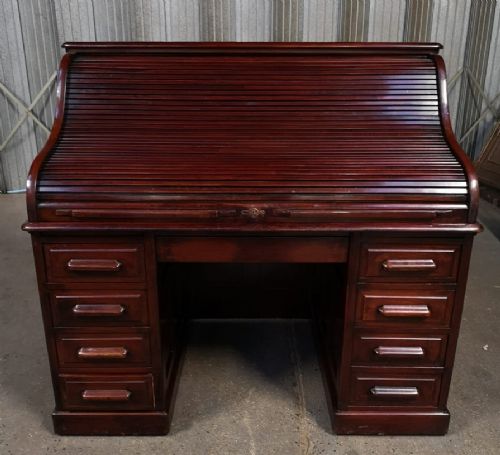
Beyond standard pedestal formats, the category includes roll-top desks, Carlton house desks, and partner desks designed for shared use. Each variant provides a distinct arrangement of stationery compartments, drawers and cupboards tailored to historical working methods.
Materials and construction methods
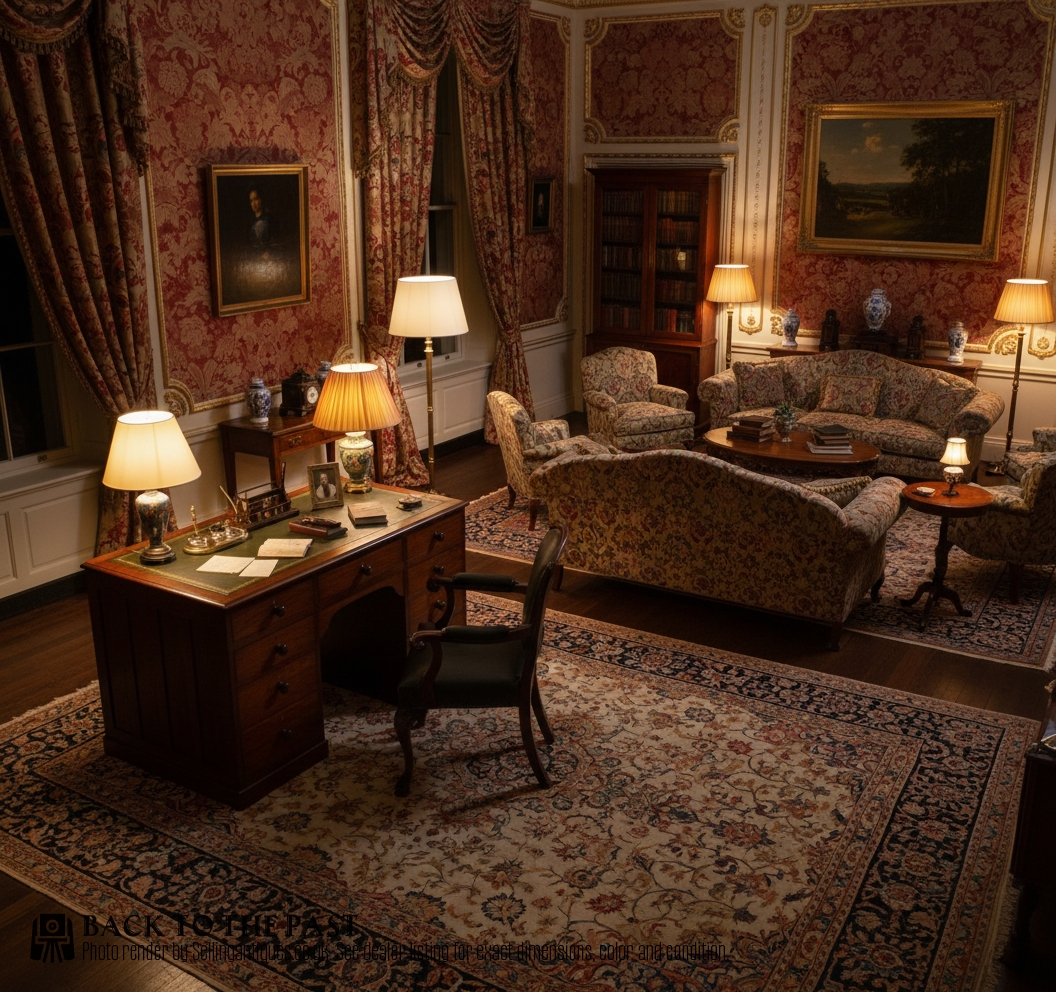
Cabinetmakers relied on dense hardwoods like mahogany, oak, walnut and burr walnut to build durable frames that could withstand decades of daily use. Mahogany and oak dominate the surviving examples, often selected for their strength and ability to take a deep, polished finish.
Surfaces frequently incorporate inset leather writing panels, sometimes tooled with gilt borders, providing a soft texture for handwriting. Brass handles, key escutcheons and iron mechanisms complete the construction, securing the drawers and pedestals where documents were stored.
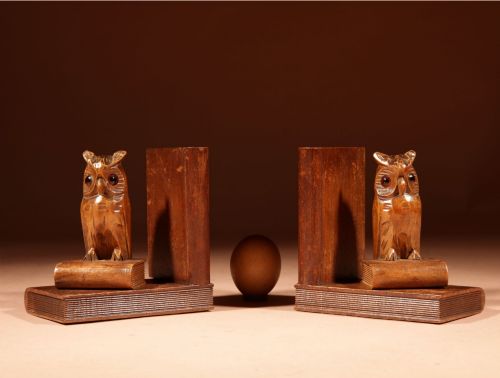
Carved wooden owls keep silent watch over the collection in the form of nineteenth-century bookends.
Assessing quality in construction and finish
Quality in a traditional wooden study desk rests upon the selection of timber and the precision of the cabinet work. Desks built from finely figured burr walnut or solid mahogany with well-matched wood grains demonstrate superior craftsmanship compared to simpler utilitarian pieces.
The integrity of the internal drawer construction, the retention of original brass hardware, and the condition of the leather inset surface distinguish finer workshop output. Superior examples maintain balanced proportions and crisp mouldings across the pedestals and superstructure.
Heals of London·Maple and Co
The Traditional Wooden Study Desk Glossary
- Pedestal desk
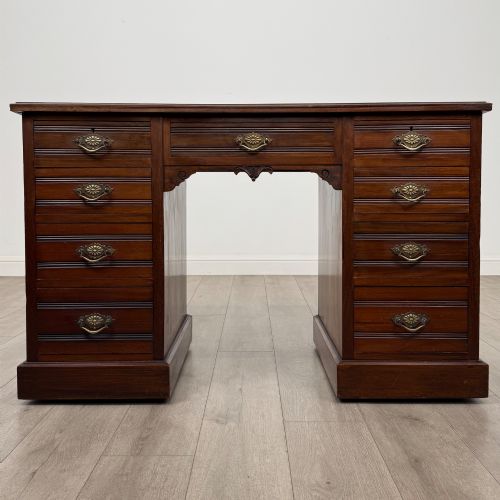
- A heavy freestanding desk comprising two supporting pedestals of drawers with a central writing slab bridging the gap. This format provides substantial storage and a commanding presence in a study.
- Kneehole desk
- A compact desk featuring a central recess for the user's legs, flanked by banks of smaller drawers. These pieces suit smaller rooms while retaining functional writing space.
- Partners desk
- A large double-sided desk designed so two people can work opposite each other simultaneously. Drawers and cupboards are duplicated on both sides to accommodate joint use.
- Carlton house desk
- A fitted writing desk with a curved superstructure of small drawers and pigeonholes rising above the writing surface. This refined form organises stationery and correspondence efficiently.
- Roll top desk
- A cylinder-top desk featuring a slatted wooden tambour that pulls down to conceal the working area and pigeonholes. It allows an entire working setup to be locked away securely.
Traditional Wooden Study Desk: Frequently Asked Questions
What is a pedestal desk?
A pedestal desk is a heavy freestanding writing table built with two vertical stacks of drawers that support the main desktop. This configuration creates a secure, enclosed workspace with generous storage capacity.
Such desks were commonly used in Victorian and Edwardian studies, libraries and offices for managing paperwork and correspondence.
How do I use a roll top desk?
A roll top desk uses a flexible wooden tambour shutter that slides down in curved grooves to cover the desktop and pigeonholes. This mechanism allows you to lock away unfinished correspondence and writing materials instantly.
Opening the shutter reveals an organised interior of small drawers and compartments designed for stationery storage.
Are these desks suitable for modern laptops?
Many traditional study desks provide adequate surface area and sturdy construction to accommodate modern computers and writing equipment. Kneehole and pedestal layouts offer comfortable legroom and surface space.
Buyers should check the internal dimensions of pedestals and writing surfaces to ensure compatibility with contemporary office hardware.
How do I tell Victorian from Edwardian desks?
Victorian desks generally feature heavier proportions, dark mahogany or oak timbers, and robust carved detailing suited to formal nineteenth-century interiors. Edwardian pieces often display lighter walnut or mahogany frames, simpler lines, and influences from earlier revival styles.
Examining the drawer linings, handle styles and secondary timbers helps clarify the manufacturing period.