
Brown Leather Executive Desk
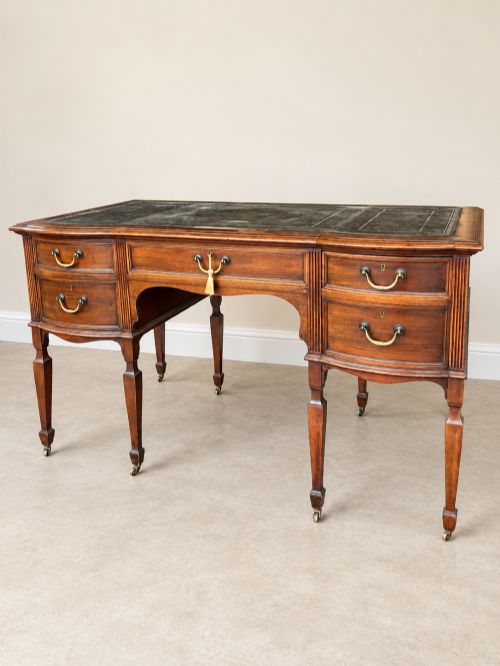
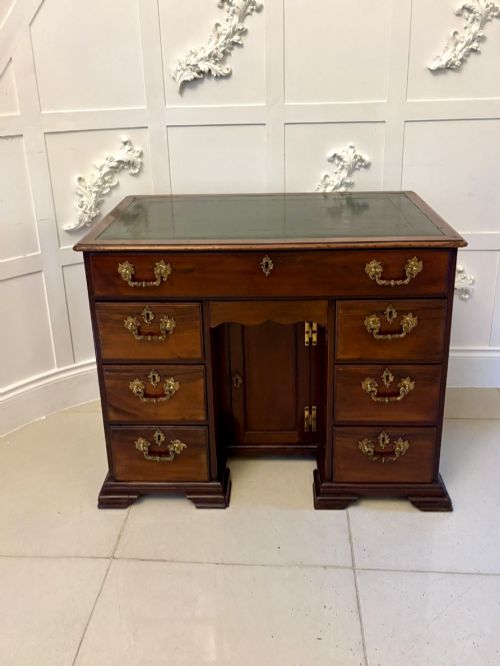
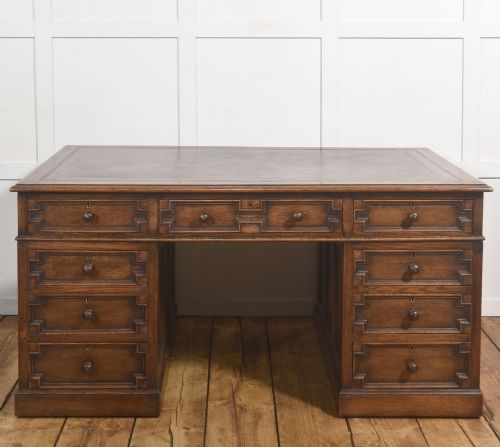
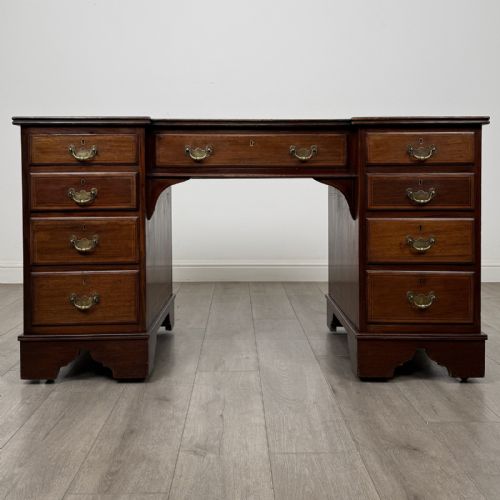
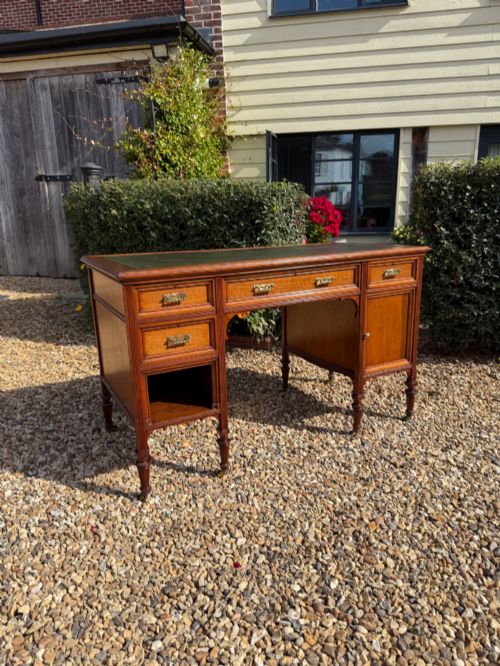
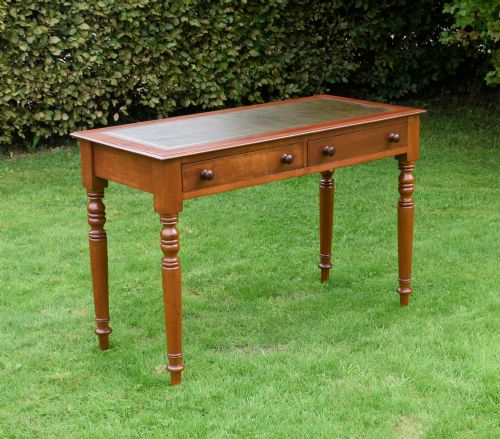
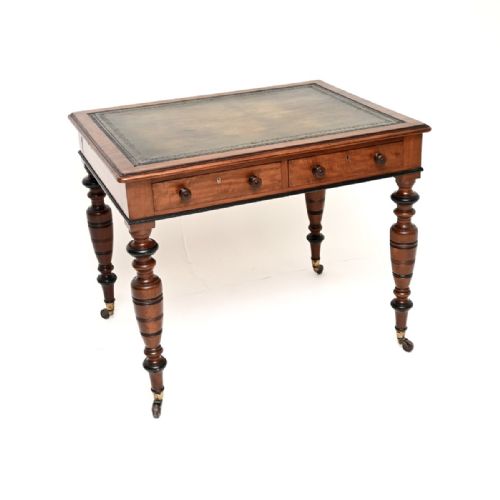
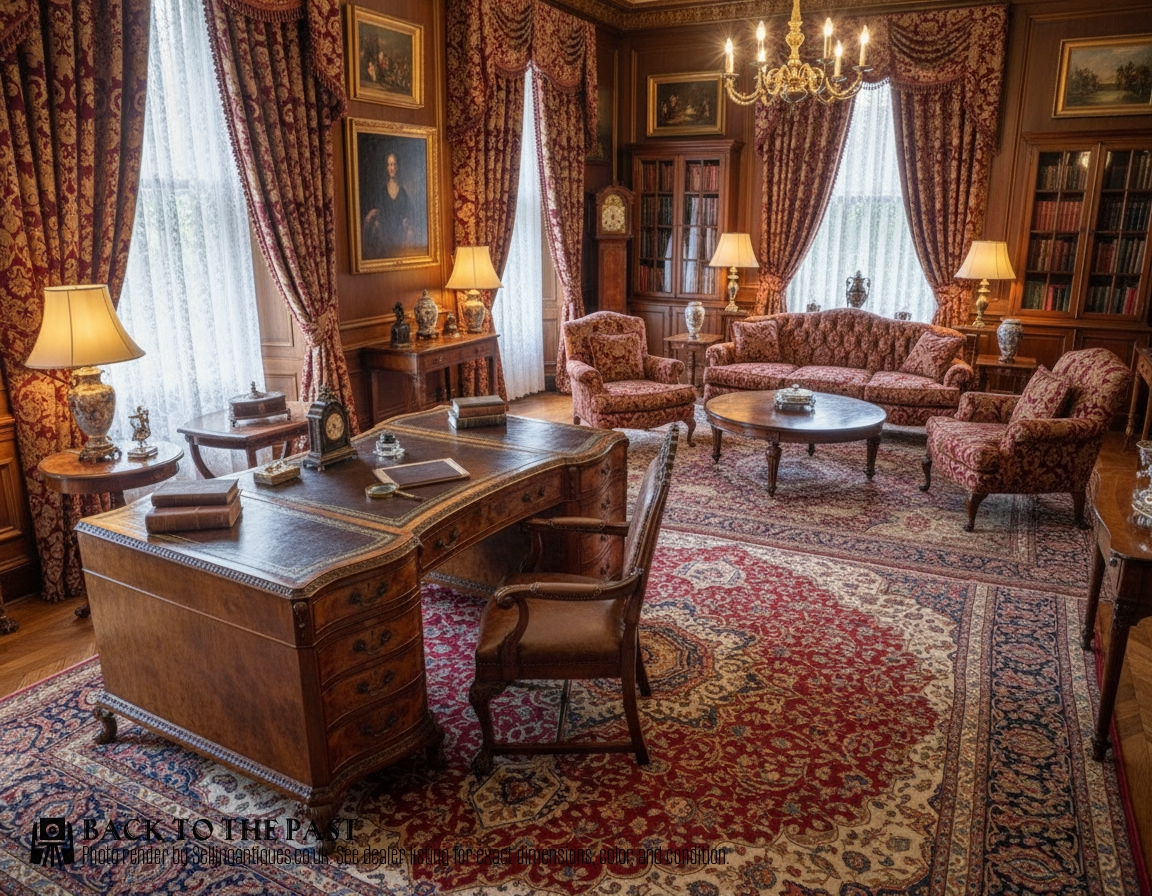
A brown leather executive desk grounds a study with substance, offering a wide writing surface inset with hide for daily correspondence.
Brown Leather Executive Desk
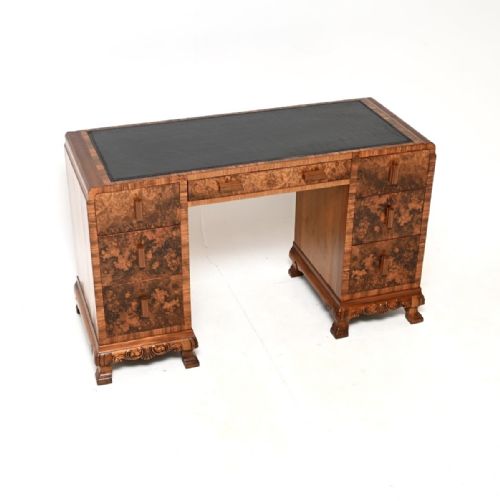
A brown leather executive desk brings together substantial proportions and practical writing surfaces designed for heavy daily administration. When buyers search for a brown leather executive desk, they encounter pedestal forms, partners desks, and library tables spanning the Victorian, Edwardian, and 1930 periods.
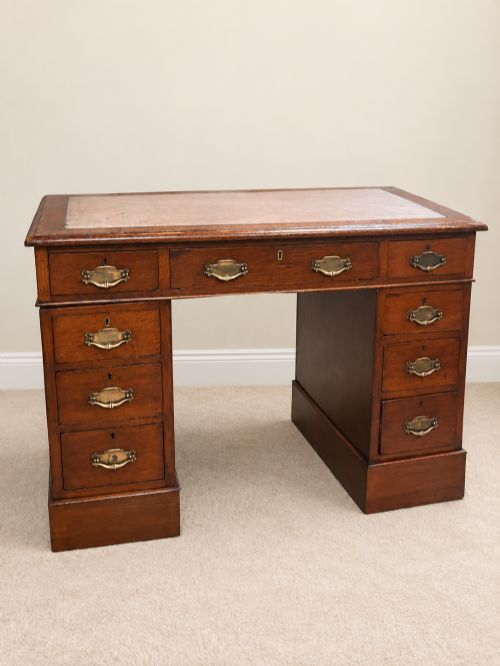
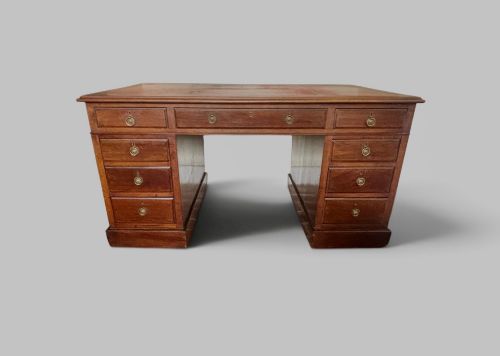
The construction relies heavily on pedestals fitted with multiple drawers, kneeholes for seating, and inset leather writing panels. Woods such as mahogany, walnut, burr walnut, and oak dominate the selection, often finished with brass handles and tooled details.
Originating predominantly from 19th-century workshops and early 20th-century makers, these pieces reflect revival styles including Georgian, Queen Anne, and Louis XV. Pieces range from compact writing tables to large freestanding partner formats finished on all sides for placement in the centre of a room.
Materials and Technique
Makers utilised solid hardwoods like mahogany, oak, and walnut for the structural carcase and drawer framing, frequently applying burr walnut or satinwood veneers to prominent surfaces. Leather inserts were glued to the timber top and finished with blind or gold tooling along the borders.
Drawer construction relied on hand-cut dovetails, oak linings, and solid brass hardware including drop handles and escutcheons. Ormolu mounts and brass gallery rails appeared on French bureau plat forms and refined library tables.
Free-standing examples required finished panelling to the reverse, allowing the desk to sit away from the wall. Secondary timbers such as pine or oak were used internally for drawer bottoms and carcase backs.
Some desks include secret stationery drawers hidden behind dummy book spines to keep private papers away from prying eyes.
Defining Quality
The standard of timber selection separates standard utilitarian pieces from high-grade commissions. Figured veneers like burr walnut or pollard oak require precise matching across drawer fronts and top surfaces.
The integrity of the internal construction, including hand-dovetailed drawer boxes and substantial secondary timbers, dictates durability. Superior examples retain original brass hardware, fitted stationery compartments, and well-executed leather tooling.
Trollope & sons·François Linke·Edwards & Roberts·Wylie & Lochhead Glasgow·Gillows·Charles Andrea Nosotti
The Brown Leather Executive Desk Glossary
- Pedestal desk
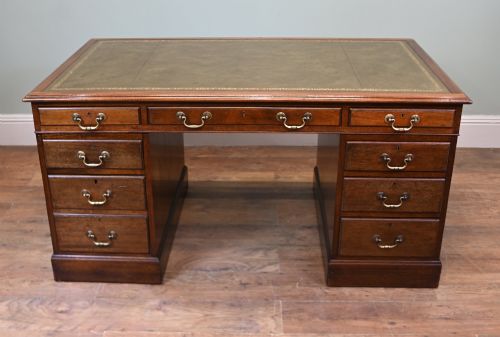
- A form comprising two banks of drawers supporting a single top, with a central kneehole space. It provides substantial storage capacity while allowing a seated user comfortable legroom.
- Partners desk
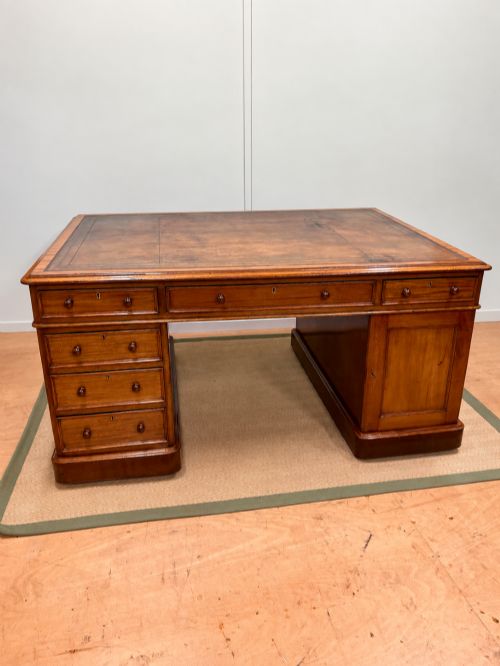
- A double-sided pedestal desk designed for two people to work opposite one another, featuring drawers and cupboards on both faces. These large formats were traditionally used in banks and estate offices.
- Bureau plat
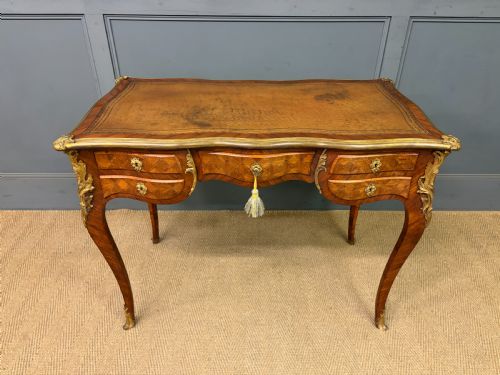
- A French freestanding writing table with a leather-inset top and one or more drawers in the frieze. These pieces often feature cabriole legs and ormolu mounts.
- Tooled leather
- Leather decorated with heated brass tools to impress blind or gold-leaf patterns around the perimeter of a writing surface. This technique adds decorative border detail to the hide.
- Kneehole desk
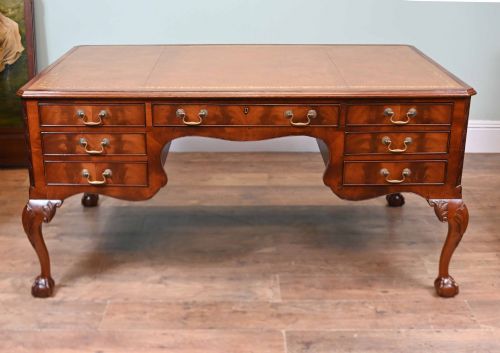
- A compact writing desk featuring a recessed central space beneath the writing surface, flanked by pedestals. Smaller variations often include a single long drawer above the opening.
Brown Leather Executive Desk: Frequently Asked Questions
How do I care for the leather top?
Leather writing surfaces benefit from occasional treatment with appropriate wax or conditioner to keep the material supple.
Avoid placing hot cups or using harsh chemical cleaners directly on the hide to preserve the gold tooling.
Are these desks suitable for daily use?
These pieces were built for heavy administrative work using solid hardwoods and durable construction methods.
Modern computers and writing equipment fit easily onto the spacious tops and sturdy pedestal frames.
How do I distinguish Victorian from Edwardian desks?
Victorian examples tend to use heavy mahogany and walnut with dark, rich finishes and deep mouldings.
Edwardian pieces often feature lighter satinwood, simpler lines, or revival styles influenced by earlier Georgian designs.