


Traditional Wooden Library Ladder
These traditional wooden library ladder examples are sturdy timber designs built to reach high shelves, combining practical utility with period craftsmanship.
Traditional Wooden Library Ladder
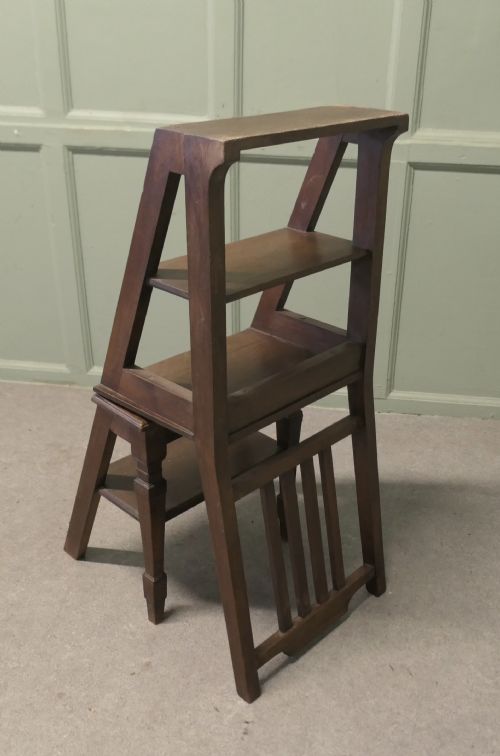
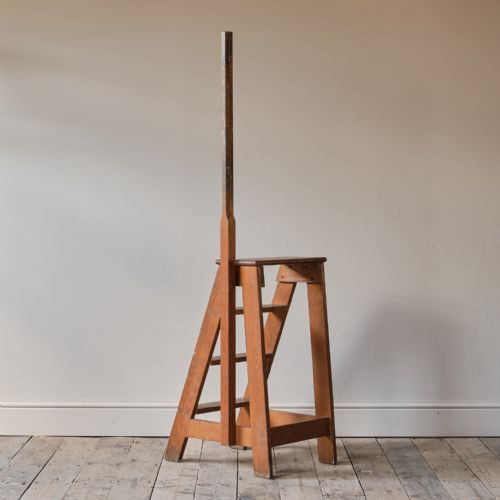
When you search for a traditional wooden library ladder, you encounter functional climbing furniture spanning the Georgian, Victorian, Edwardian, and early twentieth-century periods. These items range from sturdy oak A-frame steps to tall pine shop ladders and compact folding metamorphic chair designs.
You are most likely to meet oak and pine examples on this page, often dating from the nineteenth century or the Edwardian era. The selection includes everything from simple painted ladders to large-proportion steps fitted with leather-topped treads.
How they were made
Construction relies heavily on dense timbers such as oak, mahogany, and pine, chosen for their structural strength under load. Joinery is robust, designed to support daily climbing.
Metal components like iron and brass feature in hinges, fixings, and structural supports, while leather treads occasionally top individual steps for grip and finish.
Some steps double as chairs, proving that eighteenth-century librarians also appreciated multitasking furniture.
What varies in quality
The distinction between standard utility items and finer pieces lies in the choice of timber and the sophistication of the form, such as metamorphic variants that convert into chairs. Golden oak and figured mahogany examples show greater refinement than utilitarian painted pine versions.
Integration of secondary materials like brass hardware and tooled leather tread inserts elevates the craftsmanship of individual pieces significantly above basic workshop builds.
The Traditional Wooden Library Ladder Glossary
- Metamorphic
- Furniture designed to transform from one object into another, such as library steps that fold down into a chair. This clever dual-purpose engineering was particularly popular in the Georgian and Edwardian periods.
- A-frame
- A self-supporting structural configuration shaped like the capital letter A, providing stability without leaning against a wall. It is commonly found in freestanding library steps.
- Tread
- The horizontal flat surface of a step upon which the foot rests. In finer library steps, these are sometimes inset with leather.
- Golden Oak
- A light, warm-toned oak timber finish favoured in the Edwardian era and early twentieth century. It highlights the natural grain of the wood.
Traditional Wooden Library Ladder: Frequently Asked Questions
What periods do these ladders come from?
The pieces span from the Georgian and Victorian eras through the Edwardian period into the 1920s and 1930s. Materials and construction methods shift subtly across these decades.
Earlier examples often feature heavy oak and formal styling, while twentieth-century versions lean towards simpler utility or clever metamorphic designs.
How were library ladders originally used?
They provided access to high bookshelves in private libraries, institutional archives, and grand country houses. Some double as compact steps or transform into chairs for domestic spaces.
Their robust timber and iron construction ensured they could safely support the weight of a person reaching top shelves.
Are these steps stable enough for daily use?
Most pieces are built from heavy hardwoods like oak and mahogany with solid joinery. They remain structurally sound for regular climbing when properly maintained.
Heavier A-frame designs offer particularly good freestanding stability compared to simpler leaning wall ladders.
How do I identify a metamorphic pair of steps?
Metamorphic steps feature hinged mechanisms that allow the treads to fold out from beneath a seat. This transforms a functional chair into a tall set of steps.
They combine seating and climbing into a single piece of space-saving furniture.