

Traditional Wooden Hall Bench
A traditional wooden hall bench anchors an entranceway with sturdy timber and practical seating.
Traditional Wooden Hall Bench
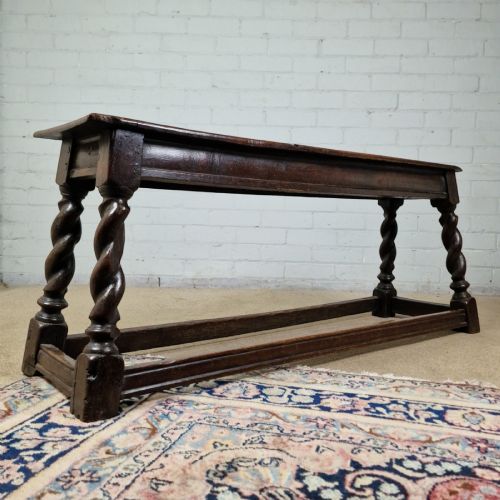
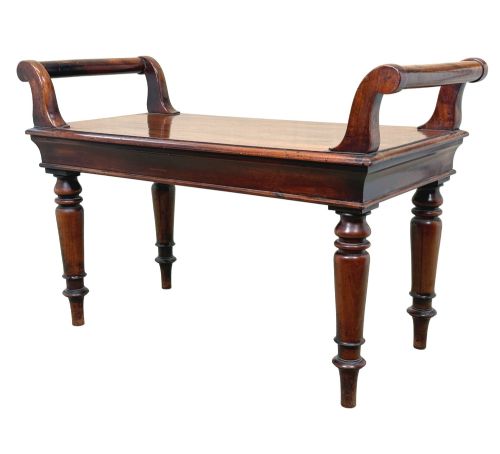
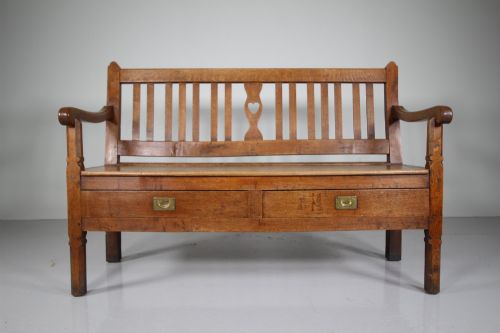
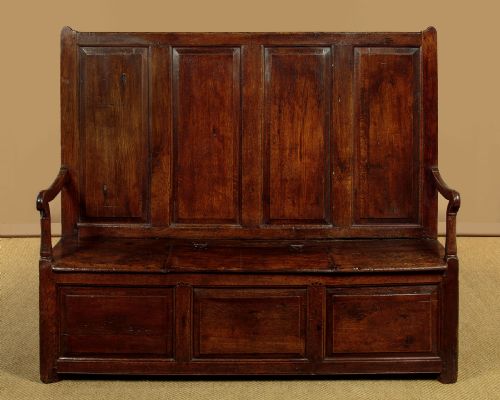
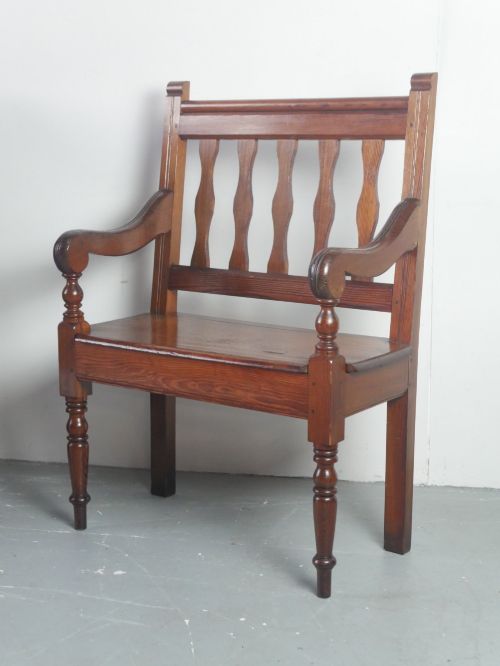
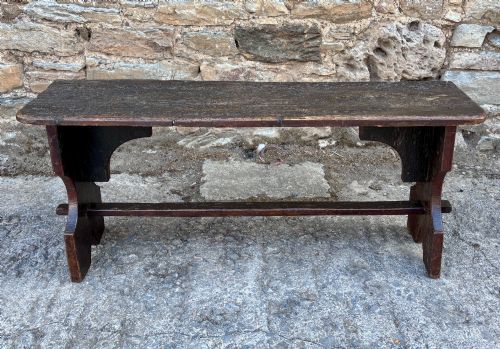
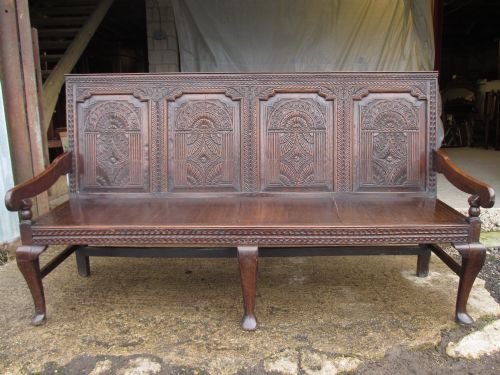
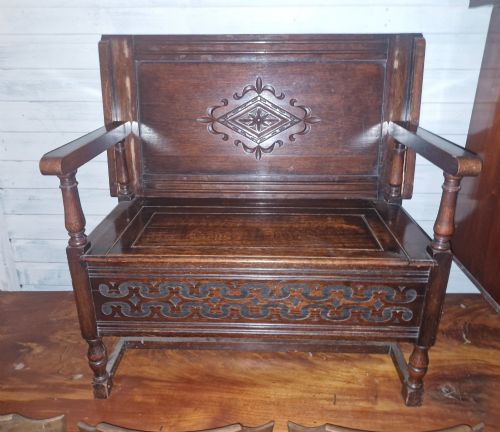
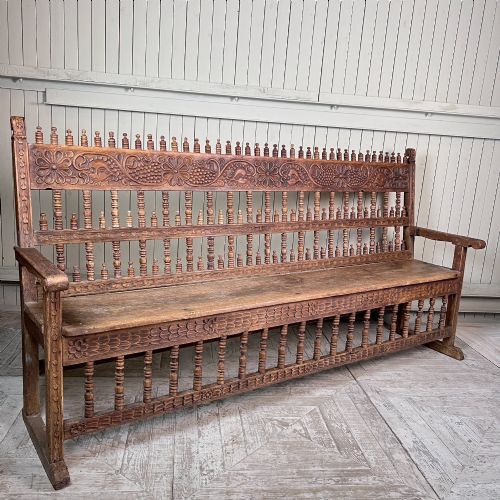
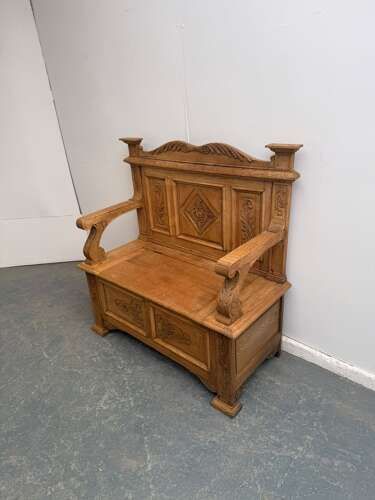
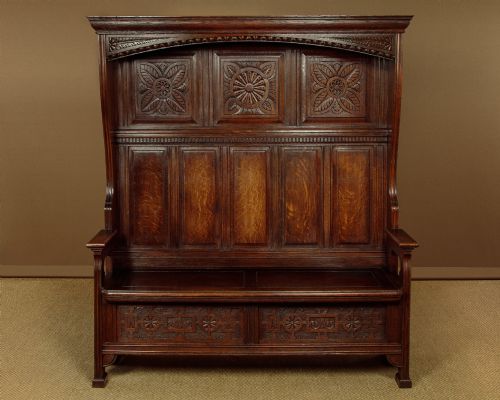
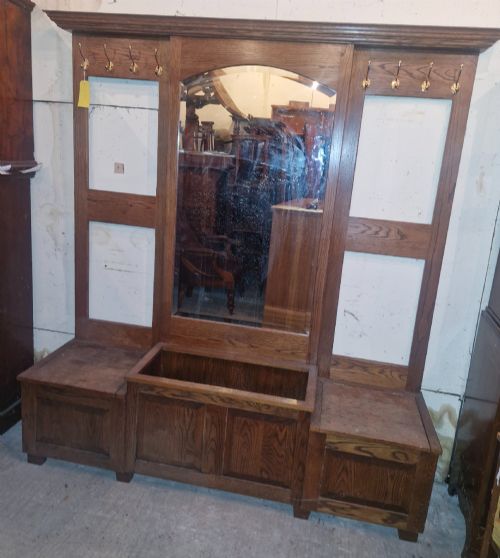
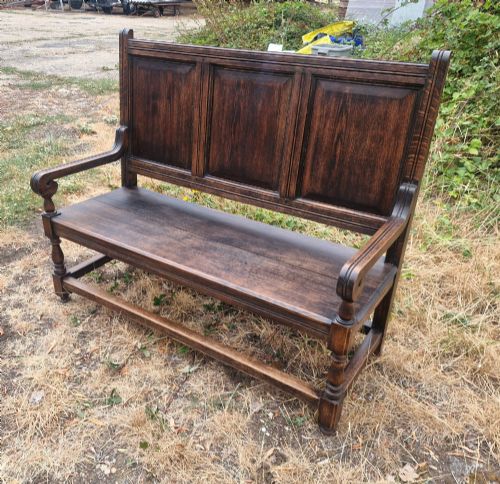
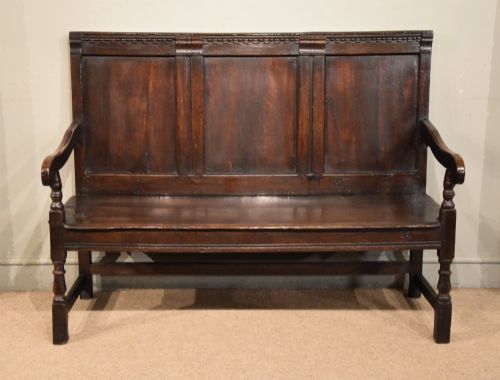
When you search for a traditional wooden hall bench, you encounter seating designed for corridors and entranceways, frequently featuring high backs or integrated storage. The forms span open farmhouse benches, settles with lift-up seats, and window seats originating from domestic settings across Britain and continental Europe.
The pieces appearing here range from eighteenth-century oak settles to nineteenth-century pine and mahogany window seats. Many examples incorporate box compartments beneath the seat, serving original purposes of storing boots, blankets, or everyday apparel near the door.
Distinctions in standard and execution
The division between everyday utility pieces and finer examples rests on the crispness of the carving, the selection of timber grain, and the integrity of the original joints. Pieces retaining their early surface finishes, whether waxed pine or polished mahogany, hold greater visual coherence than those stripped or heavily altered over time.
Proportion and scale dictate the success of the form, particularly where high backs or canopy tops are concerned. The integration of functional storage, such as smoothly operating box seats and well-fitted lids, demonstrates the underlying competency of the original maker.
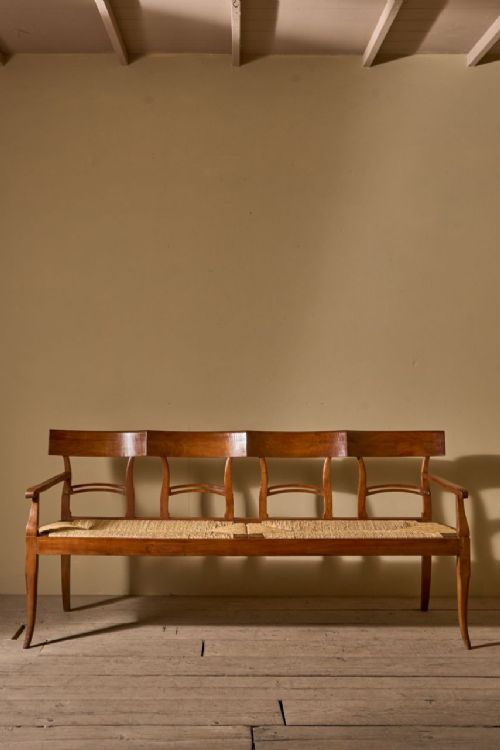
Listings feature woods spanning oak, pine, mahogany, and cherrywood, alongside painted and ebonised surfaces.
The Traditional Wooden Hall Bench Glossary
- Box settle
- A high-backed wooden bench with a solid compartment beneath the seat for storage. These items typically stood in draughty hallways to block cold air from doors.
- Settle
- A wooden bench with arms, a solid high back, and enclosed sides designed to retain heat. They represent an older precursor to modern upholstered sofas.
- Window seat
- A low bench built or proportioned to fit beneath a window recess. They frequently appear in mahogany and pine across the nineteenth century.
- Rush seat
- A seating surface woven from dried marsh rushes twisted into cords. This method appears on country chairs and benches from the nineteenth century.
- Canopy top
- An overhead wooden projection attached to the top of a settle. This architectural feature deflected draughts in large rooms.
Traditional Wooden Hall Bench: Frequently Asked Questions
Where did people put a traditional wooden hall bench?
These pieces traditionally stood in hallways, corridors, and entrance lobbies where family members and visitors removed outer garments. Their enclosed backs helped block cold draughts from front doors.
In modern homes, they serve identical functions in boot rooms and narrow entryways, offering convenient seating paired with hidden storage beneath the lift-up lid.
How do I tell an 18th-century settle from a Victorian one?
Eighteenth-century examples generally display pegged oak construction, heavy panelled backs, and simpler, utilitarian proportions shaped by regional vernacular traditions. Tool marks and hand-planed surfaces remain visible on the timber.
Victorian pieces often introduce softer woods like pine, alongside painted finishes, mahogany framing, or revival styles influenced by earlier historical periods.
What is the difference between a bench and a settle?
A standard bench consists of a flat seat supported by legs or trestles, sometimes featuring a simple open back. They prioritise basic seating capacity.
A settle incorporates solid arms, a high wooden back, and enclosed sides that descend all the way to the floor to keep out cold air.
Can I use a box settle for shoe storage?
Box settles were originally built with hollow compartments beneath the seat to hold blankets, logs, or footwear out of sight. Their deep interiors accommodate modern boots and hallway clutter with ease.
The hinged lids allow quick access while maintaining a tidy appearance in high-traffic entryways.