
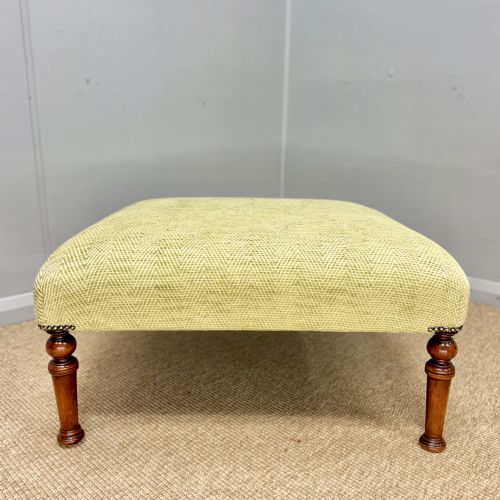


Traditional Wooden Footrest
A traditional wooden footrest brings period character and practical comfort to any room, offering a solid timber frame paired with woven cane, rush or traditional upholstery.
Traditional Wooden Footrest
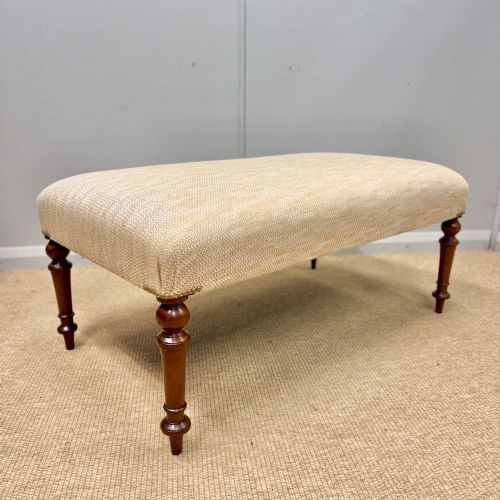
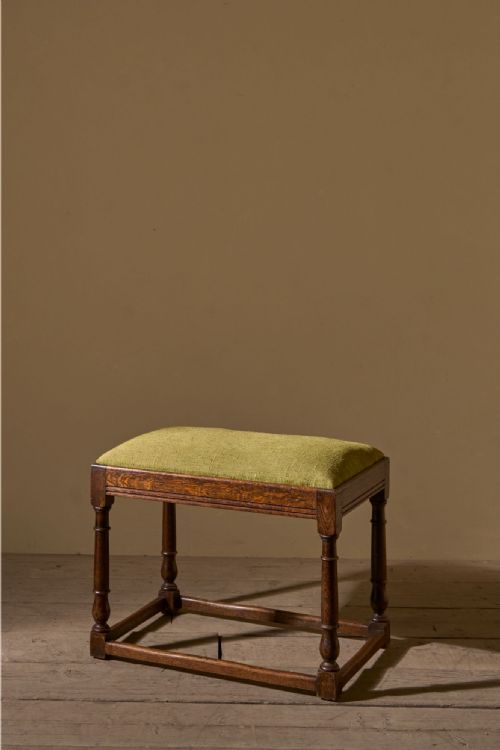
A traditional wooden footrest encompasses low stools, footstools and joint stools originating from the eighteenth, nineteenth and early twentieth centuries. These pieces appear in forms ranging from simple rectangular footstools to carved mahogany and oak frames influenced by Queen Anne, Chippendale and Jacobean styles.
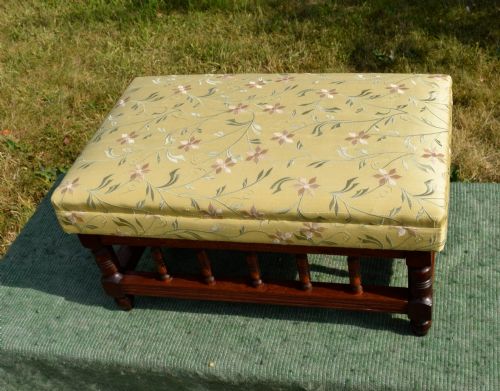
Many of these footrests show the evolution of domestic comfort, moving from heavy structural timber frames to dedicated upholstered ottomans and kilim-covered pieces. They serve primarily as low seating or foot supports, reflecting the prevailing joinery methods of their respective eras.
How they were made
Timbers like mahogany, oak and walnut form the structural skeleton of these footrests, shaped through traditional joinery and turning techniques. Hardwoods provide the durability required for daily use, while softer woods like beech appear in turned frame components.
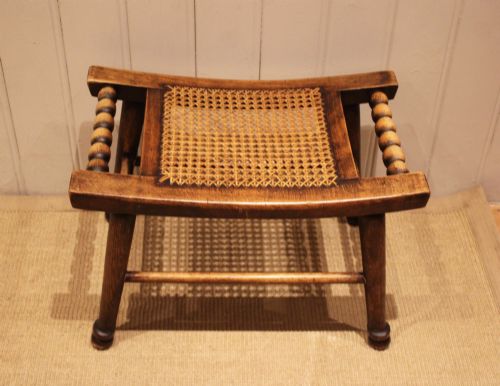
Upholstered surfaces utilise traditional stuffing materials and textiles, including heavy green linen, wool, kilim and woven rattan or cane. These coverings are secured directly to the wooden frames using traditional tacking methods, often refreshed or newly upholstered to preserve the piece.
Listings feature periods spanning from the eighteenth century through the Edwardian era, constructed primarily in mahogany, oak and walnut.
What varies in quality
Quality in a traditional wooden footrest rests on the integrity of the timber frame and the skill of the original joinery. Solid hardwood construction with tight joints distinguishes finer workshop pieces from more utilitarian variants.
The refinement of decorative elements, such as hand-carved cabriole legs, turned stretchers and the quality of the textile or cane work, elevates an ordinary stool into a distinguished period piece.
The Traditional Wooden Footrest Glossary
- Joint stool
- A sturdy wooden stool constructed with mortise and tenon joints pegged together, common in seventeenth and eighteenth-century interiors.
- Cabriole leg
- A furniture leg that curves out and then in, resembling the leg of an animal, frequently seen on Queen Anne and Chippendale style pieces.
- Kilim
- A flat-woven carpet or rug material often repurposed as durable and decorative upholstery for nineteenth-century footstools.
- Bergere
- A closed upholstered armchair or seat featuring wicker or cane panelling woven into the wooden frame.
Traditional Wooden Footrest: Frequently Asked Questions
What is a traditional wooden footrest used for?
These pieces primarily function as low footstools designed to support the feet when seated in an armchair or by a fire.
Beyond functional foot support, smaller stools serve as occasional seats or decorative stands for plants and books within period and contemporary interiors.
How do I date a wooden footrest?
Dating relies on identifying the underlying timber, turning style and joinery methods characteristic of specific periods like the Georgian or Victorian eras.
Secondary clues include the type of upholstery fabric, webbing and the presence of hand tools marks on the underside of the wooden frame.
Are these footstools newly upholstered?
Many listings feature pieces that retain either historical textiles or have been newly upholstered in traditional fabrics such as linen, wool or kilim.
Re-upholstery ensures the internal padding meets contemporary standards while maintaining the aesthetic integrity of the original wooden frame.